Lately, there seem to be more and more posts on the forums about IE University, especially its School of Architecture and Design, which is quickly becoming the new ‘it’ school. As a lurker who loves to do some digging, I’m here today to take a deep dive into what this school is all about and whether it’s worth attending.
Breaking with Traditional Architectural Education
First things first, IE’s School of Architecture takes a completely different path from the traditional architecture departments at Spain’s historic public universities. It doesn’t focus solely on pure descriptive geometry or structural mechanics. Instead, it weaves innovation, technology, sustainability, and business management into its entire teaching philosophy. Simply put, they’re not just training architects; they’re cultivating future industry leaders who understand business, technology, and entrepreneurship. This is evident in their curriculum.
Core Differences: Bachelor’s vs. Master’s
To give you a clearer picture, I’ve put together a simple table. This is a key point when choosing among Spanish Architecture Universities:
| Program Type | Core Focus | Campus | Language |
|---|
| Bachelor in Architectural Studies | Design Thinking, Tech Integration, Humanities | Segovia + Madrid | English |
| Master in Architecture | Professional Practice, Project Management, Licensing | Madrid | English/Spanish |
| Master in Strategic Interior Design | Spatial Experience, Brand Strategy, User-Centric | Madrid | English |
As you can see, the undergraduate program focuses more on building a foundation and fostering interdisciplinary thinking, while the master’s programs are more geared towards professional practice and market demands.
A Unique Two-City Experience
One of the most talked-about aspects of IE Architecture is its campus. Undergraduates spend their first two years in Segovia and then move to Madrid for the latter years. The Segovia campus is a converted 13th-century convent, so you’re literally studying inside a World Heritage Site. The experience is absolutely incredible!
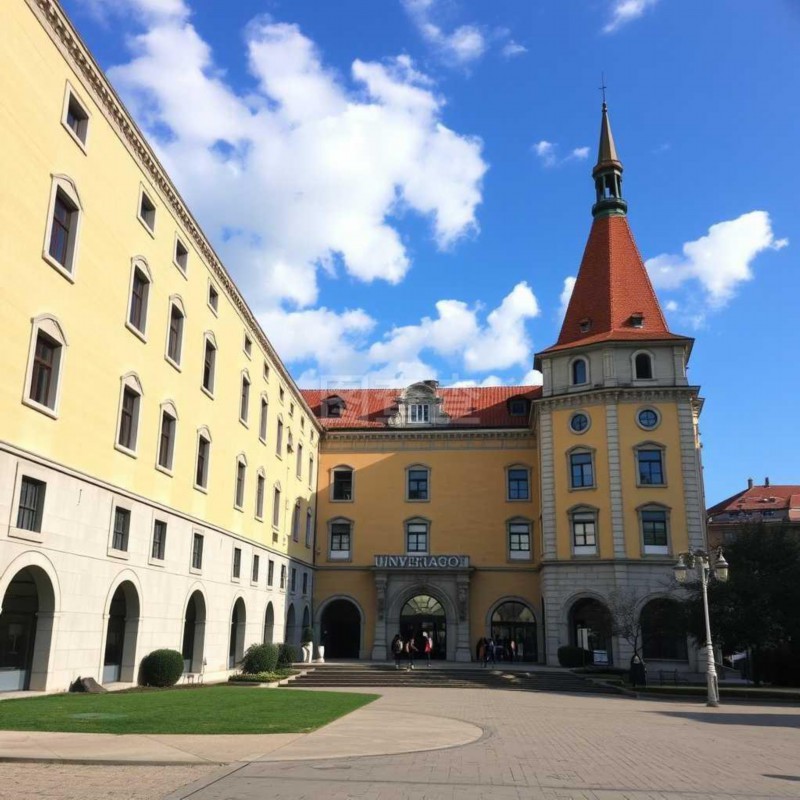
In the upper years, you move to the IE Tower in downtown Madrid, a modern skyscraper that feels like you’ve been transported from the Middle Ages to a futuristic financial hub. This stark contrast between the classic and the contemporary is an invaluable source of inspiration for any design student.
How Difficult Is It to Get In, and What About Jobs?
In terms of applications, IE follows a typical ‘elite education’ model, placing a strong emphasis on a student’s holistic profile rather than just grades. In addition to the standard materials required for Spanish University Architectural Design programs, IE has its own entrance exam and interview that primarily assess your logic, creativity, and communication skills. This results in a very diverse student body with fascinating classmates. As for career prospects, IE’s powerful alumni network and its business school roots are a huge advantage. Graduate job placements are excellent, and it’s certainly not a case of graduating to lay bricks. Many graduates join top-tier firms or even start their own companies.
If you want a future-focused, interdisciplinary architectural education and budget isn’t a concern, then IE is definitely an option worth serious consideration, as it offers a unique value proposition beyond what you might see in a conventional Spanish University Architecture Ranking. Are there any current students or alumni here? Please feel free to add to the discussion or make any corrections!
