For those of you new to Spain, are you curious about how universities are laid out here, just as I was? Back home, we might be used to the idea of a ‘campus town,’ often referring to a large, newly-built area on the city’s outskirts. Does a similar concept exist in Spain? And what is it called? Let’s dive into this topic today.
What Exactly is a ‘University City’ in Spain?
In Spanish, the term ‘university city’ does exist: it’s called Ciudad Universitaria. However, its meaning isn’t exactly the same as the campus towns you might be used to. It typically refers to a large campus area where the faculties, libraries, dormitories, and sports facilities of one or more universities are concentrated. The most classic example is Madrid’s Ciudad Universitaria. It’s not an independent administrative town but rather a district within the city of Madrid dedicated to higher education.
The Madrid University City
When talking about university cities in Spain, Madrid is a must-mention. The Ciudad Universitaria here is the largest and most famous in the country, with options for student living like chalets in the University City area. Located in the Moncloa-Aravaca district of Madrid, it is home to the main campuses of several public universities, including the Complutense University of Madrid and the Technical University of Madrid. Walking through the area, which is also home to many Spanish language schools in the University City, you’re surrounded by young students with backpacks, lush green spaces, and an atmosphere buzzing with academic and youthful energy.
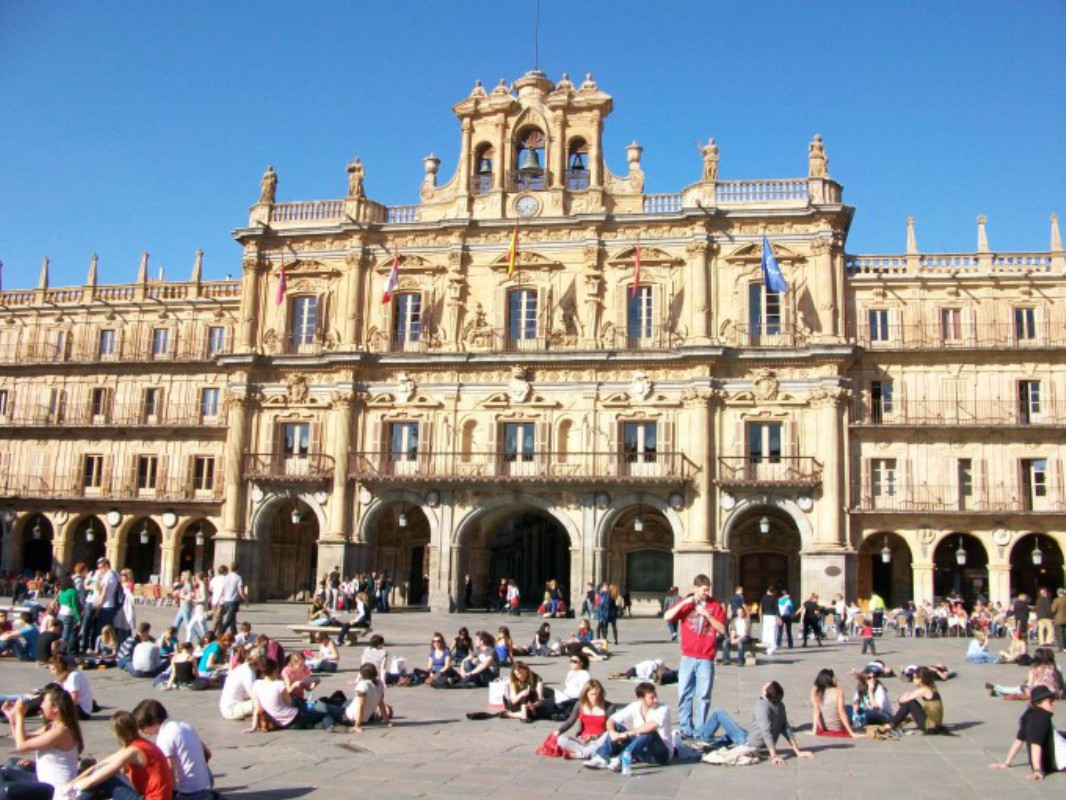
The University-City Integration Model
Not all Spanish universities have a clearly defined ‘university city’. Many historic universities have their faculty buildings completely integrated into the urban fabric, to the point that you could say the entire city is the university. The classic example is Salamanca. The University of Salamanca is one of the oldest in Spain, and its lecture halls and libraries are themselves some of the city’s most important historical monuments. As you wander through the old town of Salamanca, it’s hard to tell where the city streets end and the university campus begins, creating a uniquely immersive experience.
The distribution model for universities in Spain is quite diverse, and you can even find various prices for A2 Spanish courses in the University City depending on the location. To help you understand better, I’ve made a simple comparison table:
| City | University Model | Characteristics |
|---|
| Madrid | Dedicated University City | Shared by multiple universities, centralized facilities, distinct area |
| Salamanca | University-City Integration | The entire old town has an academic feel; the campus is the city |
| Barcelona | Dispersed Campuses | Campuses of various universities are spread across different city districts |
| Granada | Hybrid: Part-Centralized, Part-Integrated | Has a main campus area, but also faculties scattered throughout the city center |
I hope this information is helpful for new students! What model does the university in your city follow? Feel free to share and discuss in the comments below!
