Lately, I’ve seen many people on forums asking about the cost of studying at a university in Spain. Having completed my undergraduate degree here and helped many junior students with their budgets, I thought I’d start a thread to discuss “How much does it really cost to study in Spain?”. Overall, Spain is significantly cheaper than countries like the UK, US, Australia, or Canada, but it’s not realistic to expect a ‘backpacker’ budget. Your spending will vary depending on your lifestyle, but there are some basic expenses you can count on.
Tuition Fees: Public vs. Private, a World of Difference
First, let’s tackle the biggest expense: tuition fees. Spanish universities are divided into public and private, and their fees are worlds apart. Public universities are subsidized by the government, making tuition relatively affordable, even for non-EU students. Generally, undergraduate tuition is calculated per credit. Each credit costs around €20-€40, and with a standard 60-credit year, the total tuition is about €1,200 - €3,500 per year. Master’s programs are slightly more expensive, typically ranging from €1,800 - €4,500 per year.
Private universities are a different story. They operate on a market-driven basis, with tuition fees ranging from €6,000 to €20,000 per year, and it’s not uncommon for top programs at popular private business or design schools to exceed €20,000 annually. So, when considering how much it costs to study at a Spanish university, public universities are the most cost-effective option if you’re on a budget. And by the way, the era of free tuition is long gone, so don’t believe those unreliable rumors.
Tuition Fee Estimates for Popular Fields of Study
I’ve put together a general table to give you a clearer picture, but remember to check the official websites of the universities and specific programs for exact costs. It’s also worth looking into how much you can get from a university scholarship in Spain to help offset the expenses.
| Field of Study | Public University Annual Tuition | Private University Annual Tuition |
|---|
| Humanities & Social Sciences | €1,200 - €2,500 | €7,000 - €15,000 |
| Science & Engineering | €1,500 - €3,500 | €9,000 - €18,000 |
| Medicine / Dentistry | €2,000 - €4,000 | €15,000 - €25,000 |
| Arts & Design | €1,500 - €3,000 | €8,000 - €20,000 |
Living Expenses: Your City Determines Your Budget
Once you’ve sorted out tuition, the next thing to consider is living expenses. This part of your budget is heavily influenced by the city you live in. As Spain’s two largest cities, Madrid and Barcelona naturally have the highest cost of living. In contrast, cities like Valencia, Seville, Granada, or Salamanca are much more affordable, allowing for a more comfortable lifestyle.
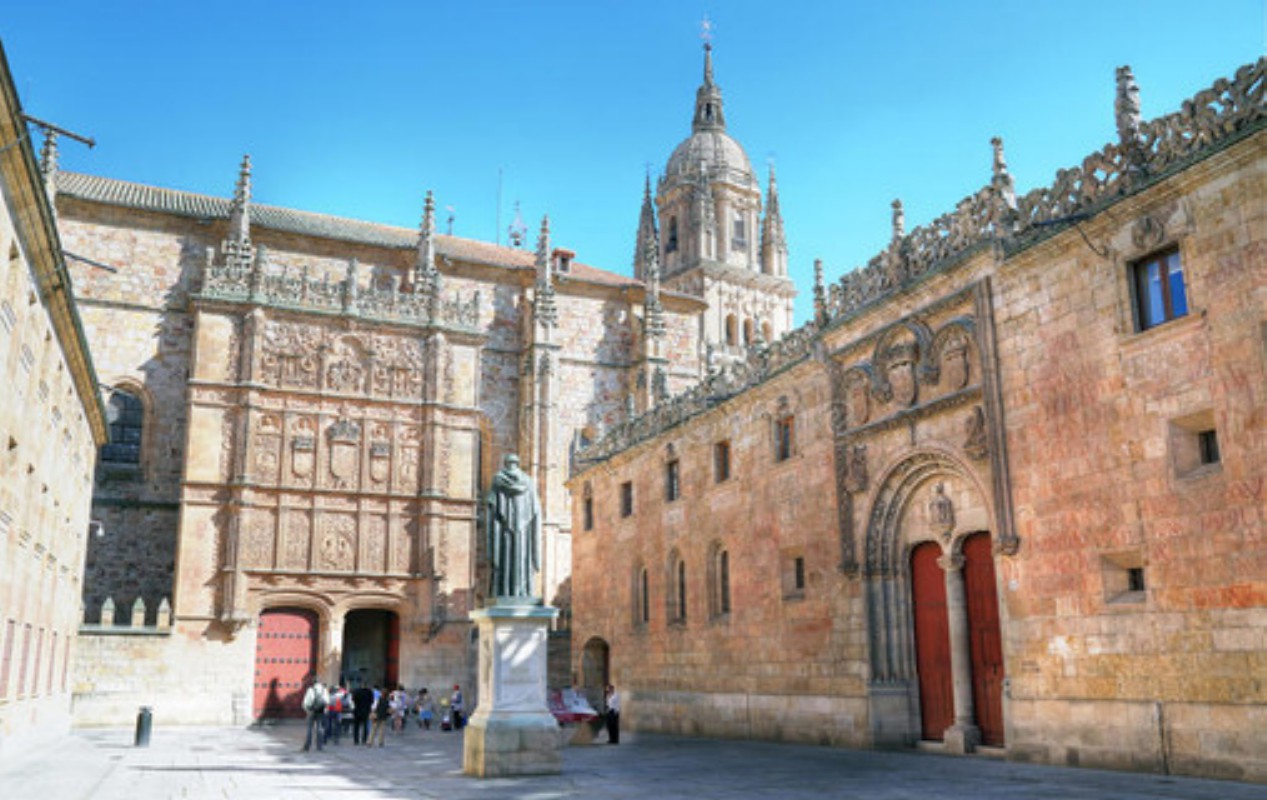
Let’s take Madrid as an example. Here’s a rough monthly breakdown:
- Rent: A room in a shared apartment typically costs between €350 - €550, and more for prime locations.
- Food: If you primarily cook at home, €200 - €250 a month should be enough. Eating out regularly will, of course, increase this significantly.
- Transportation: The youth transport pass (Abono Joven) is a fantastic deal at €20 per month, offering unlimited travel on the metro and buses within the Community of Madrid.
- Phone/Internet: A mobile phone plan will cost around €10 - €20 per month.
- Other: For shopping, social activities, travel, etc., it’s wise to budget an additional €100 - €200.
All in all, a comfortable and reasonable monthly budget for living in cities like Madrid or Barcelona would be around €800 - €1,100. In smaller cities, you can live well on €600 - €800.
So, if you’re wondering how much it costs to study at a university in Spain and choose a standard public university, your total annual expenses will likely fall between €12,000 and €18,000. This is a very competitive price point among major study abroad destinations. I hope this summary is helpful! Feel free to add your own experiences or corrections in the comments!
Which city in Spain are you in? What are your monthly expenses? Let’s discuss in the comments below
!
