I’ve often seen newcomers ask about studying in Spain, worried that the universities here aren’t “prestigious” enough and that a degree might not hold its value, making it difficult to find a job after graduation. I completely understand this concern, as most of us grew up hearing primarily about top universities in the UK and the US.
Let’s Talk About Rankings First
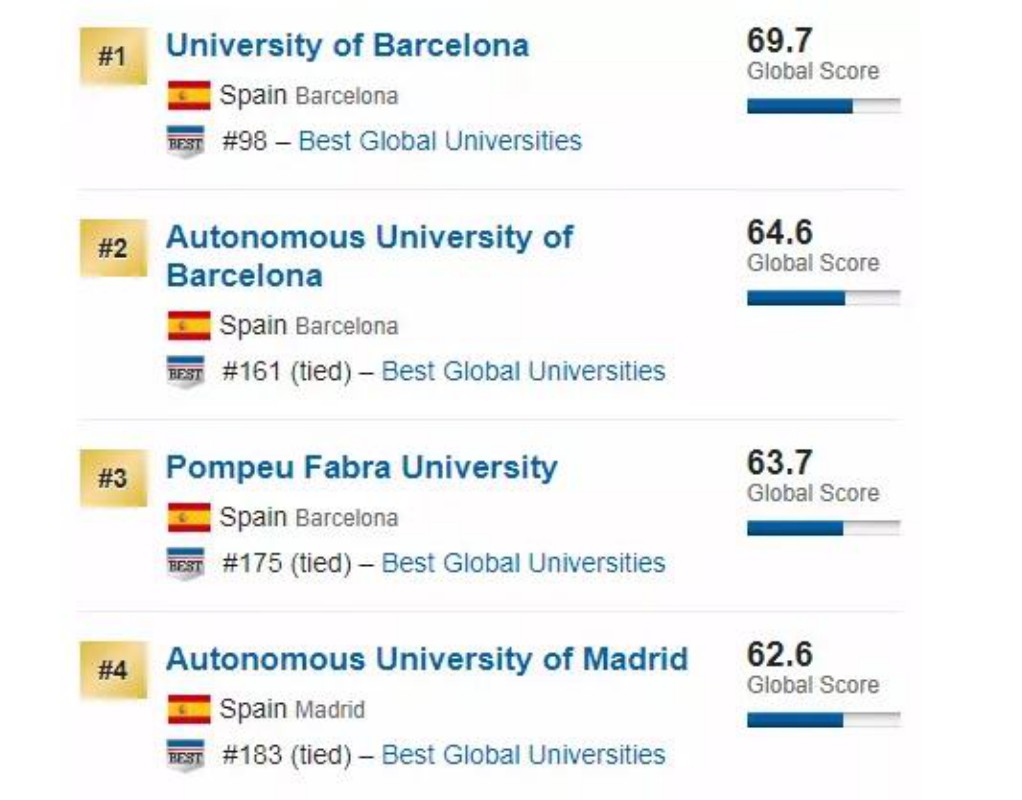
If we only focus on global comprehensive rankings like QS or THE, Spanish universities might not seem to stand out. With the exception of a few rankings of Spain’s established prestigious universities, most are ranked outside the top 100. But does this mean Spanish universities are subpar? Absolutely not
! UK and US universities have a significant advantage in the ranking methodology, which heavily weights commercialized metrics like the language of published papers, alumni endowments, and the degree of internationalization. The Spanish university system, especially its historic public universities, operates on a different model.
Look Beyond Overall Rankings to Specialized Strengths
The essence of Spanish universities lies in their strength in specific fields. Many institutions are world-class in particular subjects, but because they are “specialists,” these Spain’s top universities
don’t always shine in overall rankings. Here are a few examples:
Business: IE Business School, ESADE Business School, and IESE Business School are all among the world’s leading business schools, with their MBA programs being particularly renowned.
Architecture: The architecture departments at the Polytechnic University of Madrid (UPM) and the Polytechnic University of Catalonia (UPC) are dream destinations for countless architecture students.
Tourism Management: As a world-leading tourist destination, it’s no surprise that universities like the University of the Balearic Islands offer tourism programs that excel in combining practical experience with theory.
Humanities and Arts: Ancient institutions with centuries of history, such as the University of Salamanca and the Complutense University of Madrid, possess an incredibly rich heritage in fields like languages, history, literature, and journalism.
I’ve created a simple comparison table to give you a clearer picture:
| Comparison Point | Top Spanish Public Universities | Top UK/US Private Universities |
|---|
| Annual Tuition Fee | €1,000 - €4,000 | $40,000 - $70,000+ |
| Areas of Excellence | Business, Architecture, Tourism, Arts, Languages | Finance, Computer Science, Medicine, Law |
| Admission Process | University entrance exam score conversion / Official master’s application | SAT/GRE + Personal Statement + Letters of Recommendation |
| Core Philosophy | Public higher education, developing citizens | Elite education, industry-oriented operation |
Excellent Value and “Official Recognition”
The cost-effectiveness is something that needs to be shouted from the rooftops! Tuition fees at Spanish public universities are incredibly affordable. The total annual cost for tuition and living expenses can be just a fraction of what you’d pay in the UK or the US. For such a low cost, you get a degree that is recognized throughout the European Union and around the world, including by official bodies like China’s Ministry of Education, which facilitates career opportunities in both public and private sectors. Don’t fall for outdated rumors like “Spanish degrees can just be bought”.
Stop measuring Spanish universities by the singular “Ivy League” standard. There are hidden gems here waiting to be discovered. The key is to be clear about what you want to study and what your future career goals are.
Choose the right major, and a Spanish university will be your ‘top-tier’ institution
!
How did you all choose your university and major? Feel free to share and discuss in the comments below!
