I recently saw a question on a forum asking if Barcelona is actually a city. It might sound strange at first, but it’s a topic worth discussing. After all, for those who have just arrived in Spain or are planning to, understanding these basic concepts is quite important.
Barcelona’s Administrative Status
Of course, Barcelona is a city—and it’s Spain’s second-largest, after Madrid. It is the capital of the autonomous community of Catalonia and the provincial capital of Barcelona province. The city itself covers about 101 square kilometers with a population of around 1.6 million. If you include the entire metropolitan area, the population exceeds 5 million, which certainly qualifies it as a major European city.
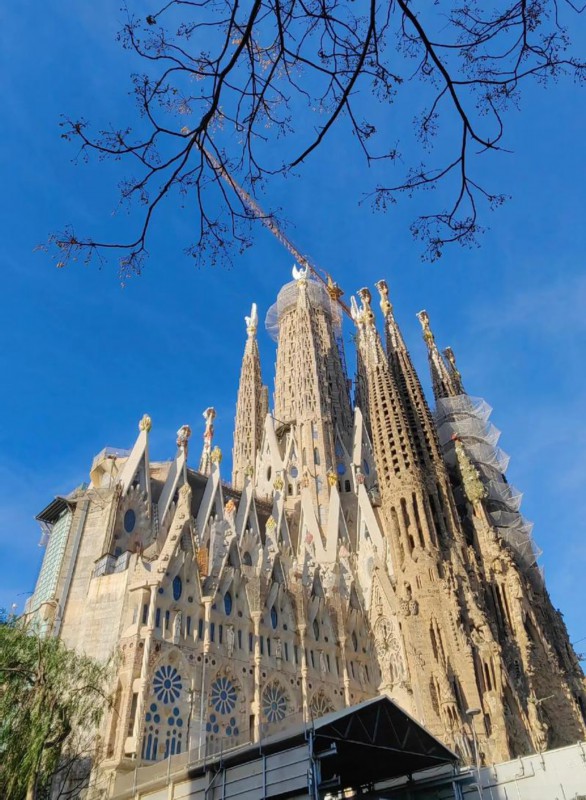
Administratively, the city of Barcelona is divided into 10 districts, each of which is further subdivided into several neighborhoods. For example, the well-known Gothic Quarter is part of the Ciutat Vella (Old City) district, while the famous Sagrada Família is located in the Eixample district, another administrative area.
Why Does This Question Arise?
I suspect some people ask this question because of Catalonia’s unique status. Catalonia is an autonomous community within Spain, with its own language, cultural traditions, and a degree of self-government. Sometimes, in the news or daily conversation, people use ‘Barcelona’ and ‘Catalonia’ interchangeably, which can cause some confusion.
Another reason is football. The influence of FC Barcelona is so immense that for many people, the first thing that comes to mind is the team, not the city. To be honest, though, Barça is indeed one of the city’s best ambassadors.
Comparison of City Characteristics
Let’s use a table to briefly compare the basic data of Barcelona with other major Spanish cities:
| City | Population (millions) | Area (km²) | Geographic Location |
|---|
| Madrid | 3.3 | 604 | Central Plateau |
| Barcelona | 1.6 | 101 | Mediterranean Coast |
| Valencia | 0.8 | 135 | Mediterranean Coast |
| Seville | 0.69 | 140 | Southern Andalusia |
As the table shows, although Barcelona’s area is not large, its population density is quite high. This is why it often feels very crowded when walking in the city center.
Living in Barcelona
As a truly international metropolis, Barcelona boasts a well-developed urban infrastructure. The metro system has 8 lines covering the entire city, and the bus network is also extensive. However, a word of warning: public transport can get extremely crowded during rush hour.
The city’s economic pillars include tourism, port trade, manufacturing, and the tech industry. In recent years, Barcelona has also been working hard to build its startup ecosystem, attracting many tech companies and startups. The annual Mobile World Congress is held here ([aerial view of Barcelona]) and is a major event in the tech world.
Some say Barcelona is just a tourist city, but that’s clearly a one-sided view. While tourism is indeed very important, the city’s industrial structure is actually quite diverse. From tourists on La Rambla to programmers in the 22@ technology district, from port workers to university researchers, people from all walks of life work and live here.
Barcelona is not just a city; it’s a vibrant, modern metropolis. It has a rich history, unique culture, a developed economy, and comprehensive urban functions. Whether you’re considering moving here or are just curious, I hope this post has helped you build a basic understanding.
