Having lived in Barcelona for three years, I’ve experienced Plaça de Catalunya in countless different ways. This vast square, located at the junction of the old city (Ciutat Vella) and the Eixample district, is not just the geographical center of the city but also a crossroads of countless stories. Today, I want to share a glimpse into the real character of this square, hoping it will be helpful for those planning a trip to Barcelona.
Basic Information about the Square
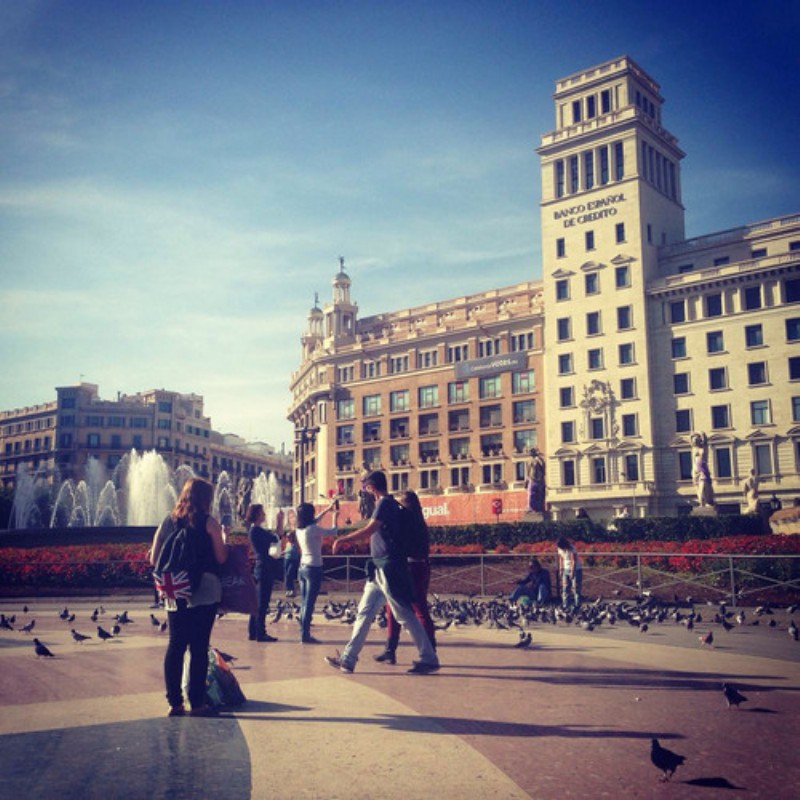
Plaça de Catalunya covers an area of about 50,000 square meters, making it one of Barcelona’s largest squares. It is surrounded by major commercial streets, including the famous La Rambla and Passeig de Gràcia. The center of the square features several fountains and sculptures, with the monument to Francesc Macià being the most prominent.
A Major Transportation Hub
This is Barcelona’s most important transport hub, where metro lines L1 and L3 intersect. It’s also a stop for numerous bus routes and the airport bus. If you’re coming from the airport, taking the Aerobus directly here is the most convenient option; from the square, you can easily walk to other landmarks like Plaça Reial. A one-way ticket costs €5.90, and the journey takes about 35 minutes. Here’s a comparison of the main transport options:
| Transportation | Price | Duration | Advantage |
|---|
| Aerobus | €5.90 | 35 mins | Direct and convenient |
| Metro L9 | €5.15 | 50 mins | Most economical |
| Taxi | €30-40 | 25 mins | Comfortable and fast |
| Renfe train | €4.60 | 40 mins | High punctuality |
What to Explore Nearby
From the square, it’s a 5-minute walk to the Gothic Quarter, home to the Barcelona Cathedral and countless narrow medieval streets. Heading north along Passeig de Gràcia, you can reach Gaudí’s Casa Batlló and Casa Milà in about 15 minutes. If you’re looking for food near Plaça de Catalunya or want to go shopping, the El Corte Inglés department store is right next to the square and is a popular spot for locals.
Many guides say the square is boring, but I find people-watching here quite fascinating. In the morning, you’ll see professionals rushing to work; at noon, elderly residents feeding the pigeons; in the afternoon, street performers; and at night, it becomes a gathering spot for young people. The benches are often full, especially on a sunny day.
Practical Tips
On the topic of safety, this area is known for pickpockets, especially in crowds. It’s a good idea to wear your backpack on your front and avoid keeping your phone and wallet in your outer pockets. However, there’s no need to be overly anxious—just stay alert. You’ll see plenty of police patrolling the area, so it’s generally safe.
For photos, I recommend early morning or late evening when the light is softer and there are fewer people. The fountains are lit up at night, creating a beautiful scene with the surrounding architecture. Also, there’s an old café on the north side of the square called Café Zurich. Sitting on its terrace with a coffee and watching the world go by is a classic Barcelona experience.
