When I first arrived in Spain, what struck me the most were the little white houses with red roofs scattered across the hillsides and coastlines. Whether on postcards or in travel ads, they’ve become a visual symbol of Spain. After living here for a while, I slowly discovered that there’s more to this seemingly simple combination than meets the eye.
Why the White Walls?
At first, I thought they were painted white purely for aesthetic reasons. But after talking with local friends, I learned the main reason is sun protection! This is especially true in the southern region of Andalusia, where the summer sun is fierce and temperatures can soar to over 40 degrees Celsius. White walls reflect the maximum amount of sunlight, reducing heat absorption and keeping the interior relatively cool. The traditional material used is a paint called cal (lime wash), which is not only inexpensive but also acts as an insect repellent and is breathable—a true testament to the wisdom of older generations of Spaniards.
And What About the Red Roofs?
The red roofs are made from terracotta tiles, technically known as ‘Roman tiles’ or ‘Arab tiles’. These curved, semi-circular tiles interlock when laid, providing excellent drainage—perfect for the rainy winters of the Mediterranean climate. The natural red color of the clay is not only beautiful but also incredibly durable, easily lasting for decades. So, as discussed in this post on Spanish white villas, the old saying that ‘red and white clash’ is completely unfounded here; it’s a perfect marriage of function and form.
Of course, not every place is the same. Although we often talk about red roofs and white walls, the styles of rural houses vary across Spain’s different regions. I’ve made a simple comparison, and you can also check out this piece on the iconic white railings:
| Region | Key Features |
|---|
| Andalusia | Quintessential pure white villages, with an emphasis on courtyard greenery. |
| Balearic Islands | Architecture leans towards cubic shapes with simple lines, like the Ibizan style. |
| Catalonia | Traditional rustic stone houses (masias) are common, often combining stone with white walls. |
| Valencia | Often uses colorful tiles to adorn exterior walls, resulting in a more vibrant look. |
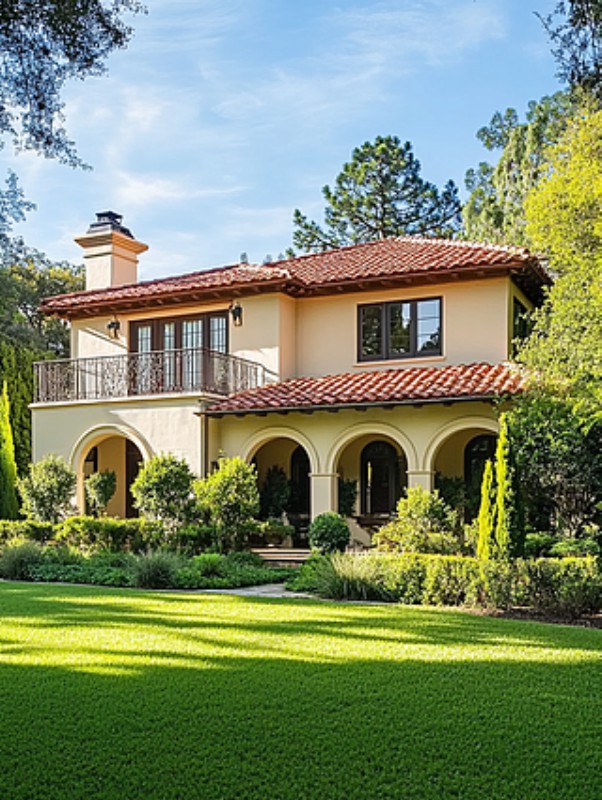
Every time I drive through the countryside and see a standalone house like this on a hillside, it feels so soothing. This type of architecture is more than just a place to live; it’s a reflection of a lifestyle: enjoying the sun and being close to nature. What’s your favorite style of Spanish house? Share your dream house in the comments
!
