Hello everyone, I just moved to Spain not long ago and ran into some trouble with exchanging money, so I’m sharing my experience today to hopefully help others. When you first arrive, you’ll likely have some cash from your home country, but here, Euros are what you need. While exchanging money at a bank isn’t always the cheapest option rate-wise, it’s definitely the safest and most reliable way.
My Experience with Major Banks
You can find major Spanish banks like the red Santander, the blue BBVA, and the Catalan CaixaBank almost everywhere. The advantage is that they have many branches and are reputable. However, the downside is clear: if you’re not a customer, you’ll likely face one of two scenarios: they’ll either refuse to serve you or charge a hefty fee. I once tried to exchange some US dollars for Euros at a BBVA branch, but since I wasn’t a customer, the commission was ridiculously high, and I had to give up.
So, if you’re just a tourist or a newcomer who hasn’t opened a bank account yet, walking into a major bank to exchange currency might not be a great experience. Here’s a simple table I put together based on the typical situation for non-customers:
| Bank | Friendliness to Non-Customers | Fees | Notes |
|---|
| Santander | Average | High | They may ask for your passport, and not all branches offer this service. |
| BBVA | Low | Very High | Highly not recommended for non-customers due to a double hit of poor rates and high fees. |
| CaixaBank | Average | High | Occasionally runs promotions with no fees, but it’s rare. |
| ING | Not Offered | N/A | An online-only bank with virtually no physical branches for currency exchange. |
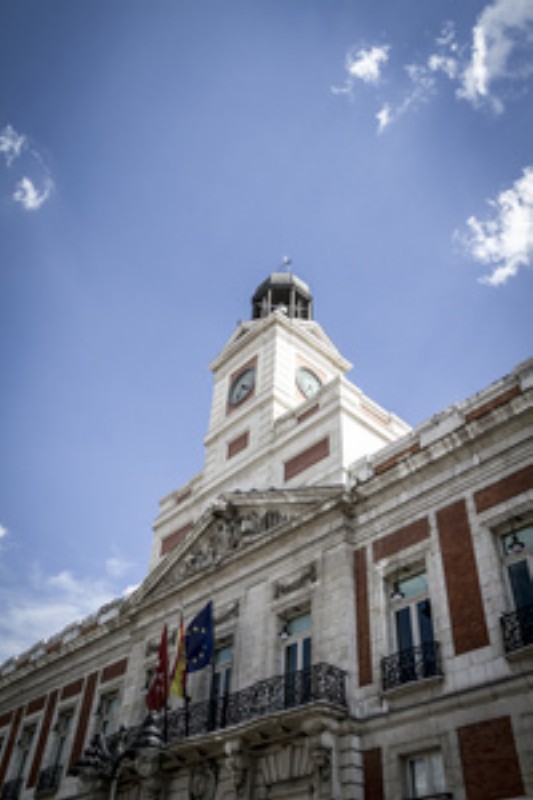
Besides banks, there are also many dedicated currency exchange bureaus, like Ria or Global Exchange, which are common in places like Puerta del Sol, airports, or train stations. Their advantage is convenience—they’re fast, no account is needed, you just hand over your cash. The downside is that their exchange rates are usually worse than the banks’, especially at airports and tourist hotspots. My personal advice is that if you only need a few hundred Euros for emergencies, using these places for currency exchange in Spain is fine. But for larger amounts, it’s a total rip-off, a really bad deal.
My recommendation is this: for small, urgent amounts, use an exchange bureau in the city center. For long-term living, the most cost-effective method is to get a local bank card as soon as possible. Then you can exchange money through your account or withdraw directly from an ATM for the most reasonable rates and fees. Remember, wherever you go, always ask about two key terms before you commit: Tasa de Cambio (exchange rate) and Comisión (commission). I hope everyone gets their money exchanged smoothly and has a wonderful life in Spain!
