Lately, I’ve seen many newcomers on the forums discussing their children’s schooling, especially regarding Spanish courses in international schools. It seems there’s a lot of confusion. My child has been attending a British international school in Madrid for a few years, and we’ve learned a few things the hard way. So, I’m starting this post to share our experiences and hopefully help others who are new to this.
What Are Spanish Classes in International Schools Really Like?
Most international schools, whether they follow the British, American, or French system, require Spanish as a compulsory second language. However, the depth and intensity of the curriculum can vary significantly between schools. Generally, they stream students based on their language proficiency, with classes ranging from beginner levels for absolute newcomers to advanced classes for near-native speakers. In the lower grades, the focus is typically on listening and speaking, using games, songs, and stories to develop a feel for the language and spark interest in [Spanish international schools]. In the upper grades, students begin to systematically learn grammar and are introduced to literature and history, with the curriculum’s difficulty gradually aligning with that of local Spanish schools.
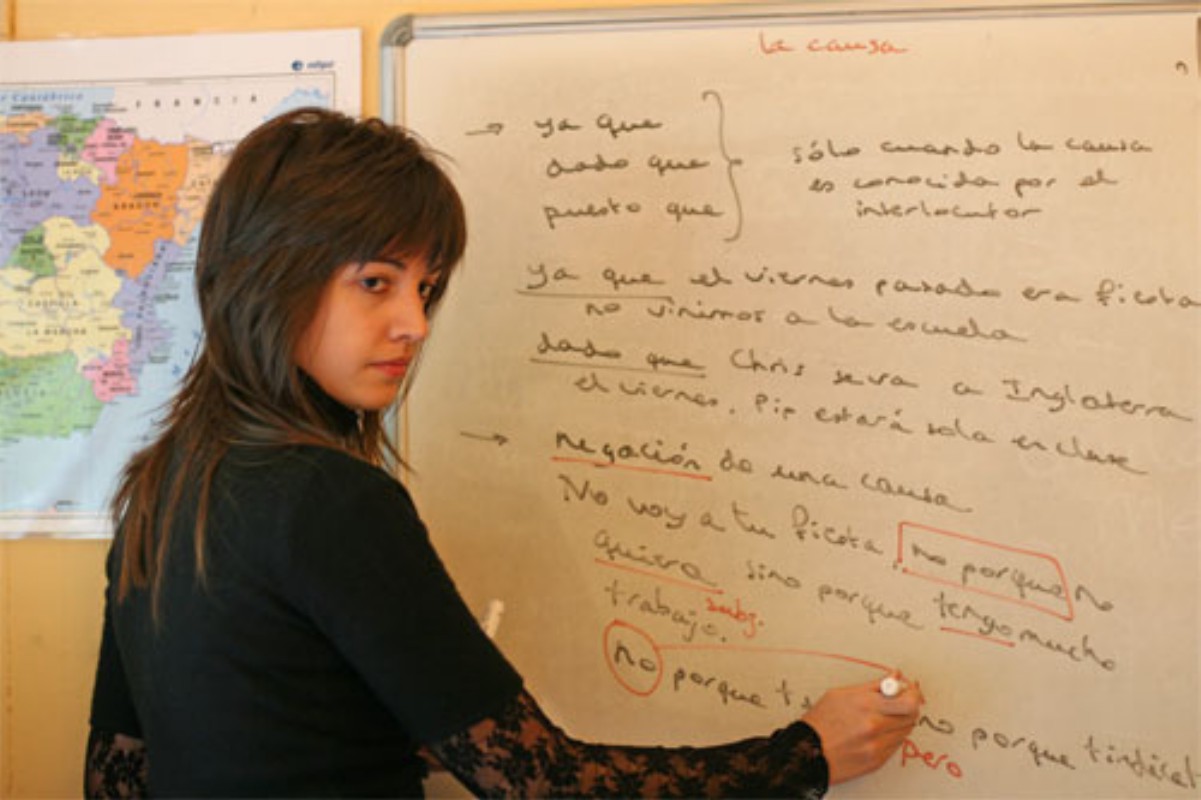
Curriculum and Teaching Staff
In my child’s school, for instance, there are about 4-5 Spanish lessons per week. The teachers are almost all native Spanish speakers with official qualifications for teaching Spanish as a foreign language. It’s important to note, however, that a teacher’s style and dedication can have a huge impact on a child. Some teachers are excellent at creating a lively atmosphere, allowing children to learn in a fun and relaxed environment. Others might lean towards more traditional teaching methods, which can be a bit dull for younger kids. When choosing a school, I’d recommend asking for feedback from current parents and, if possible, trying to have a brief chat with the language teachers during a school tour.
A common question many parents have is: In a purely international school environment, what level of Spanish can a child realistically achieve? From my observation, if a child relies solely on the school’s classes, their reading and writing skills will often lag behind their listening and speaking abilities, and they’ll still be some way from fully integrating into local social circles. The challenge is even greater for older children who have just moved to Spain. Therefore, beyond the international school curricula, extracurricular effort is essential. We enrolled our child in an external weekly Spanish activity class, mainly to create more opportunities for practice and communication.
To help you, I’ve put together a simple comparison of Spanish language goals across different educational systems, which complements a guide on international school curricula. Keep in mind this is just a general framework; specifics will vary by school.
| System | Primary Language | Spanish Course Objective | Assessment Method |
|---|
| British System | English | Typically aims for IGCSE/A-Level Spanish | IGCSE, A-Level exams |
| American System | English | Aims for AP Spanish Language and Culture | AP exams |
| International Baccalaureate (IB) | English/Multilingual | Offers different levels of Spanish B or Spanish A | IB global exams |
| Local Private/Concertado | Spanish | Taught as a first language, aligned with public school standards | ESO, Bachillerato |
Choosing an international school doesn’t mean you can relax your expectations for your child’s Spanish learning. On the contrary, we need to be more proactive in creating a language-rich environment for them, encouraging them to make local friends and participate in community activities. Ultimately, language is a tool for communication—the more it’s used, the faster it’s learned. Here’s hoping all our kids become fluent bilinguals!
