Hey everyone, especially my fellow students grinding it out in Spain! I just arrived not too long ago and I’ve noticed a classic question popping up on the forums: Is a B2 level in Spanish really enough to get straight into a Spanish university? As someone who’s been through it, I want to share my own experiences and observations on this topic.
Officially, the answer is ‘yes.’ The vast majority of public universities in Spain state that the minimum language requirement for both undergraduate and master’s applications is a DELE B2 certificate or an equivalent SIELE score. So, having that B2 certificate gets your foot in the door. But whether the path is smooth once you’re inside is a completely different story. Don’t think you’re all set just yet.
I have a few friends who came here having just scraped by with a B2. One of them, an undergraduate student, felt like he was listening to a foreign language during his first few classes—especially in humanities subjects like history or art history. The professors spoke incredibly fast, used various regional accents and slang, and the student discussions were so intense he couldn’t get a word in. While formulas in STEM fields are universal, the sheer volume of technical vocabulary is another huge hurdle. In short, a B2 level allows you to ‘survive,’ but you’re still a long way from studying and living ‘comfortably.’
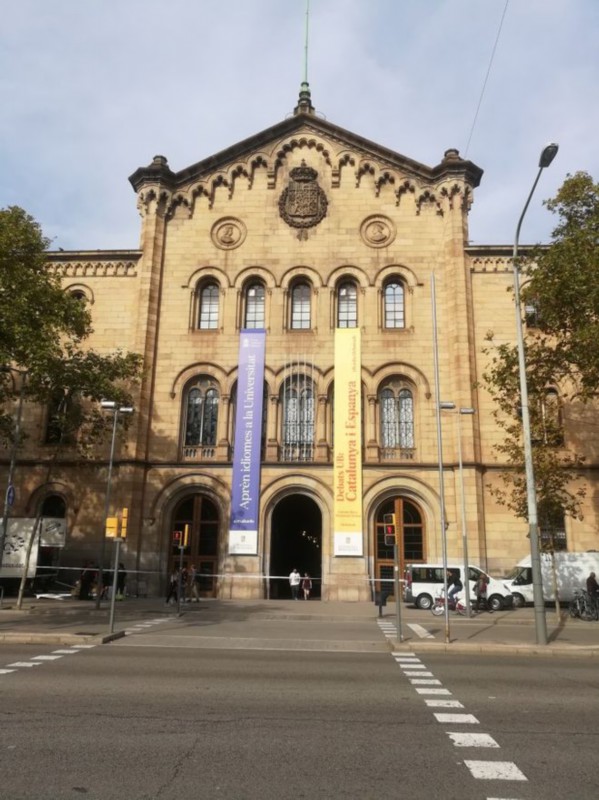
Differences and Advice for Undergraduate and Master’s Programs
In reality, the practical language demands for undergraduate and master’s degrees are quite different, so we can’t generalize. Based on my observations, here’s a simple summary:
| Study Level | Key Language Skills | Recommended Level |
|---|
| Undergraduate | Listening, speaking, fast note-taking | A solid B2, preferably with C1 listening skills |
| Master’s | Academic reading, professional writing | C1 level is highly recommended before starting |
To put it simply, undergraduate studies are like a constant round-table debate, while master’s programs are more like independent academic work requiring extensive reading reports and research. Many wonder if a B2 is enough for this, as seen in this post from a Zhejiang University student with Spanish B2. If you’re content with just understanding the gist and relying on classmates’ notes and Google Translate, your academic journey will be incredibly difficult and could even affect your final grades and graduation.
My core message is this: Don’t see B2 as the finish line; see it as the starting point. Congratulations on getting your B2 certificate—you’ve earned your ticket to study at a Spanish university. But to truly absorb knowledge, graduate successfully, and enjoy your time abroad, you must continuously hone and improve your language skills through real-world practice. Building a stronger foundation back home or taking advantage of a C1 course at a language school after you arrive is an investment that will definitely pay off.
So, what’s your situation like? I’d love to hear from other senior students already studying here about their own experiences, especially regarding things like the Spanish university’s own B2 certificate. Please share your thoughts!
