What’s King Juan Carlos University Really Like?
Hey everyone, I’ve noticed many newcomers on the forum asking about choosing a university in Madrid, and King Juan Carlos University comes up a lot. This university is quite well-known, but online opinions about it seem to be polarized. As a seasoned expat who’s been in Spain for a while, I’d like to offer an objective take on what this “King’s University” is really like.
URJC is a very young public university, founded in 1996, so its campus and facilities are very modern. It’s one of the largest public universities in Madrid in terms of student population. When it comes to rankings, don’t set your expectations too high; it’s not a traditional powerhouse like Complutense or UAM that consistently ranks in Spain’s top five. In global rankings like the QS, it’s typically found beyond the 800 mark. However, this doesn’t mean it’s without merit. Its main strengths lie in its practical, career-oriented approach, with many highly practical course offerings.
Top Programs and Campus Distribution
If you’re interested in fields like Journalism, Media, Audiovisual Communication, Tourism, Advertising, or Public Relations, URJC is undoubtedly one of the top choices in Spain. Its Faculty of Communication Sciences is very famous. Additionally, its business-related programs like Economics, Management, and Marketing are also quite strong. However, for purely theoretical research in subjects like Physics, Mathematics, or History, a more traditional university might be a better fit. I’ve prepared a simple table for your reference, and you can find more details on language level requirements for Spanish university applications:
| Main Campus | Strengths / Fields of Study |
|---|
| Vicálvaro | Social and Legal Sciences |
| Fuenlabrada | Communication Sciences, Telecommunication Engineering |
| Móstoles | Experimental Sciences and Technology, Computer Engineering, Environmental Sciences |
| Alcorcón | Health Sciences |
URJC’s campuses are spread across different cities in the Community of Madrid. Commuting by Cercanías (commuter train) or metro is quite convenient. With a large student body, campus life is very vibrant, with a constant stream of activities and student clubs. The campus environment is also great, especially the modern architecture of the Móstoles campus, which is quite motivating.
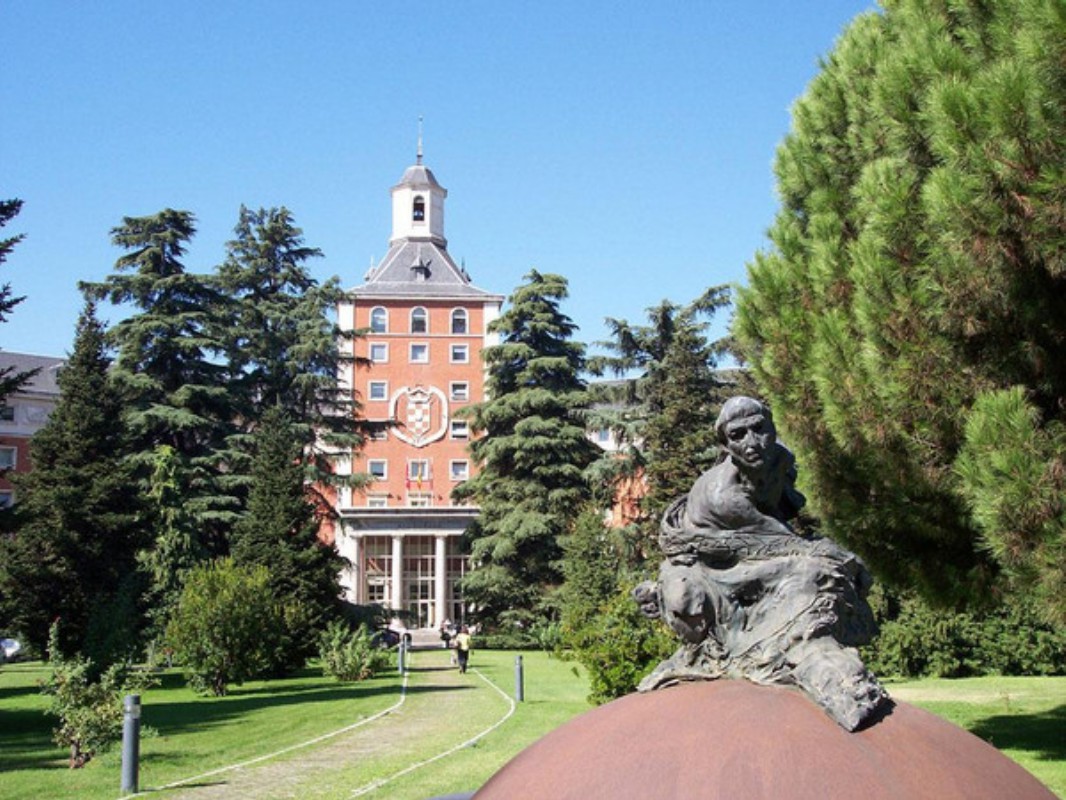
URJC is a university with very clear strengths and weaknesses. If you’re looking for practical skills, a modern learning environment, and strong job prospects after graduation, it’s an excellent choice. However, if you’re a high-achiever aiming for a top-tier academic research career, you might want to reconsider. Regardless of your choice, be prepared for challenges like the university Spanish placement tests. Of course, the past master’s degree scandal did tarnish its reputation a bit, but the university has been working hard to restore its image in recent years. What do current students and alumni think? Feel free to join the discussion and add your thoughts!
