Scalpers Run Rampant: Free Public Services Turned into High-Priced Commodities
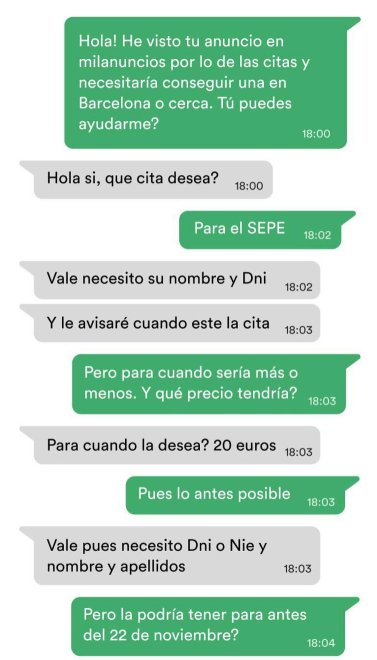
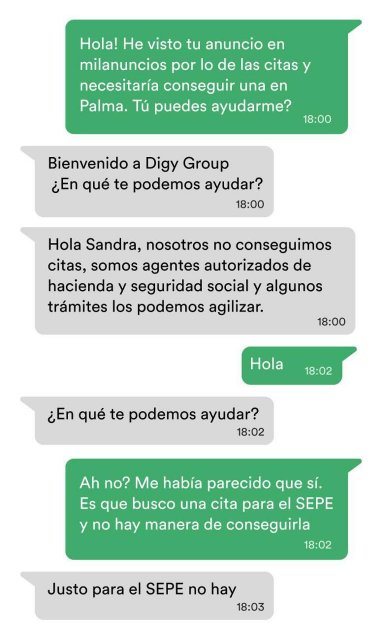
The difficulty of booking public service appointments in Spain continues to worsen. From the State Public Employment Service (SEPE) to immigration offices and even local citizen service centers, securing an appointment (Cita) has become a persistent struggle. This situation has fueled a rampant scalper market, where free appointment slots are openly sold on various online platforms for prices ranging from €30 to €99.
Take Sofia, who works in the province of Lleida, for example. After being laid off in November 2025, she urgently needed to apply for unemployment benefits. However, after ten consecutive days of constantly refreshing the official website, she still couldn’t get an appointment. Ultimately, she was forced to pay €45 through an unofficial channel for a slot just two days later. “Some people were even asking for €99,” she said. “It’s complete extortion.”
The Technical Underbelly: Automated Bots Monopolize Appointment Resources
According to union sources, scalpers commonly use automated programs (bots) to monitor appointment systems 24/7. These bots can snatch and hoard a large number of appointment slots at speeds far exceeding human capability. It is understood that some agencies, using this technology, can accumulate 40 to 60 appointment slots within a single day. Once a buyer makes a payment, the scalpers cancel a reserved appointment and use the bot to instantly rebook it for the client, making the process seamless. Ordinary citizens stand no chance of competing.
Official Intervention and The Root Problem
In response to this chaos, Spain’s Ministry of Labour recently filed a formal complaint with the Catalan headquarters of the National Police. This is not the first time such action has been taken; the Ministry had previously reported the issue to prosecutors in 2020, but the case was dismissed due to “insufficient evidence.” Filing the report again shows the government’s determination to tackle the problem. Meanwhile, the government has implemented technical countermeasures, such as limiting the number of appointments a single ID can hold and randomly releasing canceled appointments back into the system to disrupt the bots’ operating model.
However, industry insiders and unions widely believe that the root of the problem lies in the chronic understaffing of public departments. Unions point out that SEPE is severely short-staffed due to a wave of retirements and budget cuts, with a nationwide shortfall of nearly 5,000 employees (a demand for about 12,000 staff, with only around 7,300 currently employed). It is this severe supply-demand imbalance that provides fertile ground for the scalping industry to thrive.
Public Helplessness and Outcry
The long-term inability to book appointments places immense financial and mental stress on the public, especially vulnerable groups like immigrants who urgently need to process paperwork and often become the primary targets of scalpers. “We have to pay scalpers for a service that is supposed to be free,” one unemployed individual stated helplessly. Although SEPE offers an “online pre-application form” to safeguard the start date of citizens’ rights, many people still desperately need face-to-face interaction with staff to resolve complex issues—a door that is now being ruthlessly blocked by scalpers.
