The V16 Warning Light: A New Chapter in Spanish Road Safety
Spain’s Directorate-General for Traffic (DGT) has confirmed that from January 1, 2026, the connected V16 emergency light will become mandatory safety equipment for all vehicles traveling within Spain. The implementation of this regulation marks the official phase-out of the long-used warning triangles, aiming to fundamentally improve the visibility and safety of vehicles involved in an accident or breakdown.
Why Is It Mandatory? Ending the Risk of Exiting Your Vehicle on the Highway
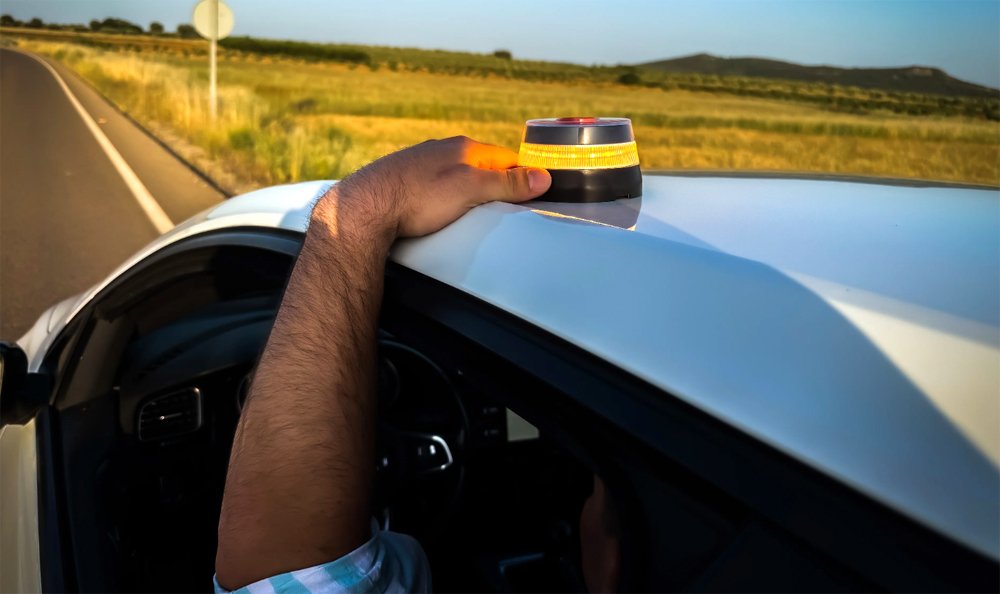
The core motivation behind the V16 light is to reduce injuries and fatalities caused by drivers getting out of their vehicles to place traditional warning triangles on the road. The V16 device attaches magnetically to the vehicle’s roof, allowing drivers to activate it without leaving the driver’s seat. This significantly lowers the risk of exposure in dangerous environments like highways and is a crucial measure for protecting lives.
Smart Connectivity: How the V16 Works
Certified V16 emergency lights are equipped with a built-in SIM card and GPS module. Once activated, the device automatically connects to the DGT 3.0 cloud platform. It then transmits the vehicle’s precise geolocation data in real-time. The system forwards this information to variable-message signs on the road, other connected vehicles, and emergency services, creating a rapid, automated alert network.
Is It Safe to Test at Home? The DGT Officially Answers Key Questions
Many vehicle owners are concerned about whether testing the V16 device at home will trigger a false alarm. In response, Spain’s Directorate-General for Traffic (DGT) has provided a clear answer: owners can safely perform a short test. The device is designed with a safety buffer mechanism. An emergency notification is only sent to the DGT system after the light has been activated and remains continuously on for more than 100 seconds. This 100-second window is sufficient for the device to establish a network connection and acquire a GPS signal, while also effectively filtering out false alarms caused by accidental activation or testing. Therefore, performing a brief functional check at home is completely safe.
