The Madrid City Council approved an amendment to the Sustainable Mobility Ordinance this Thursday, officially launching a systemic reform aimed at reshaping the city’s parking landscape. The core of the new regulation is to significantly expand the coverage of the Regulated Parking Service (SER) and introduce more flexible charging hours to address urban traffic congestion and environmental challenges.
Policy Core: A Two-Phase Major Expansion
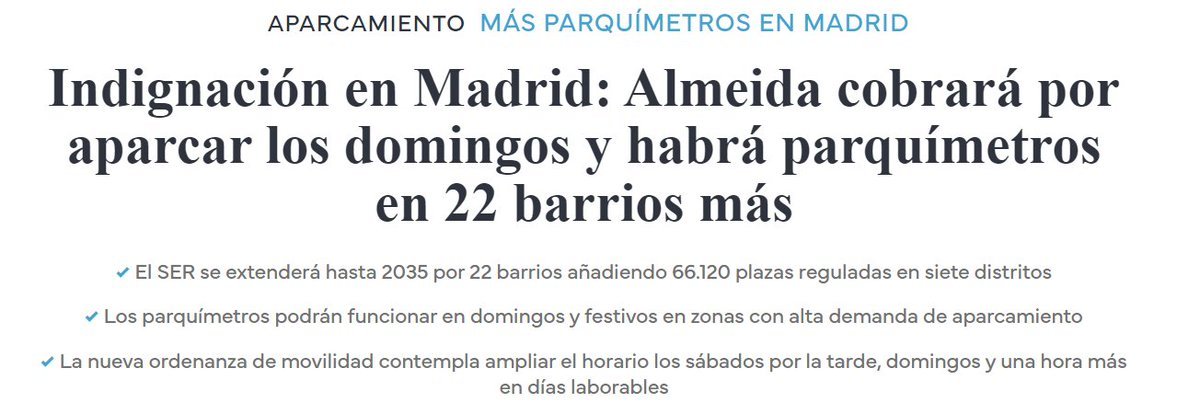
Under the approved plan, Madrid will extend its paid parking system to 22 new neighborhoods in two phases over the next decade, adding a total of 77,492 regulated parking spaces. This move will increase the city’s total number of regulated spots by 42.7% to nearly 260,000.
- Phase One (until December 31, 2029): An additional 11,372 paid parking spaces will be implemented in 5 neighborhoods, including Peñagrande in the Fuencarral-El Pardo district, Valdezarza in Moncloa-Aravaca, Opañel and San Isidro in Carabanchel, and Costillares in Ciudad Lineal.
- Phase Two (until December 31, 2035): The scope will expand further to the remaining 17 neighborhoods, adding 66,120 more spaces. Notably, the major districts of Moratalaz and Puente de Vallecas will be included in the paid system for the first time.
New Rules and Official Objectives
In addition to the geographical expansion, the new ordinance grants the city government greater administrative authority. Most notably, it authorizes for the first time the collection of parking fees on Sundays and public holidays in ‘high-demand zones’ with significant commercial activity or high tourist traffic. Furthermore, charging hours on weekdays can be extended beyond 9:00 PM based on actual conditions.
The delegate for Urban Planning, Environment, and Mobility, Borja Carabante, stated that the measure aims to “rationally organize public space,” guarantee parking priority for residents, and improve parking turnover in commercially and culturally active areas. The official statement emphasizes that the long-term goals of the policy are to protect public health, improve air quality, and promote the city’s sustainable environmental development.
Public Reaction and Implementation Outlook
While the policy has garnered support, it has also raised concerns among some citizens. Residents in areas soon to be included in the paid zones, such as those in the Vallecas district, worry about the additional fixed monthly expenses and point out that surrounding public transport infrastructure has not been adequately improved. Local neighborhood associations have already submitted petitions to the City Council, demanding better alternative transportation options before the new policy is implemented.
From a broader perspective, Madrid’s initiative is part of its response to the European Union’s emission reduction targets and its push for a transformation in transportation structure. In recent years, other major Spanish cities like Barcelona and Seville have also adopted similar measures to tighten private vehicle management. Before its full implementation, the new regulation must still receive final approval from the respective district councils and undergo consultation with residents. Its actual effectiveness and public acceptance remain to be seen over the long term.
