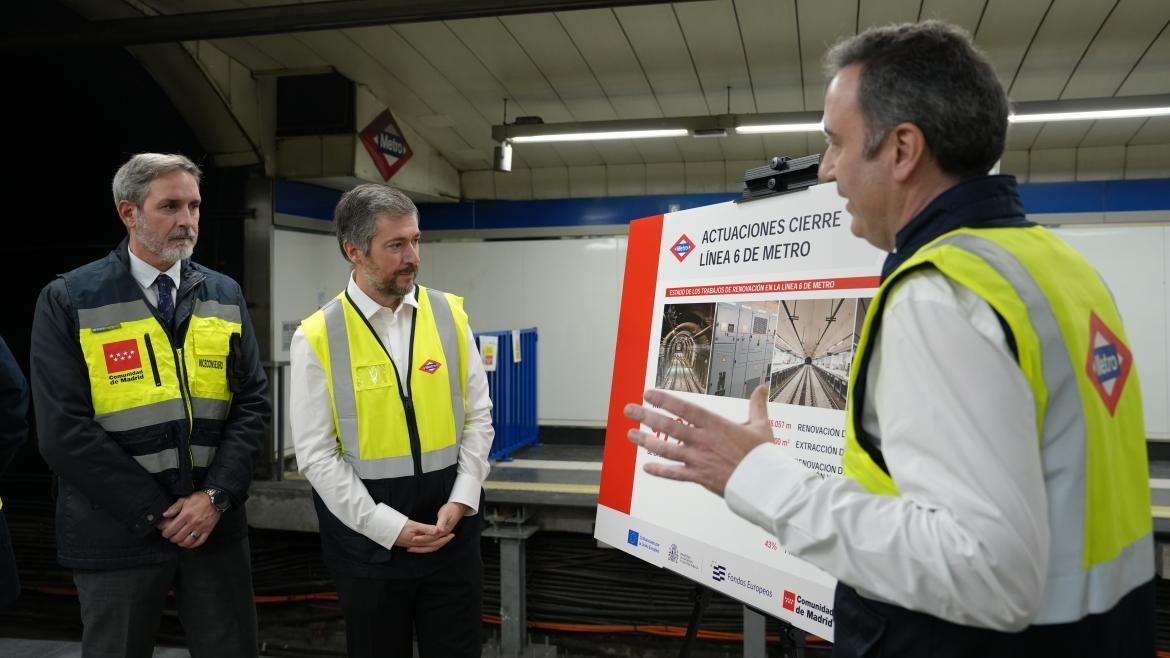
The Community of Madrid government announced this week that Metro Line 6 (the Circular line) will resume normal service between Lagazpí and Moncloa stations on December 20, fully reopening the line after completing the first phase of its modernization. The project, which began on September 6, was originally scheduled to last until the end of the year but has now been completed 11 days ahead of schedule.
Phase One Completed, Operational Efficiency Increased
This extensive upgrade involved 24-hour work shifts to replace 86,057 meters of steel rails and lay more stable concrete platforms. A key upgrade was increasing the line’s power supply voltage from 600 to 1,500 volts. According to estimates from Madrid’s transport authorities, these improvements will increase train speeds by 27% and reduce energy consumption by 30%, significantly boosting the line’s capacity and providing better service for the approximately 430,000 daily passengers.
Phase Two Begins: Installation of Platform Screen Doors
With the track work concluded, the line’s renovation will enter its second phase. Starting January 7 of next year, platform screen doors will be installed at the stations. Lagazpí station will be the first pilot station for this work, with installation at the remaining stations expected to begin in March. The new screen doors will be equipped with red and green light indicators and LED information screens, aiming to enhance passenger safety while waiting and improve the efficiency of information dissemination.
Night Service Adjustments and Connection Plan
To accommodate the nighttime construction of the second phase, metro operating hours will be temporarily adjusted. From Sunday to Thursday, the last train on Line 6 will run earlier, at 11:00 PM. Operating hours on Fridays and Saturdays will remain unchanged. During the nighttime closure (from 11:00 PM to 1:30 AM the next day), the Madrid Metro company will provide a free substitute bus service on the surface to ensure residents’ travel needs are met.
Long-Term Plan: Introduction of Driverless Trains in 2027
The final phase of the project is scheduled to begin in 2027, introducing 40 new driverless trains to Line 6. According to the plan, the new six-car trains will have a capacity for 1,385 passengers (including 165 seats) and will feature dynamic information screens above the doors. The first batch of trains is expected to arrive in Madrid for testing next summer. Miguel Ángel García, spokesperson for the Community of Madrid government, stated that the automation of Line 6 is a pilot project for the entire metro network upgrade. Its success will be extended to other lines, such as Line 8, to achieve a comprehensive improvement in the system-wide operational efficiency and capacity.
