Current Situation: Infection Rates Surge, Peak Arrives Early
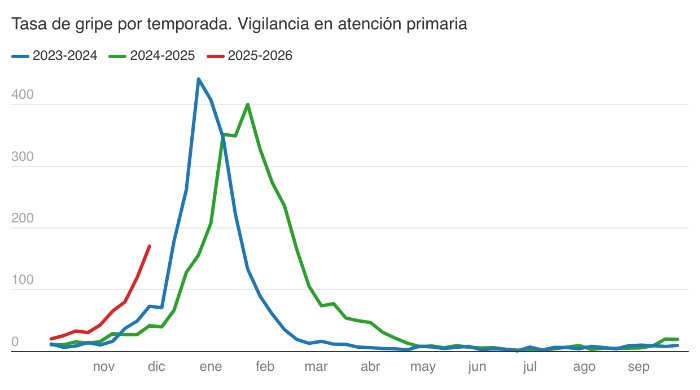
According to a report from the Carlos III Health Institute, the flu epidemic in Spain is rapidly intensifying. As of the first week of December 2025, the national incidence rate of influenza has soared from 78.3 to 164.6 cases per 100,000 inhabitants, reaching a “medium intensity” level of transmission. This level not only surpasses records from the last three flu seasons but also brings the annual peak, which last year did not occur until the end of January, a full seven weeks early. Health authorities predict that case numbers will continue to climb over the next two weeks, very likely reaching the highest point of this outbreak around Christmas.
Viral Context: Simultaneous Outbreaks Across Europe
The World Health Organization (WHO) has confirmed that this year’s flu season in Europe began approximately four weeks earlier than usual. The primary virus strain driving this outbreak has been identified as a K-subtype variant of Influenza A (H3N2). Besides Spain, several other European countries, including the United Kingdom, France, Portugal, and Italy, are experiencing similar early outbreaks. Health departments across these nations are widely urging the public to get vaccinated against the flu to build an effective immunity barrier.
Clinical Symptoms and Identification
Experts point out that the incubation period for the influenza virus is typically very short, with symptoms appearing suddenly within 1 to 2 days. Classic signs include a sore throat, dry cough, runny nose, high fever (above 38°C), chills, and general muscle aches. Most patients experience extreme fatigue and weakness, which significantly impacts daily activities.
Home Care and Prevention Advice
Medical institutions recommend symptomatic treatment for the flu. Patients should ensure they get plenty of rest and drink lots of water, broths, or oral rehydration solutions to prevent dehydration. If a fever or pain occurs, over-the-counter medications like paracetamol or ibuprofen can be used for relief. To prevent transmission, doctors strongly advise that patients should not return to work, school, or public places for at least 24 hours after their temperature has returned to normal. Typically, flu symptoms last for about a week, but respiratory discomfort such as a cough may persist for longer.
