Spain’s 2026 Real Estate Outlook: Opportunities and Challenges Coexist
According to forecasts from multiple leading institutions, Spain’s real estate market in 2026 will continue its current trajectory, presenting a complex scenario of rising prices, supply shortages, and decreasing loan costs. For potential buyers, while the financing environment may improve, the barrier to entry is likely to rise even higher.
Continued Rise in Housing Prices and Rents
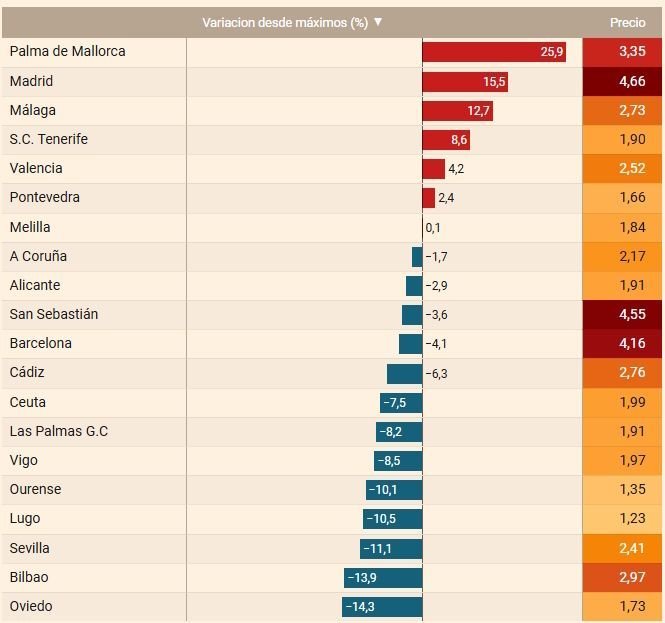
The housing shortage has become a central concern in Spanish society. Looking ahead to 2026, this structural imbalance will continue to drive prices upward. According to Singular Bank, price increases could reach as high as 9%, while the real estate portal Pisos.com offers a more conservative forecast of 7.8%. Experts point out that demand is particularly strong in economic hubs and coastal cities, acting as the main driver of price appreciation.
Simultaneously, the rental market is facing immense pressure. As high property prices force a large number of households into the rental market, a “domino effect” is created. Pisos.com predicts that average rents in Spain will increase by 6.8% in 2026.
Mortgage Costs Likely to Decline
Against the backdrop of soaring house prices, a positive signal is emerging from the credit market. The Spanish Savings Banks Foundation (Funcas) forecasts that the Euríbor, a key benchmark for mortgage interest rates, will remain low over the next two years, potentially dropping to 1.85% by the end of 2026. This means that for households applying for new mortgages or reviewing existing ones, monthly payment pressures are expected to ease, making housing costs more affordable.
New Market Trends: Asset Conversion and Specialized Construction
To address the challenge of scarce new housing supply, the market is fostering new solutions. Converting vacant offices, commercial properties, and other assets into residential use has become a significant investment strategy. According to data from CBRE Spain, over 137,000 square meters of such asset conversion projects were initiated in Spain in the first quarter of 2025 alone, with 60% intended for residential conversion.
Furthermore, the demand for specialized and sustainable housing is also growing significantly. As competition for traditional housing intensifies, developers and investors are turning their attention to niche markets like co-living spaces and green, eco-friendly buildings to meet new demands for flexibility and sustainability.
Overall Analysis: Supply-Demand Imbalance is the Core Issue
Felipe Reuse, General Manager of the real estate agency Property Partners, believes that limited housing supply, sustained price increases, and a foreseeable decline in mortgage costs will be the dominant factors in the future market. Overall, although mortgage conditions may become more favorable in 2026, the primary challenge for buyers has shifted from “interest rate levels” to “property availability” and “price affordability.” Intense market competition and high barriers to entry will make the path to homeownership even more difficult.
