Official Justification vs. The Real Dilemma
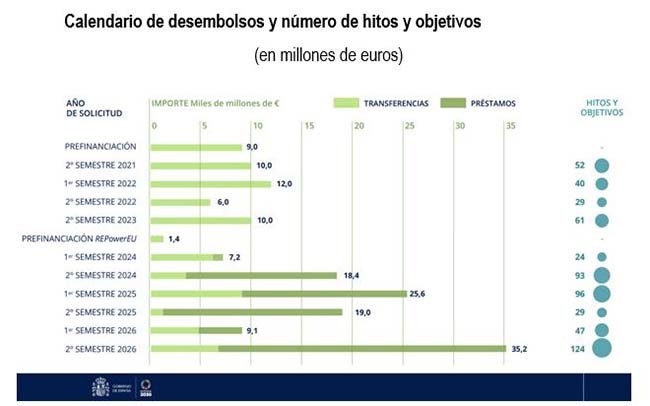
The Spanish government recently officially announced its decision not to utilize the €60.4 billion in loans offered under the EU’s Recovery, Transformation and Resilience Plan (Plan de Recuperación, Transformación y Resiliencia). The official explanation is that Spain can currently obtain financing on the financial markets at more favorable interest rates, thus negating the need for this loan. However, this decision starkly contrasts with the government’s previous narrative, which heavily promoted the plan as a ‘historic’ source of financial support for the country, sparking widespread skepticism from the public and analysts.
“Administrative Gridlock” as the Bottleneck for Fund Disbursement
Multiple analyses point to a fundamental reason for forgoing the massive loan: the severe inefficiency of Spain’s administrative system, a phenomenon known as ‘administrative gridlock’. According to internal warnings from the Senior Corps of State Civil Administrators (Cuerpo Superior de Administradores Civiles del Estado), many civil servants are adopting a passive and risk-averse attitude towards signing off on and managing the approval processes for these EU funds. This is due to concerns about potential legal liabilities and facing complex political pressures. This pervasive ‘inaction’ has caused the application and disbursement processes for aid funds to stagnate, with large amounts of money piling up within the system, unable to flow in a timely and direct manner to those who need it most—particularly small and medium-sized enterprises (SMEs) and the self-employed.
Obstructed Fund Flow and Diminished Aid Impact
With direct channels for loan disbursement to businesses blocked, funds are forced to be rerouted through multiple layers of local government, such as public companies, city councils (Ayuntamientos), and provincial councils (Diputaciones). This indirect route not only increases administrative costs but also slows down the delivery of funds. In this context, the limited aid that does reach businesses primarily comes in the form of the ‘Digital Kit’ subsidy (kit digital), which is tied to numerous restrictive conditions. Even so, its application process is widely reported as being procedurally complex and fraught with obstacles, running counter to the recovery plan’s original goal of rapidly boosting the economy.
Surging Calls for Reform
This decision to forgo the loan is seen as a clear signal that Spain’s administrative system is in urgent need of deep reform. There are widespread calls from all sectors of society for the government to confront the long-standing problem of administrative inefficiency. This includes thoroughly optimizing approval mechanisms, simplifying procedures, clarifying responsibilities, and ensuring that future public funds and aid can benefit businesses and citizens efficiently and transparently. Otherwise, whether it’s aid from the EU or domestic fiscal support, it may all just remain on paper in policy documents, failing to transform into the real momentum needed to drive the economy’s ‘recovery, transformation, and resilience’.
