The annual social dialogue in Spain regarding the national minimum wage (Salario Mínimo Interprofesional, SMI) for 2026 has begun, with negotiations entering a tense phase due to the vast differences between labor and business. An expert committee advising the government has now submitted a report, setting a reference framework for the upcoming tripartite negotiations.
The Expert Committee’s ‘Middle Ground’ Proposal
The advisory committee has presented two increase scenarios to the Ministry of Labour, with the key difference being whether the minimum wage will remain exempt from personal income tax (IRPF).
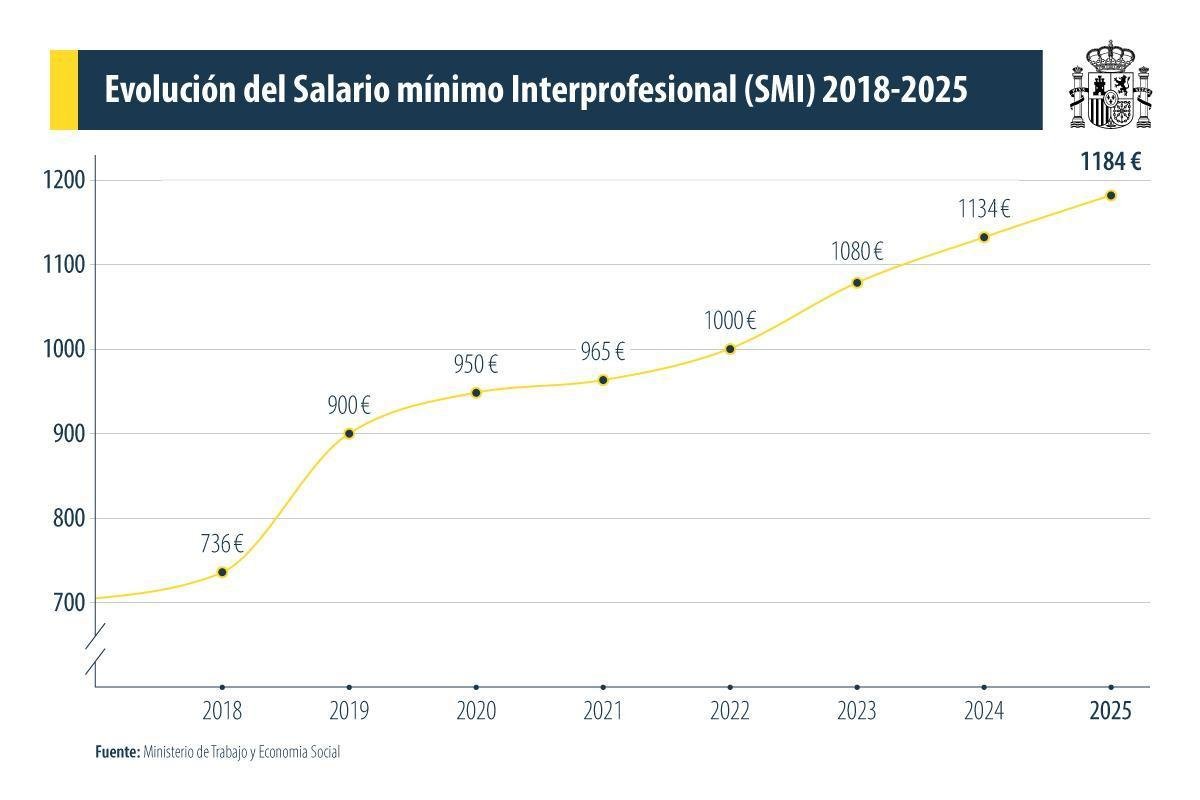
- If the tax exemption is maintained: A 3.1% increase is recommended, raising the monthly SMI from the current €1,184 to €1,221 (paid in 14 installments), for a total annual salary of €17,094.
- If the tax exemption is removed: To offset the loss from taxation, a 4.7% increase to €1,240 per month is proposed, resulting in an annual salary of €17,360.
The final increase in workers’ disposable income will depend on the Ministry of Finance’s ultimate decision on the tax exemption policy.
Deep Divide Between Labor and Business
The experts’ recommendations attempt to find a balance between the extreme positions of labor and business, but the divide remains stark. On one hand, the Spanish Confederation of Employers’ Organizations (CEOE) and the Spanish Confederation of Small and Medium-sized Enterprises (Cepyme) have proposed a token 1.5% increase, which they consider a ‘reasonable level’ that ensures the SMI remains at least 60% of the national average wage. However, the Ministry of Labour has dismissed this proposal as ‘lacking rigor’.
On the other hand, Spain’s main trade unions are demanding a substantial 7.5% raise, aiming to lift the minimum monthly salary to €1,273. Furthermore, the unions are strongly calling for legislation to prevent companies from ‘absorbing’ or offsetting the mandatory SMI increase by cutting existing allowances or bonuses.
Cost Considerations and Negotiation Outlook
Employers’ organizations have expressed concern about the cost pressure from the wage hike. According to their estimates, every 1% rise in the SMI increases overall labor costs for businesses by approximately €575 million. If the unions’ demand for a 7.5% increase is met, the total cost would surge by over €4.3 billion.
Next, the Ministry of Labour will lead a new round of social dialogue, negotiating with union and employer representatives to reach a final agreement. Notably, even the lower end of the experts’ proposal, a 3.1% increase, is already above the 2.7% inflation forecast for next year. This means the purchasing power of minimum wage earners is still likely to be protected. Last year, following negotiations, the minimum wage was ultimately raised by 4.4%.
