Madrid Adjusts Sustainable Mobility Ordinance: Circulation for Older Cars Extended to Late 2026
Madrid’s City Council recently announced the new draft of the Sustainable Mobility Ordinance (OMS), introducing several significant adjustments to the capital’s traffic policies. The new regulation not only extends the grace period for older vehicles without an environmental label but also aims to strengthen the legal stability of the Low Emission Zone (ZBE) and optimize urban parking and bike-sharing services.
Grace Period for Vehicles Without Environmental Labels Extended
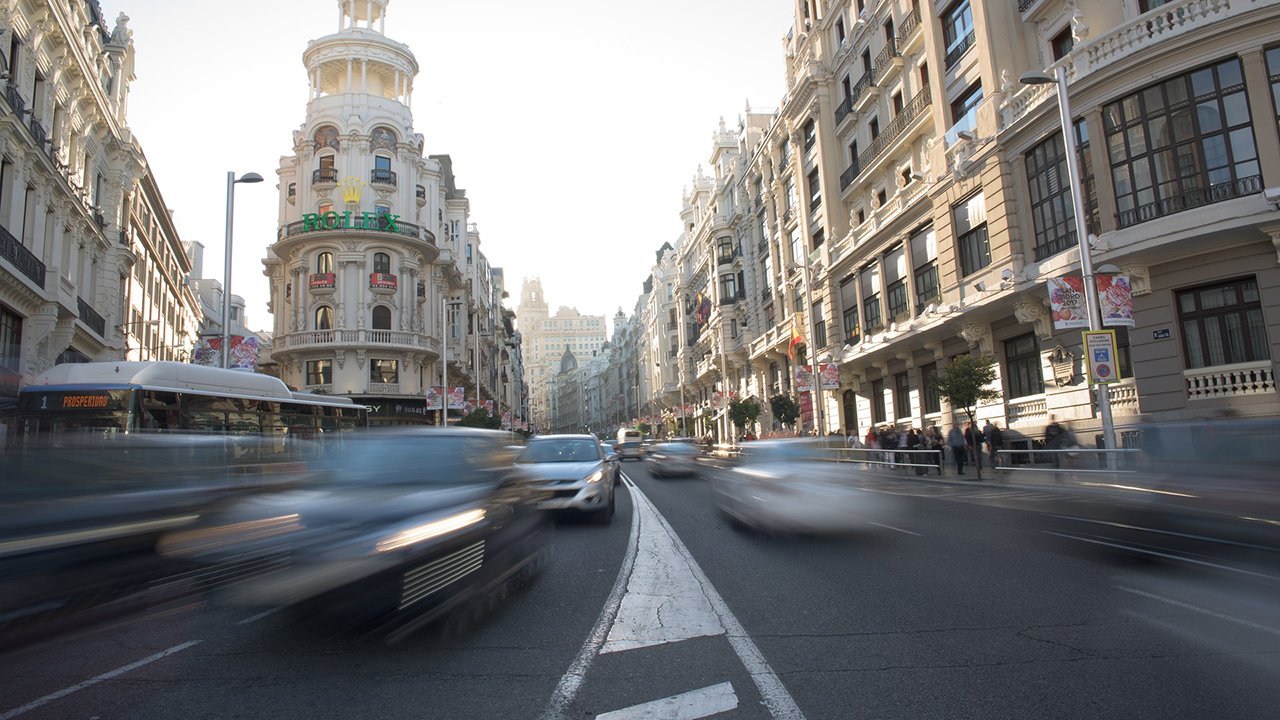
According to the new ordinance, older cars without an environmental label that are registered and pay the Vehicle Tax (IVTM) in Madrid will have their circulation period in the capital extended by two years, until December 31, 2026. Previously, these vehicles were scheduled to be banned from circulation starting January 1, 2025.
The Delegate for Urban Planning, Environment, and Mobility, Borja Carabante, explained that this decision is based on an assessment that these vehicles are limited in number and have a relatively low impact on the overall environment. Despite this, he still advised car owners to gradually phase out these older vehicles for safety reasons and confirmed that the government will continue to offer subsidy programs for new car purchases and vehicle scrapping in 2026.
Legal Framework for Low Emission Zone (ZBE) Strengthened
To ensure the legal security of the Low Emission Zone policy, the new draft ordinance specifically reinforces its legal foundation. Previously, the High Court of Justice of Madrid had ordered the suspension of the ZBE in 2024 because the City Council failed to provide a sufficient economic impact report. To avoid repeating this issue, the City Council has commissioned the state-owned engineering and consulting firm Ineco to produce a new, detailed economic impact analysis report.
The draft ordinance has already undergone a public consultation phase before its official announcement and is expected to be submitted to the Plenary of the City Council for final approval in March 2025. This aims to provide a solid legal guarantee for the long-term stable operation of the Low Emission Zone.
Regulated Parking Service (SER) Scope and Hours Adjusted
The new ordinance also adjusts Madrid’s Regulated Parking Service (SER) system. The proposal suggests that 22 new neighborhoods will be able to decide via a resident vote whether to introduce resident-only parking spaces (green zones). Additionally, in some areas where SER is already implemented, its paid operating hours may be extended into the night and on weekends to more effectively manage parking demand.
The City Council projects that through these adjustments, the number of SER parking spaces in the city will increase by approximately 77,492 by 2035, aiming to alleviate traffic congestion and parking difficulties.
Bicimad Bike-Sharing Service Expands Across Municipalities
In terms of green mobility, the new regulation removes the geographical restrictions on the Bicimad public bike-sharing service. This means that the Bicimad station network can now legally extend to neighboring municipalities outside the city of Madrid, such as the previously mentioned Pozuelo de Alarcón. The City Council has stated it will actively negotiate with interested municipalities to ensure the legality and safety of the service extension, providing citizens with broader green mobility options.
