1. An Unusually Early Flu Season and the K Variant
According to the latest report from Spanish public health authorities, the country has officially entered its flu season. Unlike previous years, a “K variant” of the Influenza A(H3N2) virus is spreading at an unusually rapid pace, advancing the entire epidemic process by three to four weeks compared to a typical season. Health authorities predict that this wave, led by the K variant, will form a significant peak just before the Christmas holidays, drawing widespread public attention.
2. Variant Characteristics: Highly Transmissible but Not More Virulent
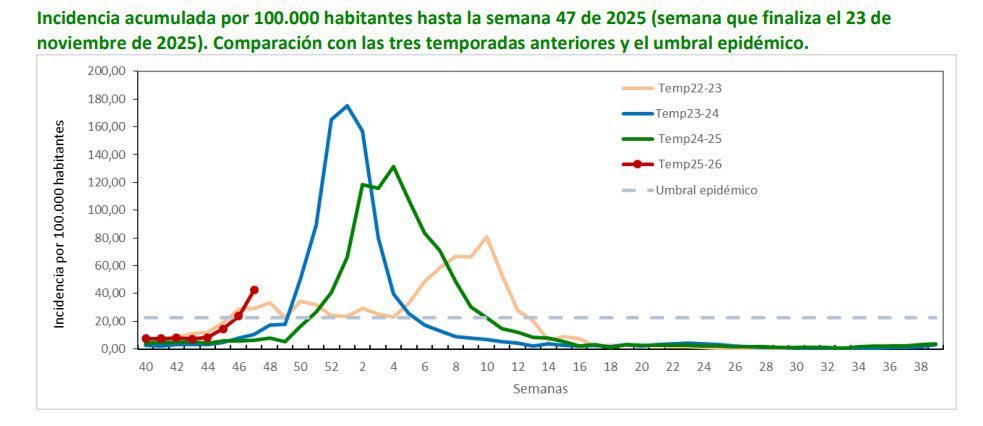
Epidemiologists have pointed out that while the K variant has enhanced transmissibility, its virulence is similar to that of common seasonal flu viruses and it has not shown greater aggressiveness. Its high transmissibility is mainly due to key mutations on the virus’s hemagglutinin protein. Epidemiologist Joan Carles March noted that this variant carries about seven such mutations, allowing it to more effectively evade the immune barrier formed by previous infections or vaccination.
Health agencies have published a list of typical symptoms, which include:
- Sudden high fever
- Severe headache and body aches
- Profound fatigue
- Dry cough and sore throat
Notably, infected children may also exhibit specific symptoms such as earaches or a significant decrease in activity levels.
3. Strain on the Healthcare System and Official Response
The rapid expansion of the infection base is placing immense pressure on Spain’s healthcare system. Primary care centers and hospital emergency services nationwide have reported a substantial increase in patient volume. To cope with a potential peak in hospitalizations, some autonomous communities have been forced to activate contingency plans and increase bed availability.
In response, the Spanish Ministry of Health has activated an “Enhanced Surveillance” mechanism and issued a series of prevention and control recommendations to the public. Core measures include: reinforcing hand hygiene, maintaining good indoor ventilation, and voluntarily wearing masks when experiencing respiratory symptoms. Officials are also urging the public to speed up the flu vaccination process.
4. Experts’ Appeal: Vaccination Remains a Key Defense
Although the protective efficacy of current vaccines against the K variant may be somewhat reduced due to viral mutations, experts unanimously agree that vaccination remains the most crucial defensive measure at present. Joan Carles March emphasized that the vaccine is “the best tool for preventing severe complications,” significantly lowering the risk of infection progressing to severe illness or requiring hospitalization. Authorities are particularly calling on people over 65, vulnerable individuals with underlying health conditions, healthcare personnel, and essential workers to prioritize and complete their vaccination as soon as possible.
Experts predict that in the coming weeks, Spain may experience several small-scale outbreaks caused by the K variant. Authorities are urging the public to remain calm and not panic, but to strengthen personal protection responsibilities and work together to alleviate the saturation and pressure on the healthcare system.
