Youth Cohabitation Rates Hit a New Low in the EU
According to the latest ‘Focus on Spanish Society’ report by the Spanish Savings Banks Foundation (Funcas), the country’s young people face severe challenges in living independently and forming families. Data shows that among Spaniards aged 25 to 29, a staggering 73% do not live with a partner, a figure significantly higher than the European average of approximately 42%. In the 30-35 age group, the cohabitation rate in Spain is only 42% (meaning 58% do not cohabit), far below the EU average of 64%. María Miyar, Director of Social Studies at Funcas, analyzes that the uncertainty of the labor market, the prolonged transition to adulthood, and intensified housing pressures collectively make it difficult for young people to establish stable intimate relationships.
Housing Costs: The “Number One Obstacle” to Having Children
Exorbitant housing prices are clearly identified as a key factor influencing decisions about having children. Data from the 2024 European Social Survey (ESS) shows that among respondents under 45 who admitted to having fewer children than they had hoped for, 47% attributed the reason to excessive housing costs. This correlation was further confirmed in a mid-2025 study by Funcas: at that time, 85% to 90% of Spaniards expressed high concern about housing prices. Among childless individuals under 45, 69% considered high housing prices the core reason for their choice not to have children.
International Studies Confirm the “Housing-Fertility” Link
Spain’s predicament is not an isolated case; numerous international studies have also revealed a strong correlation between housing costs and fertility rates. In a paper published in 2025, University of Toronto economist Benjamin K. Couillard estimated that if US housing prices had remained at 1990 levels, the country would have seen approximately 13 million more births, an increase of 11%. Similarly, George Mason University economist Bryan Caplan observed that fertility rates in rural areas of the US with lower housing prices are much higher than in metropolitan areas. He pointed out that delaying homeownership to save for a down payment could cause many families to miss their optimal childbearing window.
Demographic Alarm Bells and Policy Challenges
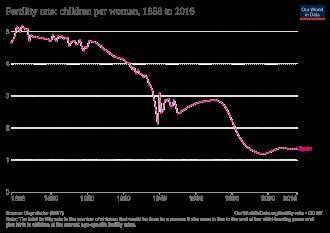
Experts warn that Spain is slipping into a vicious cycle of ‘low cohabitation rates, low fertility rates, and accelerated aging.’ Currently, the country’s total fertility rate has dropped to 1.19, far below the replacement level needed to maintain a stable population. If the housing problem is not addressed systematically, the future will bring labor shortages and a crisis of social sustainability. Although the Spanish government has introduced measures such as social housing plans and childbirth subsidies, the fundamental conflict between market supply shortages and continuously rising prices remains unresolved. How to effectively increase the supply of affordable housing has become a core strategic challenge for the future of Spain.
