The Spanish government recently made a significant adjustment to its Personal Income Tax (IRPF) filing policy, clarifying that some recipients of unemployment benefits will no longer have a mandatory filing obligation. This new regulation aims to reduce the administrative burden on economically vulnerable groups and corrects a previous policy.
Policy Change: Removal of Mandatory Filing Obligation
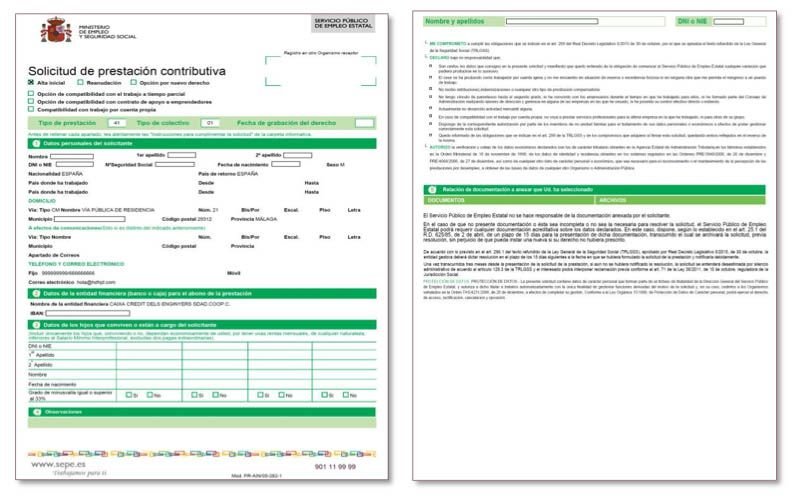
On December 23, 2025, the Spanish government officially passed Royal Decree-Law 16/2025, which repeals the mandatory IRPF filing requirement previously imposed on recipients of unemployment benefits. This decision amends a provision in Royal Decree-Law 2/2024, which had required all individuals receiving unemployment benefits to file an annual tax return, potentially affecting their benefit eligibility. The government acknowledged that the old provision “went beyond the original intent of the law,” and the new adjustment aims to rectify this, making the policy more reasonable.
Beneficiaries and Scope of Impact
This policy change is expected to benefit approximately 2.5 million taxpayers who receive unemployment benefits from the State Public Employment Service (SEPE). Official statistics show that among these beneficiaries, about 75% receive a total annual benefit of less than €5,400. The implementation of the new rule will directly relieve this large and economically vulnerable group from the complex tax filing process, reducing unnecessary administrative pressure.
Key Dates for the 2025 Tax Return
Although some groups are now exempt, the filing period for the 2025 tax year is still scheduled to proceed in 2026. All taxpayers who are required to file should note the following key dates:
- April 8, 2026: Online filing channels officially open.
- May 6, 2026: Telephone filing services begin.
- June 2026: In-person appointments at tax agency offices become available for on-site assistance.
- June 30, 2026: The final deadline for all filing methods.
Exceptions to the Filing Exemption
It is important to emphasize that the exemption from the filing obligation does not apply to all recipients of unemployment benefits. In the following situations, taxpayers will still need to file their 2025 IRPF return in 2026:
- Having Other Sources of Income: If, in addition to unemployment benefits, a taxpayer has other income (such as rent, freelance work, etc.) and the total income from all sources exceeds the legal filing threshold.
- Claiming Tax Deductions: To benefit from specific tax advantages or deductions (for investments, donations, mortgage relief, etc.), a tax return must be submitted.
- Recipients of Specific Benefits: The law stipulates that recipients of certain specific subsidies, such as the subsidy for individuals over 52 (subsidio para mayores de 52 años), are still required to file.
Therefore, affected individuals are advised to carefully review their financial situation to determine whether they need to fulfill the tax filing obligation.
