Effective Date and Core Requirements
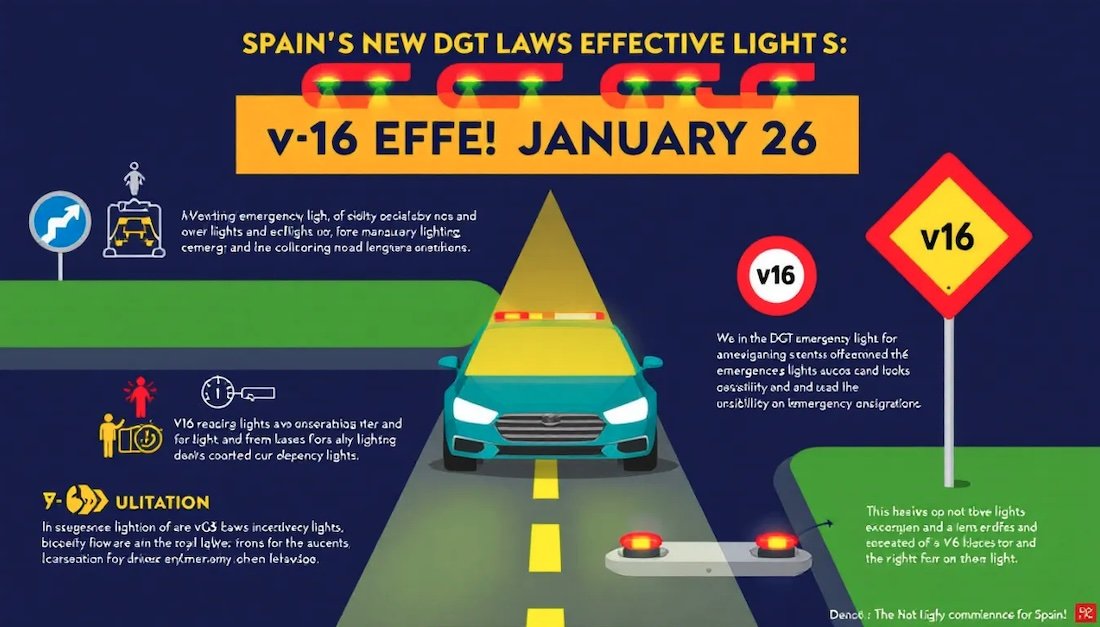
After a period of preparation and public information campaigns, the Spanish regulation for connected V16 warning lights will officially come into full effect on January 1, 2026. According to guidelines from the Directorate-General for Traffic (DGT), drivers must ensure their vehicle is equipped with an officially certified V16 warning light. Compliant devices must be approved by designated laboratories like IDIADA or LCOE to differentiate them from non-compliant or uncertified products. The goal is to enhance the visibility of stopped vehicles after an accident or breakdown, reducing the danger drivers face when exiting their vehicle to place traditional warning triangles.
Applicable and Exempt Vehicles
The regulation doesn’t apply to every vehicle on the road but covers most of them. The mandate to carry a V16 warning light applies to passenger cars, buses, adaptable mixed-use vehicles, and various types of goods transport vehicles, impacting an estimated 30 million vehicles across Spain. However, certain vehicles are exempt; motorcycles, light quadricycles, and bicycles are not required to have this device. Furthermore, vehicles with foreign license plates driving in Spain can continue to use their home country’s pre-signaling systems or traditional warning triangles.
How Does the V16 Light’s Connectivity Work?
Many drivers are concerned about the privacy aspects of the V16 warning light. The DGT has specified that the integrated Internet of Things (IoT) module and SIM card will not continuously send the vehicle’s location to the DGT 3.0 platform. The feature is activated only in an emergency. When the driver activates the light, the device first spends up to 100 seconds establishing a satellite connection to get a precise location. It then sends an anonymous signal with this location to the manufacturer’s cloud, which relays it to the traffic authorities. This process is designed to be almost instantaneous, intended to rapidly warn other vehicles and traffic management systems without infringing on the driver’s everyday privacy.
Fines and the Future of Warning Triangles
After the new regulation is implemented, the penalty for failing to carry a V16 warning light will be €80, consistent with the previous fine for not having warning triangles. While the DGT’s deputy director, Ana Blanco, has indicated that there won’t be major, dedicated enforcement campaigns at the outset, traffic police are legally empowered to fine non-compliant vehicles during patrols. Therefore, drivers are advised not to risk it. Regarding the traditional emergency warning triangles, DGT Director Pere Navarro has confirmed they will not be outlawed and will remain legal for use after the new rule’s effective date. This means drivers may still use triangles as a secondary warning device, but the V16 light becomes the primary, mandatory piece of safety equipment.
