New Regulation Takes Effect, Affecting Millions of Drivers
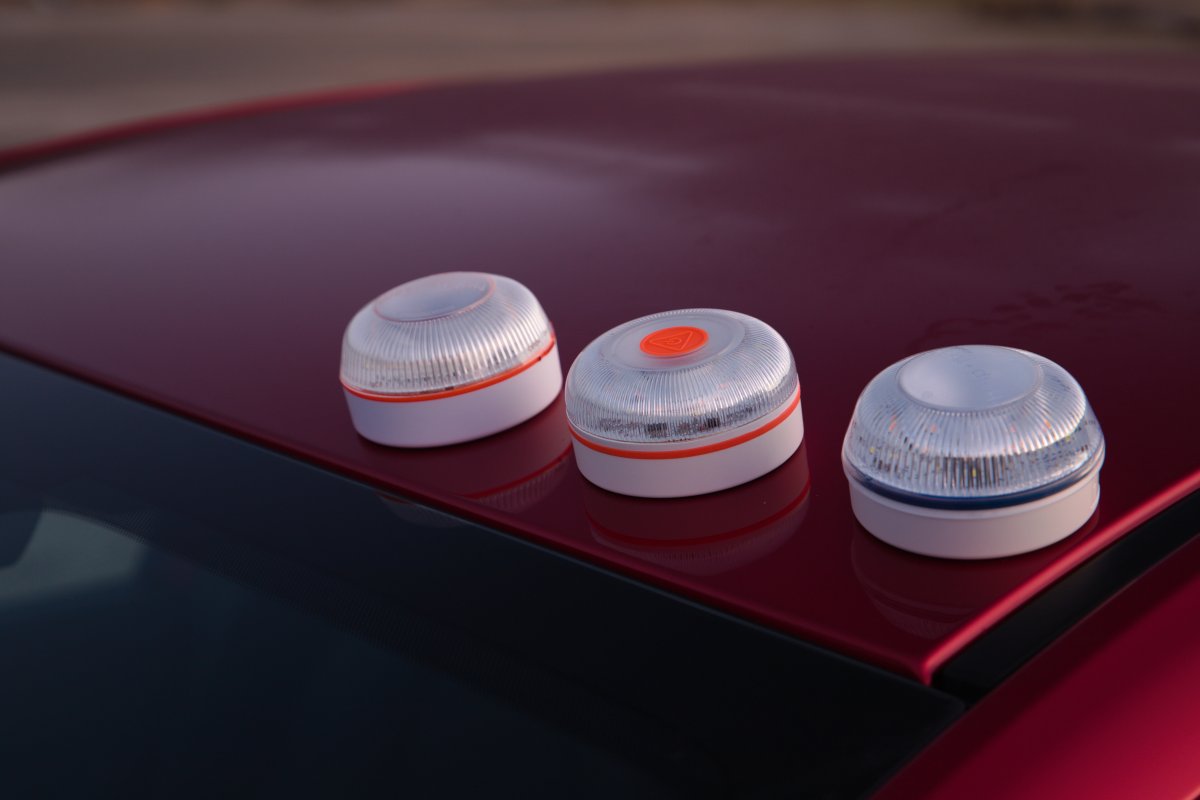
According to a mandatory regulation from Spain’s Directorate-General for Traffic (DGT), starting January 1, 2026, connected V16 geolocation signal lights will completely replace traditional warning triangles. This new rule is designed to improve road safety by allowing drivers to activate the signal from within their vehicle during a breakdown, automatically transmitting the precise location to the DGT 3.0 platform. In the Murcia region alone, over one million vehicles (including about 840,000 private cars and more than 150,000 commercial vehicles) will need to be updated with this new device.
High Costs and Substantial Tax Revenue
While enhancing safety, the policy also introduces a significant financial burden. The market price for compliant V16 signal lights typically ranges from 40 to 55 euros. At the lowest price point of 40 euros, the total expenditure for drivers in the Murcia region alone will exceed 41 million euros. Of this amount, 21% in Value Added Tax (VAT) will go directly to the state treasury, projected to contribute approximately 8.7 million euros in tax revenue—a figure that has led the public to question the policy’s underlying motives.
Market Chaos and Consumer Dilemma
The new regulation has fostered a chaotic market. Manuel Martínez, an employee at the Fercasa hardware store in Cartagena, notes that the market is flooded with cheap signal lights selling for around 20 euros, most of which are not officially certified by the DGT. Drivers who purchase these non-compliant products will still face fines during roadside inspections. Additionally, Luis Parra, a shop owner in Murcia, highlights that the “valid until 2036” label commonly found on product packaging has left consumers frustrated, implying that another mandatory purchase may be necessary after a decade, thus increasing the long-term cost of ownership.
Official Advice and Compliance Guide
In response to market uncertainty, the DGT has published a list of certified V16 signal light brands on its official website, strongly advising drivers to consult it before making a purchase. Officials stress that a compliant device must have its own geolocation and data transmission capabilities, without relying on a mobile phone app. As the enforcement date nears, traffic police will increase inspections of vehicle emergency equipment, reminding all drivers to purchase compliant products to avoid substantial fines for a minor oversight.
