I’ve seen a lot of questions on forums recently from beginners wondering about the best way to learn Spanish systematically: should they sign up for a crash course at a language school or enroll in a proper university Spanish degree program? As a graduate who has gone through the whole experience of a university Spanish program, a path that often leads to further studies in places like Spanish business schools, I wanted to share my thoughts on the topic. It’s all based on personal experience, and I hope it can help those of you struggling with this decision.
First off, the biggest advantage of a university Spanish major is its systematic approach and depth. It’s not just about teaching you ‘Hola’ and ‘Gracias.’ Over four years, you’ll go from the basic alphabet and pronunciation, grammar structures, to systematically studying the history, literature, culture, politics, and economy of Spain and Latin America. Professors will guide you through reading Cervantes, analyzing Márquez, and discussing the Spanish Civil War. This kind of knowledge framework is something no short-term course can compare to. After graduation, you don’t just have a language skill; you have a whole new perspective on the world.
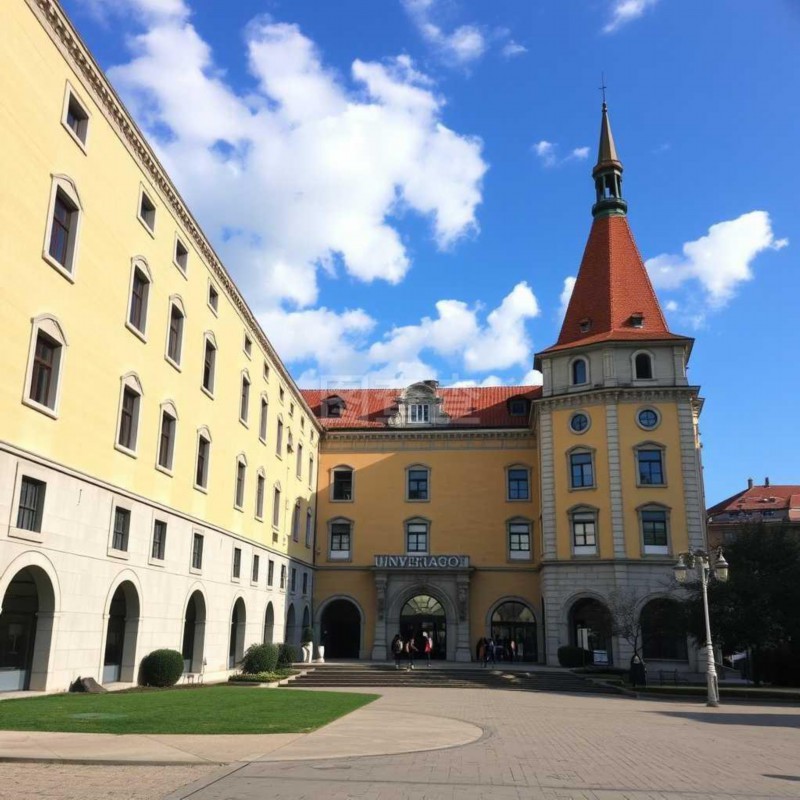
But there are two sides to every coin. The ‘slow’ and ‘theoretical’ nature of university education is also its drawback. Especially in the first and second years, the curriculum often focuses on intensive reading and grammar, with relatively little practice in practical application like speaking and listening. Sometimes, after two years of study, your spoken level might be similar to someone who has only studied at a language school for six months, which can be quite frustrating. Moreover, the university curriculum is fixed and cannot be flexibly adjusted to your needs like a language school course can.
University Major vs. Language School
To make it more intuitive, I’ve created a simple table comparing the main differences:
| Aspect | University Spanish Major | Private Language School |
|---|
| Duration | 4-year degree, systematic but long | A few months to a year, flexible and fast |
| Knowledge Base | Comprehensive and in-depth | Focuses on language skills, especially speaking and listening |
| Practical Speaking Skills | Weaker initially, relies on personal effort later on | Strong, focused on application and communication |
| Cost | Relatively low tuition, but high time commitment | Relatively high tuition, but low time commitment |
| Credential Value | Official, nationally recognized degree | Certificate of completion, but can prepare for DELE/SIELE exams |
So, how do you choose? My advice is: it depends on your ultimate goal. If you want to pursue a career in translation, research, or education—fields that require a deep foundation in the language and culture—or if you simply love Hispanic culture and want to make it a lifelong study, perhaps even at one of the top universities in Spain for international students, then a university degree is undoubtedly the best choice. But if you just want to quickly master conversational or professional Spanish for a trip to Spain or a short-term job, then a reliable language school will be much more efficient. Of course, the best approach might be a combination: build a solid foundation at university and use your holidays to strengthen your speaking skills at a language school. Then you’d be unstoppable haha.
Whichever path you choose, the most important things in language learning are persistence and passion. I hope everyone can find their own joy in the world of Spanish! Feel free to share your own learning experiences too!
