Ministry of Labor Proposes a 3.1% Compromise
The Spanish Ministry of Labor, led by Second Deputy Prime Minister Yolanda Díaz, has formally submitted its proposal for the 2026 Minimum Interprofessional Wage (SMI) adjustment to social partners. After a meeting on Wednesday, Deputy Minister of Labor Joaquín Pérez Rey announced the recommendation to raise the minimum wage by 3.1%.
This increase represents a middle ground proposed by the Ministry after hearing all parties, falling between the 1.5% advocated by the Spanish Confederation of Employers’ Organizations (CEOE) and the 7.5% demanded by major unions. This figure also aligns with the lower end of the growth range (3.1% to 4.7%) suggested by the expert committee commissioned by the Ministry.
Wage Impact and Tax Dispute
According to the Ministry’s proposal, if the 3.1% hike is implemented, the monthly salary (calculated over 14 payments) for minimum wage earners will increase by 37 euros, equivalent to a total annual income increase of 1,221 euros. However, a key issue remains unresolved: whether this increased portion of the wage will be subject to Personal Income Tax (IRPF).
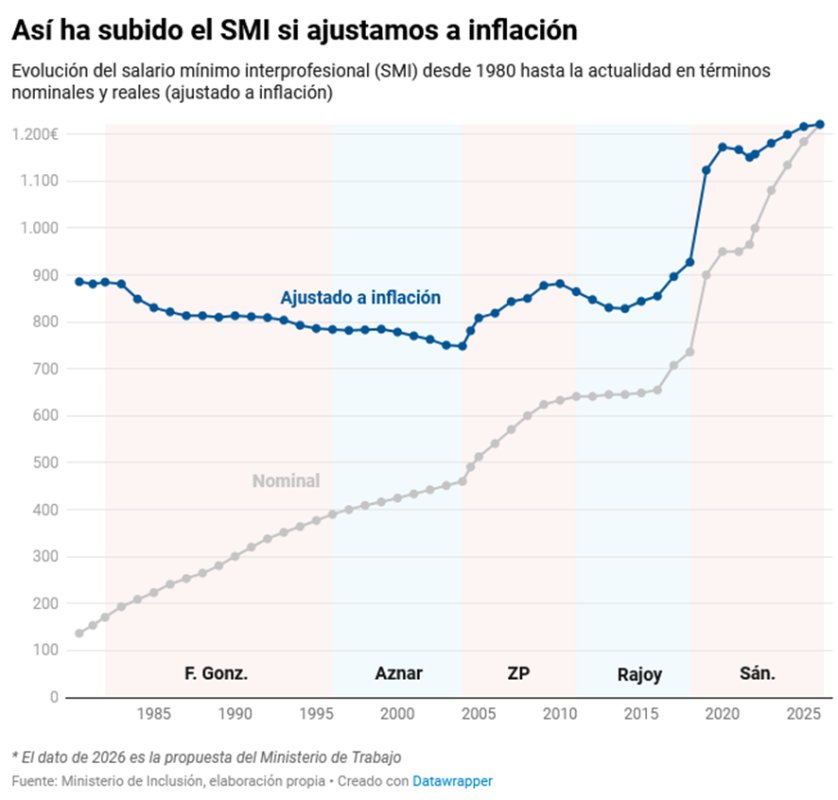
The Ministry of Labor maintains its consistent position that minimum wage income should remain tax-exempt. Pérez Rey emphasized, “We have a commitment to society that those earning the minimum wage should not pay income tax.” Nevertheless, the final tax policy decision rests with the Ministry of Finance, which has not yet made a clear statement on the matter.
Core Disagreements: Public Contracts and Wage Absorption
To win employers’ support, the Ministry has again proposed amending regulations to ensure that companies with government contracts do not pass on the costs of the minimum wage increase to public projects. However, the final decision on this amendment also lies with the Ministry of Finance, which has consistently refused to modify the current ‘De-indexation Law,’ adding uncertainty to the negotiations. Furthermore, related legal amendments may require parliamentary approval, posing a challenge for the current government.
Another core technical issue hindering an agreement is the “compensation and absorption” mechanism. This mechanism allows companies to adjust salary supplements for employees earning slightly above the minimum wage to absorb the overall cost pressure from the SMI increase. This is a focal point for employers and a major point of contention with the unions.
Outlook: Negotiations Ongoing
Currently, unions and employer organizations will consult their internal decision-making bodies on the Ministry’s proposal to provide a formal response. Although neither side has publicly commented, the government is clearly hoping to expedite the process and implement the wage increase soon. However, given the significant disagreements with the business community on several core issues, the prospect of reaching a tripartite consensus remains challenging.
