#
In most parts of Spain, the traditional figures who bring New Year’s gifts to children are the “Three Wise Men” (Los Reyes Magos), not the widely known Santa Claus. The core celebration of this tradition culminates on Three Kings’ Day, January 6th, one of Spain’s most important family holidays. Across the country, grand parades known as the “Cabalgata de Reyes Magos” are typically held on the evening of January 5th to welcome their arrival.
From “Magi” to “Kings”
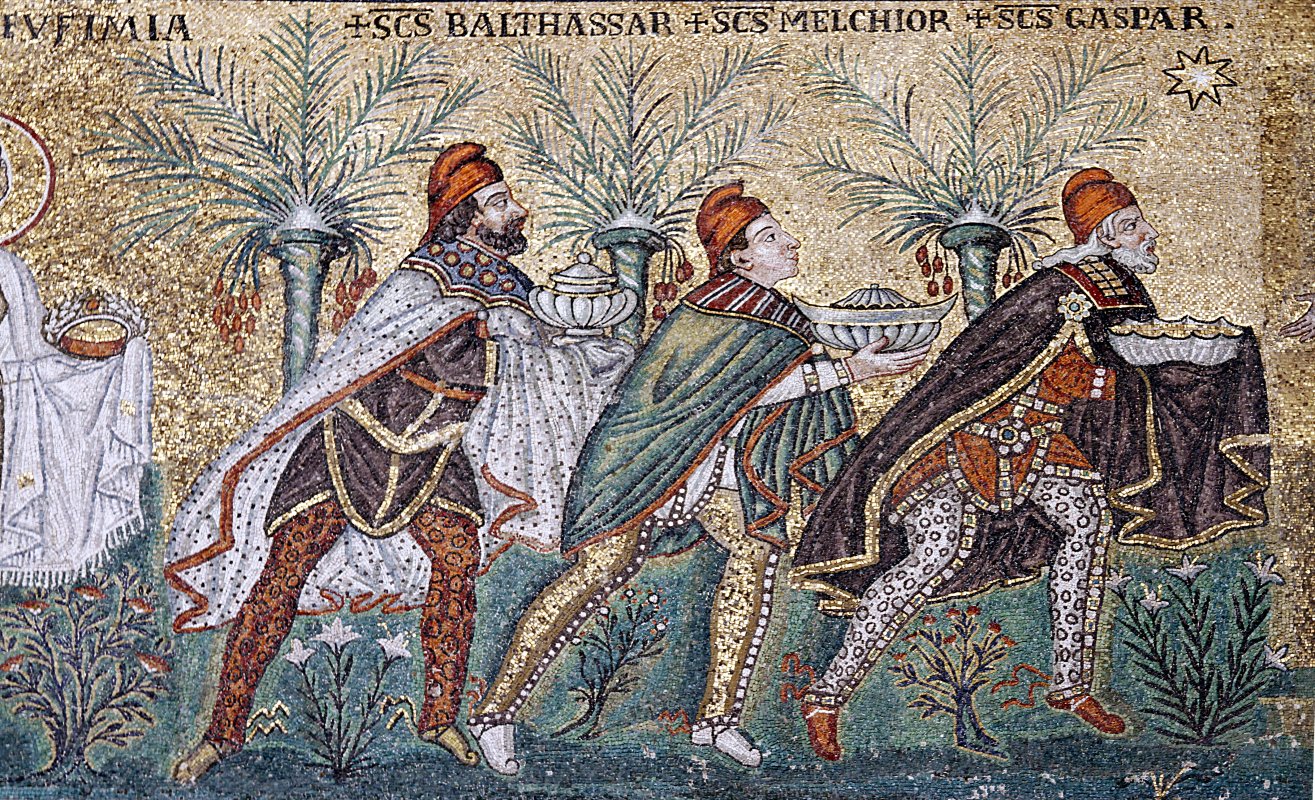
The legend of the Three Kings originates from the Gospel of Matthew in the Bible, which recounts that several “Magi” (wise men or astrologers) followed a star from the East to worship the newborn Jesus. The scripture does not specify their number, names, or royal status. It wasn’t until the Middle Ages that their number was established as three, based on the three gifts they brought. Their identity also evolved from learned scholars from the East to kings, making their image more authoritative and easier to popularize.
The Profound Symbolism of the Gifts
The gifts presented by the Magi—gold, frankincense, and myrrh—each carry profound symbolic meaning. Gold, a symbol of royalty, acknowledges Jesus’s status as a “King.” Frankincense, a precious incense used in worship, represents his “divinity.” And myrrh, often used in burials and for embalming, foreshadows the suffering and death he would endure as a “man.” Together, these three gifts proclaimed Jesus’s multifaceted identity as king, God, and mortal.
The Evolution and Symbolism of the Kings’ Identities
As the legend developed, the three kings were given specific names and origins. According to tradition since the Middle Ages, they are: Melchior, representing Asia and originating from Persia; Caspar, traditionally from India or the Arab world; and Balthazar, representing Africa. This configuration established them as representatives of the known world at the time (Asia, Africa, and Europe), symbolizing the adoration of Jesus from all corners of the globe.
Historical and Astronomical Evidence
Regarding the “Star of Bethlehem” that guided the Magi, some astronomers speculate it may be linked to a rare celestial event in 7 BC. According to ancient cuneiform tablets discovered in Mesopotamia, a series of conjunctions between Jupiter and Saturn occurred in the constellation of Pisces that year. In ancient astrological systems, Jupiter symbolized kingship, and Pisces was associated with the region of Judea. This astronomical phenomenon was likely interpreted by astrologers of the time as a sign that “a new king would be born in the land of the Jews.”
