New Wage Standard: A €37 Monthly Increase, Tax Exemption Maintained
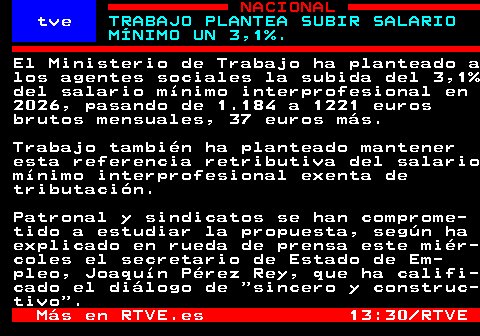
According to the latest proposal submitted by the Spanish government to trade unions and employer organizations, Spain’s Minimum Interprofessional Wage (Salario Mínimo Interprofesional, SMI) is planned to increase by 3.1% starting in 2026. This means the minimum monthly salary, calculated over 14 payments per year, will rise from the current €1,184 to €1,221, a net increase of €37 per month.
A key aspect of this adjustment is that the new minimum wage will continue to be exempt from Personal Income Tax (IRPF), ensuring that the increased income fully benefits workers. The proposal states that this increase is based on the recommendations of an expert committee and was determined on the condition of maintaining the tax exemption. If the minimum wage were to be made taxable in the future, the corresponding nominal increase would have needed to be 4.7% to guarantee a real growth in workers’ take-home pay.
Approval Process and Effective Date
The proposal is currently in the social dialogue phase, with the Ministry of Labor having submitted it to the major trade unions and employer associations for negotiation. Although the legal framework only requires the government to complete a consultation process without mandating a tripartite agreement, reaching a consensus with social partners remains the government’s goal.
In the coming weeks, the proposal will be submitted to the Spanish Council of Ministers (Consejo de Ministros) for final review and approval. Once passed, the new minimum wage standard will have retroactive effect from January 1, 2026, ensuring that eligible workers do not lose their rightful income from the beginning of the year due to the approval process.
Social Reaction and Policy Impact
Regarding the government’s proposal, Spain’s two main trade unions—the Workers’ Commissions (CC OO) and the General Union of Workers (UGT)—have expressed their support in principle, believing it aligns with the goal of protecting the purchasing power of low-income groups. Meanwhile, the Ministry of Labor is optimistic about persuading employer organizations to accept the plan.
According to initial estimates, this minimum wage increase will positively affect approximately 2.5 million workers in Spain, either directly or indirectly. This group primarily includes young people, women, and employees in the service and agricultural sectors. The move is seen as one of the government’s key measures to continuously improve the living standards of the general population and reduce social income inequality.
