2025 Spanish Housing Prices Soar to Record Highs
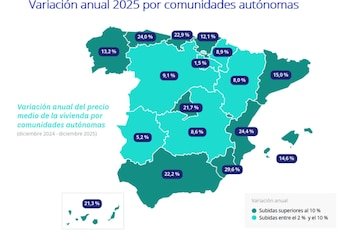
According to annual data released by the well-known real estate portal Fotocasa, Spanish property prices concluded 2025 with the highest annual increase in history. The national average price for second-hand homes saw a significant year-on-year jump of 20.5%, setting a new record. Among the autonomous communities, the Community of Madrid stood out, with an annual price growth rate of 21.3%, leading the country’s major regions.
Madrid Market: Southern Districts Unexpectedly Lead the Surge
By the end of 2025, the average property price in the city of Madrid had climbed to €5,206 per square meter, nearly double the national average. However, this price hike revealed an unexpected pattern, with southern areas outperforming the north. The district with the highest price increase was not a traditionally expensive area, but Villaverde in the south of the city, which saw a staggering annual increase of 33.8%.
Following closely were Latina (31.9%), Usera (31.1%), as well as Puente de Vallecas and Carabanchel, both with increases of 29.3%. Notably, these five districts with the highest growth are generally considered areas with a relatively lower average income in Madrid. Out of the 21 administrative districts analyzed, 20 saw annual price increases of over 10%.
Price Divergence: The Coexistence of Premium and Affordable
Despite the astonishing growth rates, the absolute property prices in these southern districts remain relatively low. For instance, the top-performing Villaverde district has an average price of €2,648 per square meter, making it still one of the most affordable areas in Madrid. Meanwhile, the traditional affluent district of Salamanca, despite a more moderate increase, still boasts the highest prices in the city at €10,618 per square meter. Amidst the overall upward trend, Hortaleza was the only exception, with its property prices experiencing a slight year-on-year decrease of 2.6%.
Policy Focus Could Drive Future Growth
The strong growth in these more affordable areas is likely linked to future urban development plans and investment expectations. Take Usera, the district with the third-highest increase, for example. The Madrid City Council has announced plans to invest €20.85 million in public funds into the district by 2026. This investment will be used for numerous infrastructure upgrades, including new cultural centers, kindergartens, and renovated sports facilities. Such large-scale public investment signals a significant improvement in the area’s quality of life, which may already be factored into the property market’s price expectations, attracting more homebuyers and investors seeking capital appreciation.
