A Deep Dive into Spain’s Empadronamiento: More Than Just Proof of Address, It’s Key to Your Residency Application
In the Spanish administrative system, the Empadronamiento or Padrón (municipal registration) is a fundamental yet crucial procedure. Its legal significance goes far beyond being a simple proof of address. It is an official declaration of residence made at the local city hall (Ayuntamiento) where you live, and it serves as the core evidence for all levels of Spanish administration and immigration authorities when assessing the continuity of an individual’s residence.
Core Documents Required for Empadronamiento
While specific requirements may vary slightly from city to city, the following key documents are generally needed to register:
Identification: The applicant’s original and a copy of their valid passport, or their existing Foreigner’s Identity Number (NIE) / residence card. You can register regardless of your legal residency status.
Proof of Address: This is the decisive document in the process and varies depending on your living situation:
- Renting a property: Provide a valid rental agreement (Contrato de alquiler).
- Owning a property: Provide the property deed (Escritura).
- Living with someone or subletting: You need a written authorization (Autorización) from the landlord or the main tenant, along with a copy of their ID and a copy of the original rental contract or property deed.
Some cities may also ask for recent utility bills or proof of rent payment as supplementary evidence.
Its Decisive Role in Immigration Procedures
For immigration applications, a continuous, uninterrupted Empadronamiento history is the most powerful document to prove actual residence in Spain. Immigration authorities will strictly verify this record when processing certain residency permits.
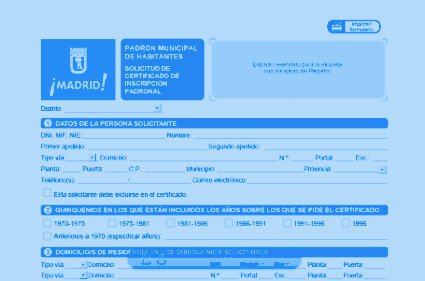
Arraigo Residency (Residency by Roots): Applying for this type of residency requires proving continuous residence in Spain for a specified number of years. The immigration office will request the applicant’s historical registration certificate (Certificado histórico de empadronamiento), and any significant ‘gaps’ in the record could lead to the application being denied.
Residency Renewals and Modifications: Especially when converting a non-lucrative residency to another type, the immigration office uses the Empadronamiento record to verify if the applicant meets the legal requirement of residing in Spain for at least 183 days per year. A break in the registration can cast doubt on the authenticity of their residency, leading to additional scrutiny and complications.
Daily Life and Other Important Considerations
Beyond immigration procedures, a valid Empadronamiento is a prerequisite for many daily activities, including enrolling children in school, applying for a public health card, processing family reunification, and accessing various municipal benefits and subsidies. Furthermore, an often-overlooked point is that when you change your address (e.g., move to a new house or city), you must register at the new city hall as soon as possible and update the address on your residence card promptly. This helps avoid unnecessary investigations due to address discrepancies.
