City-Wide Housing Overview
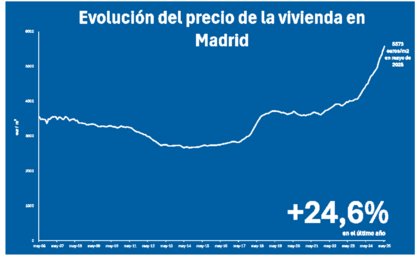
In 2025, Madrid’s second-hand housing market is exhibiting a strong upward trajectory. Fotocasa’s annual report reveals that the city’s average price has climbed to €6,463 per square meter, achieving a 17% annual increase. This growth trend spans across all urban districts, though specific performance varies significantly among different areas.
Premium Districts: Prices Remain Firm, Leading the Market
Traditional upscale districts continue to hold their leading position. As the city’s property price benchmark, the Salamanca district has reached an average of €10,618 per square meter, a 10% year-on-year rise. Following closely is the Chamberí district, with an average price of €9,368, recording a high growth of 18%. Furthermore, prices in the Retiro and Chamartín districts have also reached €8,741 and €7,968, respectively, with growth rates all exceeding 10%.
Mid-Range Districts and a ‘Dark Horse’ Performer
In the city’s central belt, in areas such as Centro, Moncloa-Aravaca, and Tetuán, prices generally fall within the €5,800 to €7,800 per square meter range. It’s worth noting that some mid-range districts show enormous potential for appreciation. For example, the Ciudad Lineal district has become a dark horse in the market with a remarkable price increase of 26%.
Affordable Districts: Rapid Growth and Emerging Potential
Relatively lower-priced areas are mainly concentrated in the southern and eastern parts of the city. Among them, while the Villaverde district is the most economical in the city at €2,648 per square meter, its annual price increase has reached an astonishing 34%. Other affordable districts like Puente de Vallecas, Usera, and Carabanchel also posted significant gains ranging from 29% to 32%. This phenomenon indicates that housing demand is shifting towards these value-for-money areas, fueling the rapid appreciation of their property values.
Market Outlook
Analysis indicates that Madrid’s robust economic vitality, sustained population inflow, and a tight housing supply are the primary factors driving the price surge. This supply-demand conflict not only inflates overall housing prices but also widens the price gap with other major cities like Barcelona. For buyers, market pressure continues to grow; for investors, competition is also intensifying. It is anticipated that the tight conditions in Madrid’s real estate market will be difficult to ease in the short term.
