Sudden Tragedy and Official Response
Around 19:45 on the evening of January 19, 2026, a tragic high-speed train accident occurred near the town of Adamuz in the province of Córdoba, Andalusia, Spain. An Iryo-operated train, number 6189, carrying approximately 300 passengers, derailed and entered the adjacent track, colliding with a Renfe-operated train, number 2384. The accident has resulted in at least 40 deaths and over 150 injuries. After visiting the site, Spanish Prime Minister Pedro Sánchez vowed to “uncover the truth” and announced three days of national mourning, starting from midnight on Tuesday.
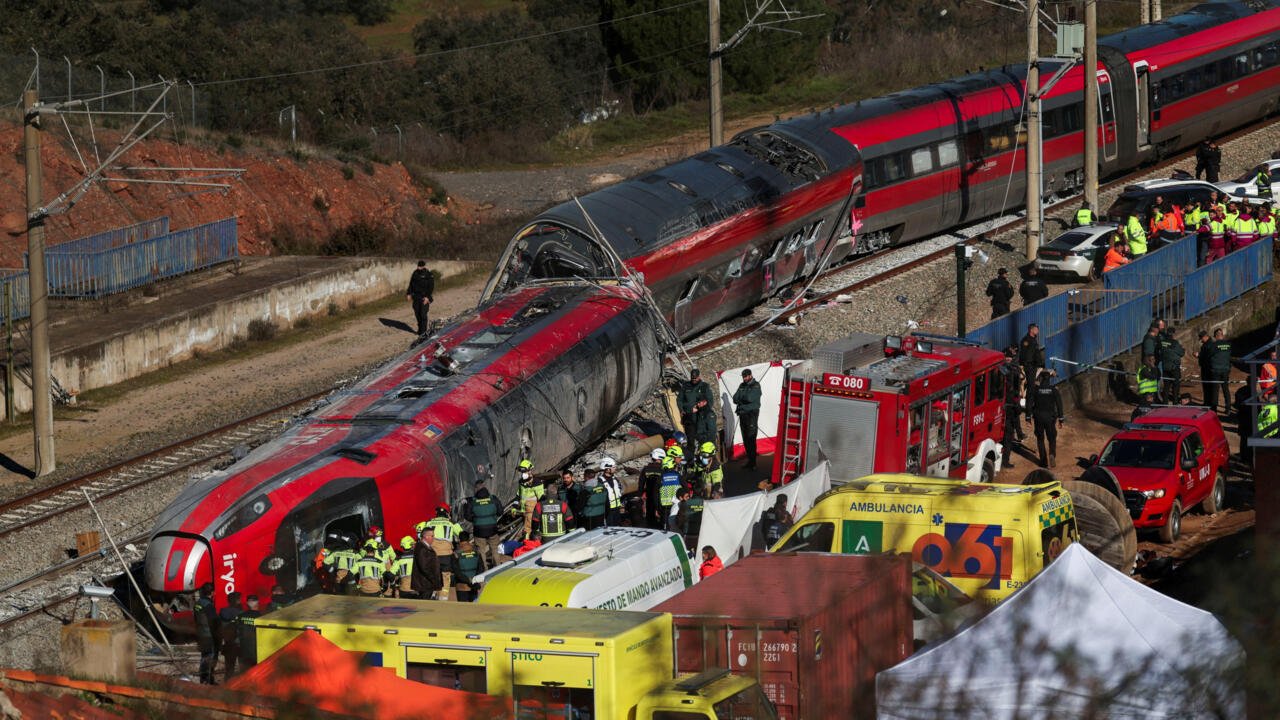
Full Investigation Launched, Cause of Accident a Mystery
Spain’s Guardia Civil has dispatched a special team of over 220 officers to conduct a full investigation into the accident, with a key focus on analyzing the trains’ “black box” data. Concurrently, offices have been set up in Huelva and Córdoba for families to provide DNA samples to expedite victim identification. Minister of Transport Óscar Puente described the accident as “extremely rare and difficult to explain,” as the Iryo train involved was only put into service in 2022, and the related railway infrastructure had just recently been updated. A Renfe official also stated that the possibility of human error could be largely ruled out, as the system is equipped with automatic correction capabilities.
Early Safety Warnings Allegedly Ignored
However, the “accidental” nature of the incident is being questioned. The Spanish Union of Train Drivers (SEMAF) pointed out that five months before the accident, they had sent letters to the railway infrastructure manager (Adif AV) and the National Railway Safety Agency (AESF), warning that the increased number and weight of trains from new operators were causing vibrations and deformation on the line. They recommended reducing the maximum speed on this section from 300 km/h to 250 km/h. The union stated that this crucial safety recommendation was not given sufficient attention by the management, highlighting the urgency of infrastructure maintenance.
Widespread Impact of the Accident
This accident has had a severe impact on Spain’s entire rail network. In addition to the casualties, it has led to the suspension of multiple lines. On the night of the accident, an Avlo train from Seville to Madrid made an emergency stop due to the track closure ahead, leaving about 400 passengers stranded on the dark tracks for four hours until they were transferred to their destination the next morning. Although government officials have urged the public to maintain confidence in the railway system, this tragedy has undoubtedly cast a dark shadow over Spain’s esteemed high-speed rail network.
