Accident Overview and Major Casualties
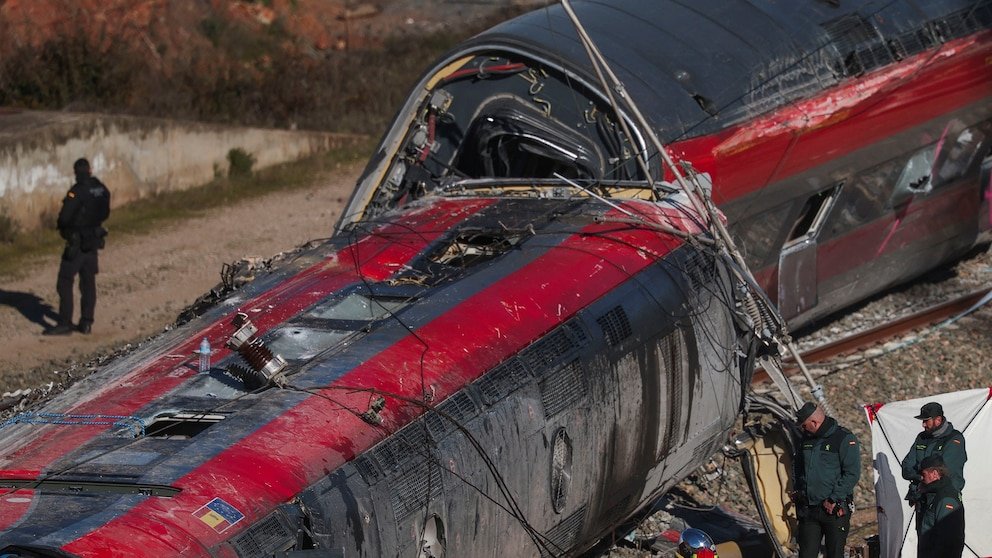
On the evening of January 19, 2026, a major tragedy occurred in the Adamuz area of Córdoba province, Andalusia, Spain, where an Iryo high-speed train collided with a Renfe Alvia train. To date, the accident has resulted in 40 deaths and 43 injuries. In memory of the deceased, the Spanish government has declared a three-day national mourning period. The incident has partially disrupted major rail traffic between Madrid and Andalusia.
Investigation Initially Focuses on Track Defect
The initial investigation by on-site technicians has focused on the condition of the track itself. It is reported that the failure of a welded joint on the guide rail is considered a highly probable cause of the accident. Experts analyze that continuous stress from daily train operations and weather factors may have jointly led to the fracture of the welded point. This fracture caused the rear carriages of the Iryo train, which was traveling at over 200 km/h, to derail and encroach upon the opposite track. Due to the extremely rapid sequence of events, the train’s LZB safety system did not have time to react, and just about 20 seconds later, the oncoming Alvia train collided with it head-on.
Human Error and Speeding Ruled Out
The president of Renfe, Spain’s national railway company, confirmed that the train’s speed at the time of the incident was 207 km/h, below the recommended speed limit of 250 km/h for that section. Therefore, speeding and human error have been preliminarily ruled out as potential causes. Minister of Transport, Óscar Puente, described the accident as “extremely peculiar” because the section of the track is straight and was just renovated a year ago. Even more puzzling is that the involved Iryo train was a new model put into service in 2022 and had just completed routine maintenance four days before the accident (January 15).
Multi-Party Investigation and Prior Warnings
Currently, a technical team composed of personnel from the Railway Accident Investigation Commission (CIAF), Spain’s railway infrastructure manager (Adif), the Civil Guard, and the train manufacturer is conducting an in-depth investigation at the site. It is noteworthy that the train drivers’ union had written to Adif last year, expressing concern about the excessive pressure on the line and recommending a reduction in operating speeds. The fracture of the welded point seems to confirm these prior warnings. At present, rescue teams are still searching for victims’ bodies at the scene. Once the rescue work is complete, efforts will immediately begin to clear the wreckage and repair the damaged railway infrastructure.
