Death Toll Rises, Investigation Focuses on Key Carriage
As of the morning of January 20, 2026, the confirmed death toll from the Adamuz high-speed rail accident in Spain has climbed to 41, including a 27-year-old Alvia train driver. This collision between an Iryo and an Alvia high-speed train is one of the most severe safety incidents in Spanish high-speed rail history. Currently, the central piece of evidence in the investigation is the sixth carriage of the Iryo train, which has been confirmed as the first part of the train to derail in the accident.
The Track Fracture Dilemma: Cause or Effect?
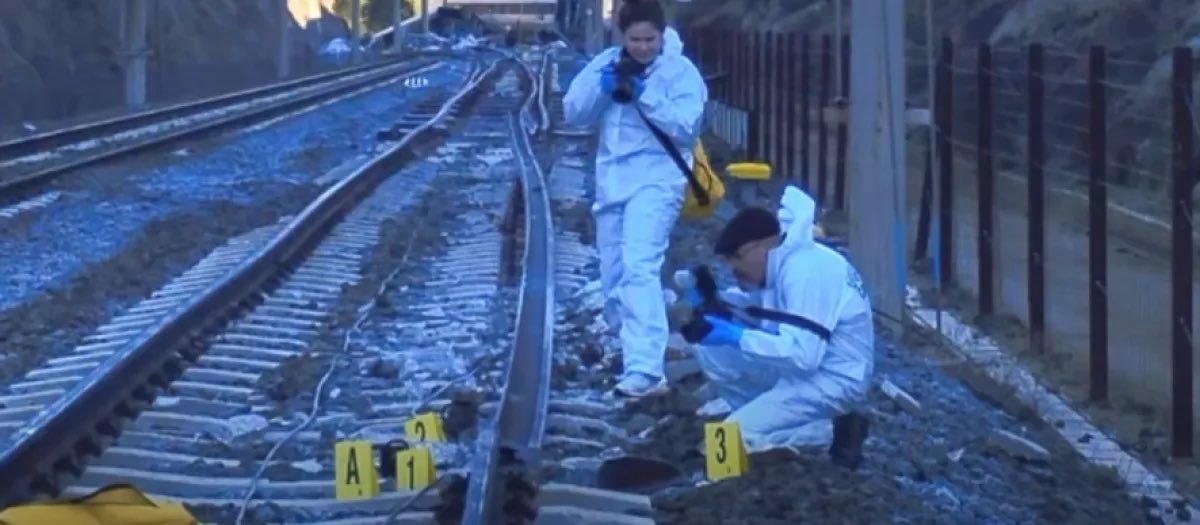
Regarding the photos of a “broken rail” circulating online, Minister of Transport Óscar Puente raised a technical question: the expert panel cannot currently determine whether the track fracture was the cause of the derailment or the result of the immense impact force after the train derailed. He emphasized that this section of track had just been renovated last May and that 10 trains had passed through safely within 90 minutes before the incident, making the “pre-existing track defect theory” difficult to sustain. If the track itself had a problem, the front of the train should have derailed first, not the sixth carriage in the middle.
Black Box Rules Out Several Common Causes
Both “black boxes” from the crashed trains have been successfully retrieved and decoded. Preliminary data has ruled out several common causes of accidents:
- Speed Factor: The two trains were traveling at 205 km/h and 210 km/h, respectively, both within the 250 km/h speed limit for that section of the track.
- Human Error: The LZB signaling system was operating normally. This system features automatic speed monitoring and correction functions, which can effectively prevent driver operational errors.
- Weather Factor: The weather was clear at the time of the accident, with high visibility and no adverse conditions such as strong winds or rain.
Surviving Driver’s Testimony and Future Investigation Direction
Currently, the driver of the Iryo train is the sole key surviving witness to the accident. He described to investigators that the train experienced an inexplicable anomaly in an instant, followed by a collision with the oncoming train in an extremely short period. The investigation team also clarified that previous reports about the driver complaining of track vibrations were actually referring to a different section of the line with a speed of 300 km/h. The current focus of the investigation has shifted to material fatigue, undercarriage structural failure, or some form of extremely low-probability infrastructure failure. Officials have stated that the final conclusions of the accident are expected to take at least a month to be announced. Meanwhile, the disruption to the southern high-speed rail network has triggered a chain reaction. Officials are working at full capacity to repair the line, striving to restore single-line operation before February 2.
