Policy Shift: From Encouraging Green Vehicles to Ensuring Efficiency
The Spanish Directorate-General for Traffic (DGT) has confirmed the end of a decade-long traffic policy. Effective January 29, 2026, vehicles with Zero-emission, ECO, C, or B environmental labels will no longer automatically qualify for single-occupant access to High-Occupancy Vehicle (HOV) lanes based on their eco-friendly status. This reform signals a major shift in Spain’s traffic management philosophy, moving the core focus from incentivizing specific vehicle types back to the fundamental goal of increasing vehicle occupancy rates to improve road efficiency.
New Regulation in Detail: Returning to the Core Purpose of “High Occupancy”
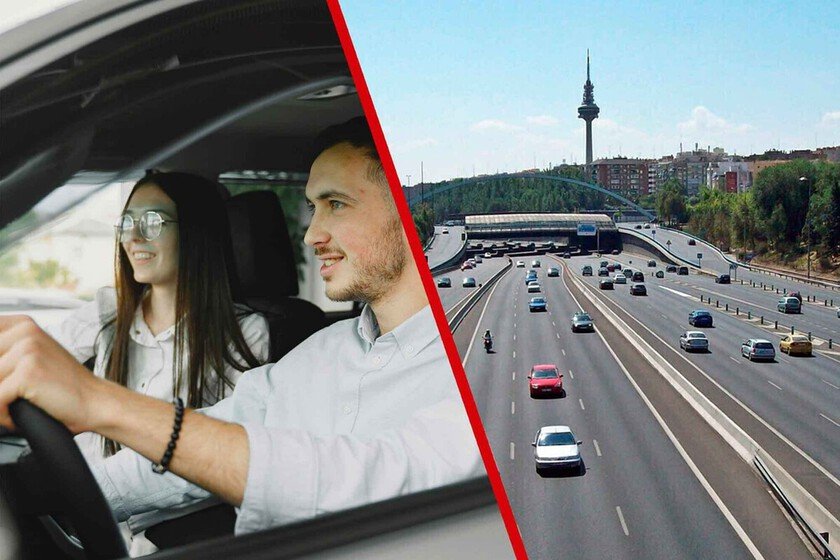
Under the new rule, access to HOV lanes will strictly adhere to their original purpose. Unless variable-message signs at the entrance indicate otherwise based on real-time traffic conditions, all vehicles must carry at least two occupants (including the driver) to enter an HOV lane. The DGT explained that this change is a direct response to the declining effectiveness of HOV lanes themselves. For instance, on Madrid’s A-6 highway, the HOV lane is already nearing saturation during peak hours. By 2025, its traffic volume is projected to increase by 22% compared to 2019, with congestion soaring by 90%, severely impacting the efficiency of public buses.
Eligible Vehicles and Enforcement
Once the new regulation takes effect, HOV lanes will be primarily open to the following:
- Regular passenger cars with at least two occupants (or the minimum number specified by signs).
- Two- or three-wheeled motorcycles.
- High-occupancy passenger vehicles, public buses (with a gross weight over 3.5 tons), and articulated buses that meet the occupancy requirements.
Trucks and light mopeds are explicitly prohibited. To ensure compliance, the DGT will deploy an AI-based infrared camera system to automatically monitor the number of occupants in each vehicle. Any driver found using an HOV lane in violation of the rules will face a €200 fine.
Impact and Future Outlook
This policy change will have a broad impact on all regions in Spain with HOV lanes, especially for electric vehicle owners. Key affected routes include the A-6 and A-2 in Madrid, GR-3211 in Granada, A-8057 in Seville, the A-357 and A-7056 roads to the Technology Park in Málaga, and the V-21 in Valencia. The DGT emphasizes that this measure is intended to optimize road resource allocation and genuinely promote public transport and carpooling, thereby enhancing the overall sustainability of the transportation system. For EV owners, while one convenience is lost, they can still enjoy other benefits associated with their environmental labels. Future commutes will require more consideration of carpooling or public transportation options.
