€96.8 Million Investment to Restore Designed Speed
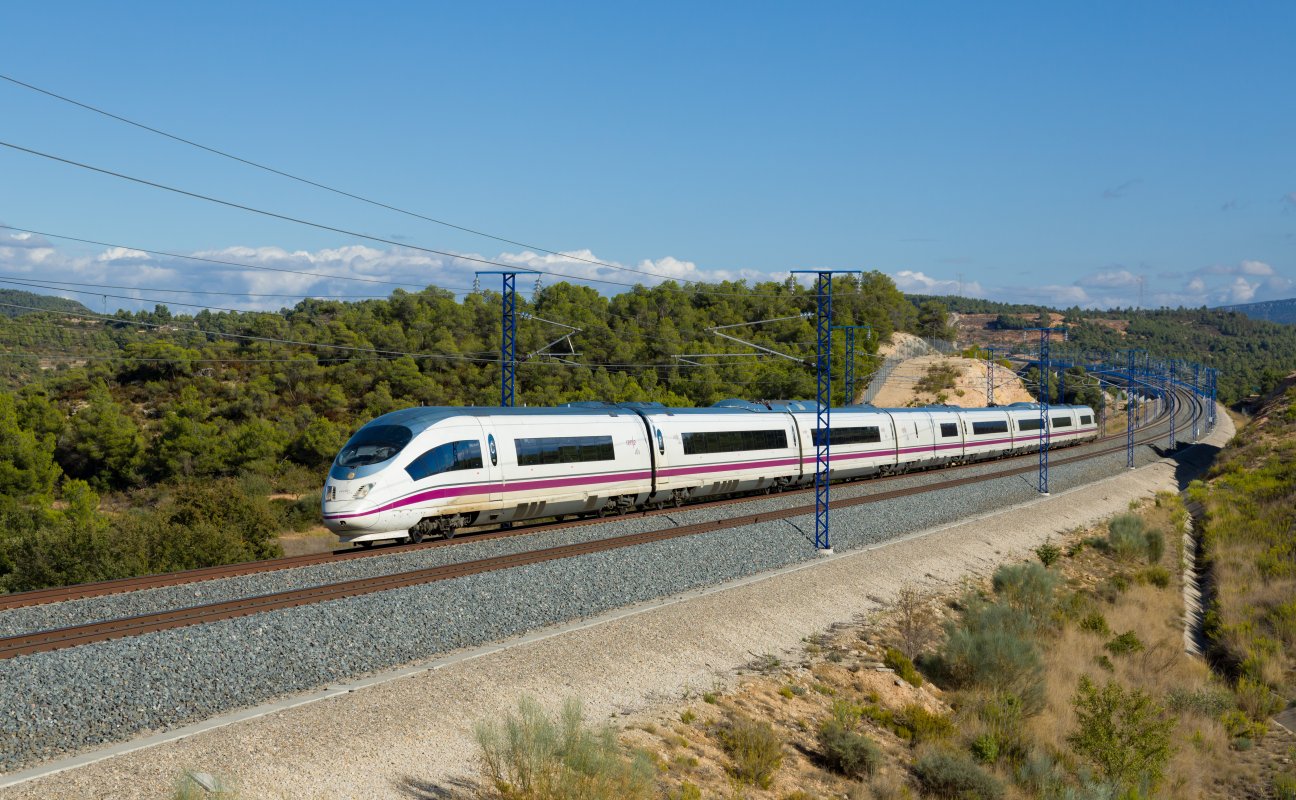
On January 27, 2026, the Spanish Council of Ministers approved an allocation of €96.8 million to initiate upgrade works on the Madrid-Barcelona high-speed railway. The core of the project is the acquisition of 680,400 new “aerodynamic” sleepers, aiming to increase the line’s maximum operating speed from the current 300 km/h to the originally designed 350 km/h.
Minister of Transport Addresses Public Concerns
Addressing public anxiety sparked by recent incidents like the Adamuz train accident, Minister of Transport Óscar Puente acknowledged the “fear” among passengers at a press conference. However, he compared this to the anxiety of flying after a plane crash, emphasizing that the railway system has rigorous safety controls. Puente stated that the speed increase is a “structural decision” aimed at giving trains a competitive edge over short-haul flights, not an “impulsive” one.
Madrid to Calatayud Section Prioritized for Renovation
This upgrade will initially focus on the most problematic 174-kilometer section between Madrid and Calatayud. Due to poor track conditions, train drivers had requested in the summer of 2025 to reduce the speed limit on this section from 300 km/h to 250 km/h. In response to the drivers’ feedback and to prevent further deterioration of the track, the government decided to advance the renovation work, originally scheduled for 2027, to a 2026 start.
Adopting New Spanish Technology
The “aerodynamic” sleepers used in this renovation are a Spanish-developed technology. Their special design effectively prevents ballast (crushed stone) from flying up and striking the train body at speeds exceeding 300 km/h, a technical challenge for traditional sleepers at such velocities. Additionally, the Ministry of Transport has launched tenders for associated works, including the installation of over 7.67 million rail fastening pads and other components for sections near the maintenance bases in Brihuega (Guadalajara) and Calatayud (Zaragoza).
Enhancing Infrastructure Reliability and Future Competitiveness
Minister Puente pointed out that the track condition from Calatayud to Girona is significantly better. This targeted upgrade aims to comprehensively improve the reliability, durability, and safety of the entire Madrid-Barcelona line. By restoring its full 350 km/h operational capacity, it will solidify the strategic position of Spain’s high-speed rail network as a sustainable backbone of national transport.
