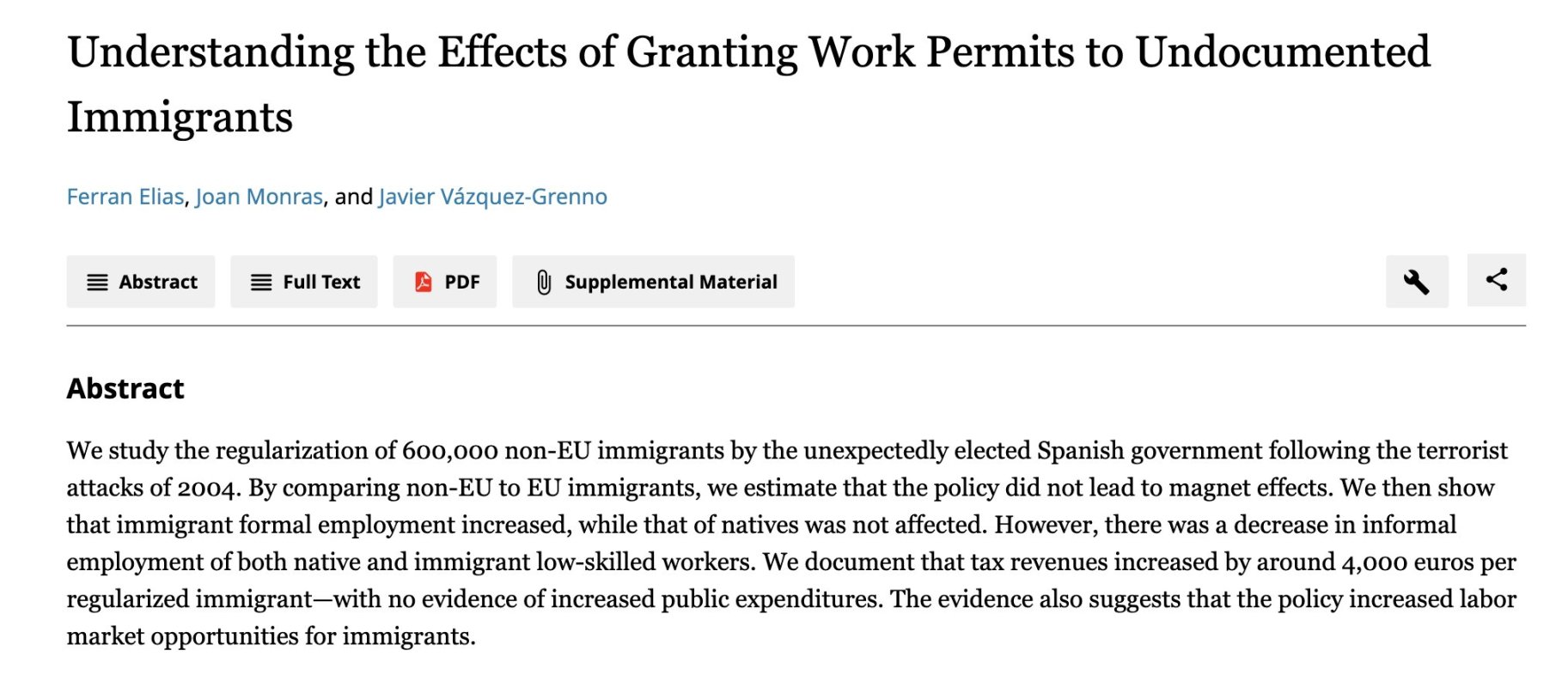
A recent large-scale migrant legalization policy promoted by the Spanish government, which plans to grant legal residency and work rights to approximately 500,000 undocumented immigrants, has ignited a broad economic debate that goes beyond public security concerns. Several economic experts warn that this policy, viewed by some as a ‘vanity project,’ could have profound effects on the national economic structure and potentially harm the living standards of ordinary citizens.
Risk of Wage Stagnation in the Labor Market
Economist Javier Santacruz points out that this amnesty will lead to a massive influx of labor into the low-skilled job market. The sharp increase in labor supply will inevitably suppress wage growth. For many local workers already struggling on the poverty line, they will face fiercer job competition. In the long run, this could lead to overall wage levels gravitating towards the legal minimum wage, exacerbating the ‘pauperization’ trend in the job market.
Soaring Housing Costs in Core Cities
Although these 500,000 immigrants already reside in Spain, the legalization of their status will shift their housing demand from informal ‘shared living’ arrangements to the formal rental market, or even property purchase. Given Spain’s current weak supply of only about 100,000 new homes annually and nearly depleted housing stock, this new, huge wave of legitimate demand is expected to have a massive impact on the rental market. Rents in major cities like Madrid and Barcelona are likely to see a new round of significant increases, potentially making affordable housing disappear and further squeezing the living space of residents.
Public Service System Overload
Once immigrants gain legal status, they will have the right to ‘family reunification,’ meaning tens of thousands of family members can legally enter Spain. This chain reaction will place unprecedented pressure on the already saturated public health and education systems. Although the new legal residents will become new taxpayers, experts widely believe that the taxes they pay will be a drop in the bucket compared to the huge potential government expenditures on unemployment benefits, social security, and non-contributory pensions. The long-term social costs of this policy experiment, which has not been fully debated in parliament, are becoming an economic price hanging over every ordinary citizen.
