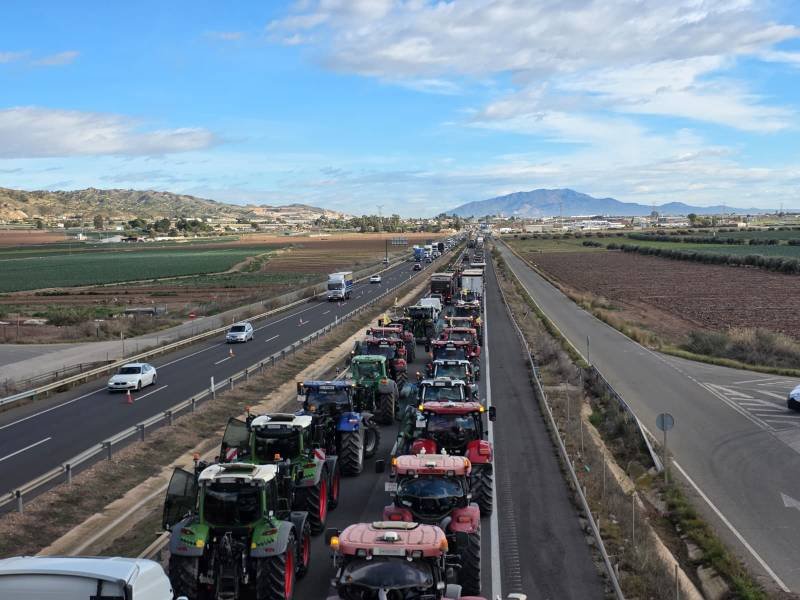
On January 29, 2026, a large-scale farmer protest erupted in the southeastern region of Murcia, Spain. The farmers employed a dual strategy: they not only used tractors to block highways but also distributed free agricultural products in the heart of Murcia city to raise public awareness of the severe challenges facing the agricultural sector.
Blockades and Giveaways: A Unique Protest Scene
The protest began on Thursday morning. In the Plaza del Cardenal Belluga, next to the Murcia Cathedral, farmers piled up large quantities of high-quality fresh artichokes, broccoli, lemons, and oranges for the public to take for free. Simultaneously, another group of farmers drove a convoy of tractors, strategically accessing the highway and causing traffic disruptions. This action, dubbed “The Farmers’ Protest is Justified,” aimed to highlight the seriousness of their demands by impacting the city’s daily operations.
14 Demands: Pointing to the Sector’s Survival Crisis
Using loudspeakers on-site, the farmers broadcasted the 14 core reasons for their return to the streets. These demands clearly pointed to the multiple difficulties facing agriculture today, primarily including: the constantly rising price of water for agricultural irrigation, budget cuts and unfair distribution of the EU’s “Common Agricultural Policy” (CAP), and trade agreements signed by Spain with third countries. The farmers argue that these agreements lack necessary reciprocal controls and fairness principles, allowing cheap imported agricultural products to flood the domestic market while local farmers must adhere to stricter, more costly production standards.
Defending Local Agriculture to Win Public Support
Although the giveaway event caused long queues of citizens, the atmosphere was filled with understanding and support for the farmers. Agriculture is an economic pillar and a symbol of identity for the Murcia region. A farmer named Virginia stated that this action was to defend the dignity of the sector and to send a message to consumers: although the price of local products may be slightly higher, their superior quality, safety standards, and sustainable production methods are unmatched by imports. Through this approach, the farmers hope to make the public aware of the importance of protecting local, short-distance agriculture for maintaining rural vitality, ensuring ecological balance, and preserving agricultural culture, thus preventing rural areas from being abandoned due to lack of livelihood.
