Recently, numerous residents in Spain have reported receiving emails claiming to be from the Dirección General de Tráfico (DGT) about an outstanding traffic fine. These emails have been confirmed as a phishing scam designed to illegally obtain personal and financial information. Spanish authorities have issued alerts, urging the public to heighten their awareness.
Telltale Signs of the Scam Email
While these phishing emails are highly convincing, there are several telltale signs. Firstly, the sender’s email address is unrelated to the DGT’s official domain (@dgt.es) and is often a spoofed or irrelevant address. Secondly, the email’s content creates a sense of urgency to pressure the recipient, with threats like ‘if the fine is not paid within 24 hours, the amount will automatically increase to 400 euros.’ This is intended to make the user panic and click the link without thinking.
Official Confirmation and Statements
The Dirección General de Tráfico (DGT) has clarified multiple times through official channels that it never sends fine notifications via email or SMS. All official notifications are delivered by registered mail or through the Dirección Electrónica Vial (DEV) system. Additionally, the Spanish National Cybersecurity Institute (Instituto Nacional de Ciberseguridad, INCIBE) has issued an alert regarding this cyber-fraud. Fact-checking organization Maldita.es has also confirmed via its WhatsApp consultation channel that the DGT is not sending these emails.
The Scam’s Core Objective and Process
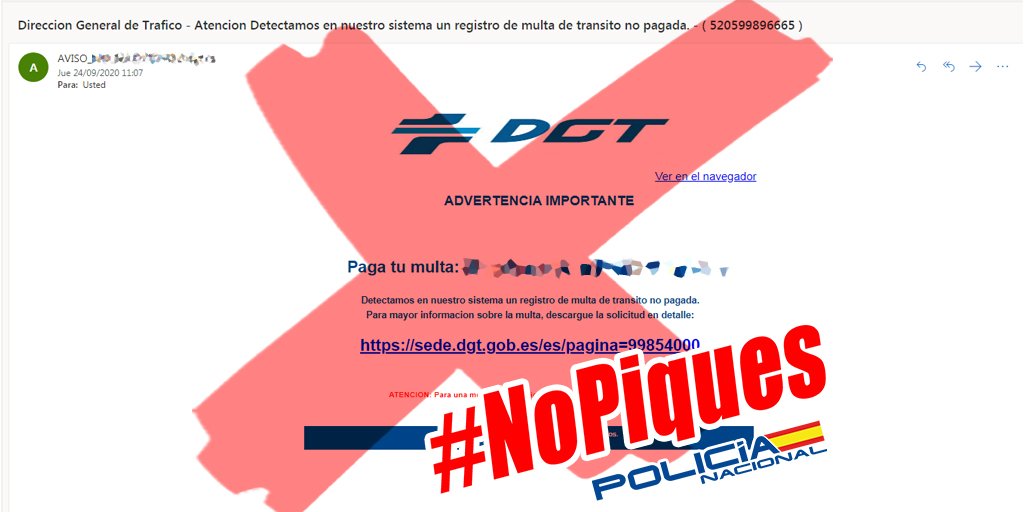
The core objective of this fraudulent activity is to steal the victim’s sensitive data. After clicking the link in the email, the user is redirected to a meticulously designed fake website. This website closely mimics the appearance of the official DGT site and prompts the user to enter personal identification information and key financial details, such as bank card numbers and passwords. Once this information is submitted, the fraudsters can use it to make unauthorized purchases or engage in other illegal activities.
What to Do If You’ve Fallen for the Scam
If you have received such an email and have inadvertently clicked the link or submitted your personal information, the DGT recommends taking the following immediate steps:
- Contact your bank immediately: Get in touch with your bank as soon as possible, explain the situation, and request to freeze or cancel the affected bank card to prevent any unauthorized transactions.
- Save all evidence: Keep the fraudulent email, screenshots of any text messages, and all communication records related to the scam as evidence for a future police report.
- Report it to the authorities: Take all your evidence and report the incident to law enforcement agencies such as the National Police (Policía Nacional) or the Civil Guard (Guardia Civil) as soon as possible. You can also report the cybersecurity incident to the National Cybersecurity Institute (INCIBE).
