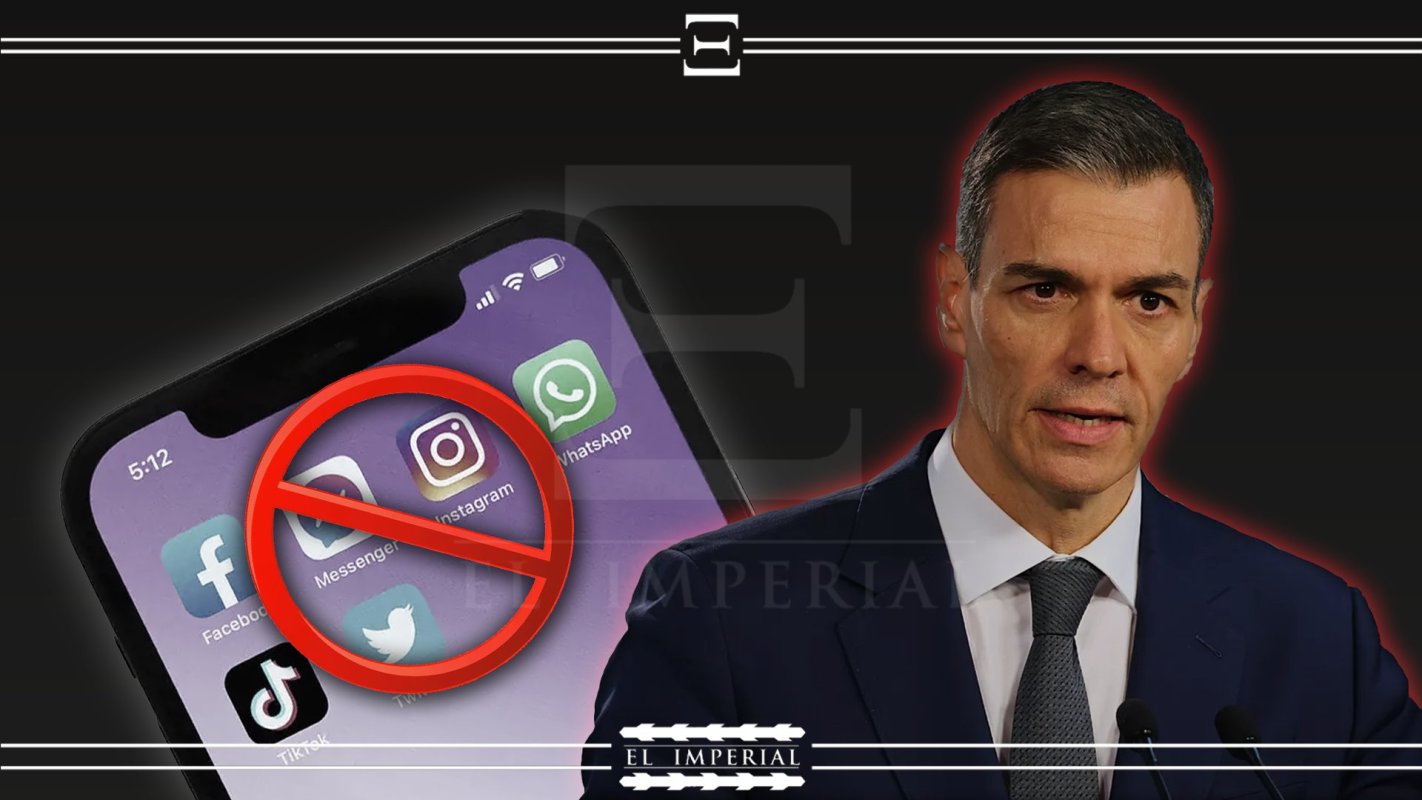
Spanish Prime Minister Pedro Sánchez recently announced that the government plans to introduce a bill to ban minors under the age of 16 from using social networks. This measure is a core component of a series of legislative and regulatory actions by the Spanish government to build a secure digital environment that respects fundamental rights.
Comprehensive Digital Environment Governance Blueprint
At the World Government Summit in Dubai, Sánchez outlined the government’s digital governance plan. In addition to imposing an age limit on social media use for minors, the plan also mandates that digital platforms implement effective age verification systems. This follows France’s move a week prior to become the first European country to ban social media use for minors under 15. Sánchez emphasized that digital governance is “the central issue of our time” and that the “state of disorder” in the social media ecosystem must be addressed from a global perspective.
Strengthening Platform Accountability and Legal Responsibility
The new regulations plan to amend the law to eliminate legal immunity for platform executives, making them directly liable for illegal content on their platforms, such as unremoved hate speech. Furthermore, algorithmic manipulation and the amplification of illegal content will be considered for criminalization. As part of a “zero tolerance” policy, the Spanish government will collaborate with the prosecutor’s office to investigate potential illegal activities on platforms like Grok, TikTok, and Instagram.
International Cooperation and Tech Giant Reactions
To coordinate and effectively strengthen the supervision of social platforms, Sánchez confirmed that Spain has joined the “digital coalition” formed by five other European countries. However, this series of tough measures has also sparked controversy. Tesla CEO Elon Musk publicly accused Sánchez of being a “traitor to the people” on his social media platform X, to which Sánchez responded that the move was to protect children. This debate highlights the growing power struggle between sovereign nations and global tech giants in strengthening digital regulation.
Combating the Spread of Disinformation
As early as January 13, 2026, the Spanish government had already approved the legislative draft of the “Right to Rectification Bill” and submitted it to parliament for deliberation. The bill stipulates for the first time that online influencers with more than 100,000 followers must correct false or inaccurate information they publish on social networks, aiming to curb the spread of disinformation at its source.
