Poverty Improvement Trend Stalls
According to the 2025 Living Conditions Survey released by the National Statistics Institute (INE), the proportion of the population at risk of poverty or social exclusion (AROPE) in Spain was 25.7%, a mere 0.1 percentage point decrease from 25.8% in 2024. This figure marks a halt to the significant downward trend of this indicator since 2021. The stagnation of the AROPE indicator is mainly because the proportion of ‘households with very low work intensity’ remained unchanged at 8%, while the ‘at-risk-of-poverty rate’ and ‘severe material and social deprivation rate’ saw slight improvements, falling to 19.5% and 8.1% respectively, but this was not enough to drive a significant overall improvement.
Housing Becomes a Core Factor in Poverty
Housing has become a key factor exacerbating social vulnerability. Experts from the European Anti-Poverty Network (EAPN), such as Rosana Caravantes, have pointed out that housing is turning into a “factor that perpetuates poverty.” Data shows that over 40% of renters in Spain live below the poverty line, with 17.8% of these tenants facing severe material and social deprivation. Furthermore, 63% of renting households report difficulty making ends meet, a figure much higher than the national average of 40%. This indicates that for low-income groups, renting has not effectively alleviated their financial pressure.
Income Growth Coexists with Cost of Living Pressures
Although data shows an increase in public purchasing power—with the average annual income per person reaching €15,620 in 2024, a 5.5% year-on-year increase that outpaced the 2.8% inflation rate (CPI) for the same period—the actual cost of living pressure on the public has not eased. The survey found that the proportion of households reporting ‘great difficulty’ in making ends meet rose to 8.5%. Meanwhile, 36.4% of households were unable to afford unexpected expenses such as car repairs or emergency medical care. Additionally, about a third of the population (33.1%) could not afford at least one week of vacation away from home per year for financial reasons.
Child Poverty Situation is Particularly Severe
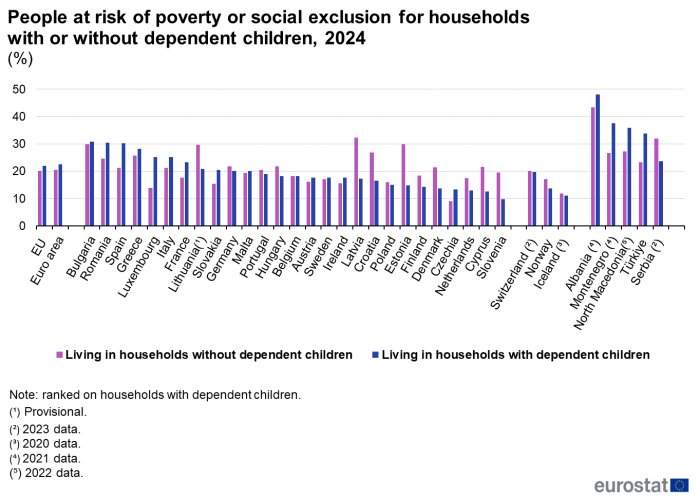
Child poverty in Spain remains alarming. The AROPE poverty rate for minors under 18 is as high as 33.8%. Despite a slight decrease, approximately 2.7 million children are living in difficult conditions, placing Spain among the countries with the highest child poverty rates in the European Union. Specifically, 15.5% of households with children cannot maintain an adequate temperature in their homes during the winter. Gabriel González-Bueno, a specialist from UNICEF Spain, warned that these numbers are “worrying” against the backdrop of the country’s overall economic growth and directly stated that “current policies aimed at eliminating child poverty are not achieving the desired results.”
