Overall Trend for 2026: New Cases to Surpass 300,000
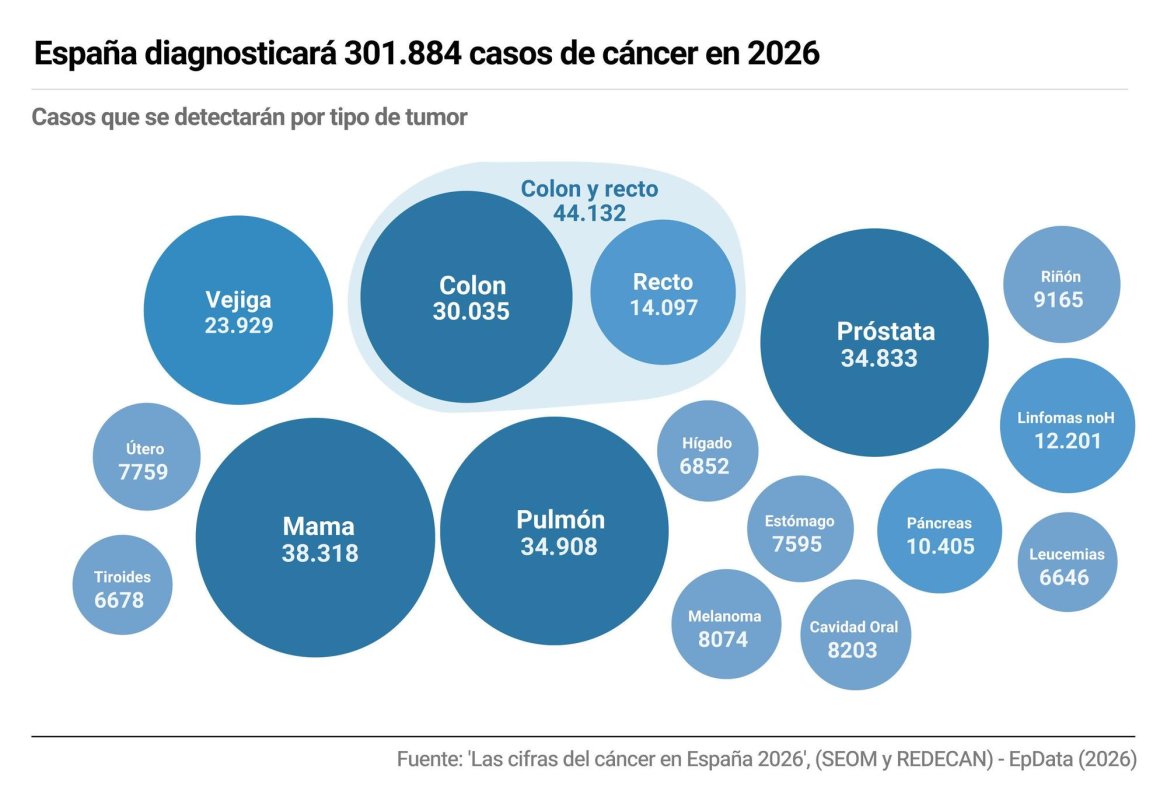
According to the ‘Cancer Figures in Spain 2026’ report, jointly published by the Spanish Society of Medical Oncology (SEOM) and the Spanish Cancer Registries Network (REDECAN), the number of new cancer cases diagnosed in Spain is projected to reach 301,884 in 2026. This represents an approximate 2% increase from the previous year’s forecast of 296,103 cases. The prediction is based on historical registry data, demographic changes, and scientific calculation models.
The report forecasts that colorectal cancer will be the most common type in 2026, with 44,132 new cases. It is followed by breast cancer (38,318 cases), lung cancer (34,908 cases), prostate cancer (34,833 cases), and bladder cancer (23,929 cases).
Significant Gender Disparities: Prostate and Breast Cancer Rank First
Cancer incidence varies significantly between genders. For men, prostate cancer remains the number one cancer, with a projected 34,833 new cases, followed by colorectal cancer (26,477 cases) and lung cancer (23,079 cases).
Among women, breast cancer tops the list with a projected 38,318 new cases. Notably, lung cancer has become the third most common tumor in women (11,829 cases), a trend the report directly links to the rise in female smoking rates since the 1970s.
Multiple Factors Driving the Rise in Incidence
The report analyzes that the growth in the total number of diagnosed cancer cases in Spain can be attributed to several factors. Firstly, population growth and aging, as age is a key risk factor for cancer development. Secondly, exposure to risk factors such as tobacco, alcohol, obesity, and sedentary lifestyles. Additionally, the implementation of early detection and screening programs for cancers like colorectal and breast cancer has led to more cases being identified in a timely manner.
The report also notes that in recent years, the incidence rates for breast cancer, pancreatic cancer, and non-Hodgkin lymphoma have all risen among women. The increase in thyroid cancer incidence, in particular, may be partly due to overdiagnosis.
Younger Demographics and Survival Outlook
An alarming trend is the rising cancer incidence in younger populations. The report estimates that in 2026, over 8,000 people under the age of 45 will be diagnosed with cancer, with breast and thyroid cancer being the most prevalent. Unbalanced diets, obesity, and the overuse of antibiotics are considered potential risk factors.
Despite the rising number of cases, treatment prospects continue to improve. Data shows that for patients diagnosed between 2013 and 2017, the five-year net survival rate was 57.4% for men and 65.2% for women. SEOM President, Javier de Castro, stated that cancer survival rates in Spain have doubled over the past 40 years and are expected to continue rising thanks to new therapies and more widespread screening.
