Storm Devastates Andalusia, One Fatality Reported
Weeks of relentless winter storms have wreaked havoc across Spain, with the latest, Storm ‘Leonardo’, claiming the life of one woman. The victim, identified as Carolina, was found in the Turvilla river on Friday. It is believed she fell into the water while attempting to rescue her dog. The storm has prompted mass emergency evacuations affecting approximately 9,000 people, the vast majority of whom are in the Andalusia region. Over 8,600 people have been evacuated from this area, including around 3,400 from the city of Jerez de la Frontera in the province of Cádiz. Others were evacuated from provinces such as Málaga and Córdoba. Meanwhile, some 700 residents previously evacuated in the Extremadura region have been given clearance to return to their homes.
Nationwide Transport Arteries Disrupted
The severe weather has caused major disruptions to the national transport network. Spain’s national railway company, Renfe, has announced the continued cancellation of most train services in the Andalusia region. Currently, only a few routes remain operational, including the Cercanías C1 commuter line in Málaga and the AVE high-speed service between Madrid and Villanueva de Córdoba. In Galicia, rail services to and from Vigo, and between Ourense and Santiago de Compostela, have also been suspended.
On the roads, Spain’s General Directorate of Traffic (DGT) reports that up to 180 roads across the country have been closed due to flooding or landslides. 140 of these are located in the heavily affected Andalusia region, with conditions in the province of Cádiz being especially critical.
Capital Region Faces Dual Flood and Snow Alerts
In the Community of Madrid, persistent heavy rainfall has caused the Manzanares and Jarama rivers to reach red alert levels. To mitigate flood risks, the Tagus Hydrographic Confederation and Canal de Isabel II have initiated controlled discharges from 11 reservoirs. Furthermore, Spain’s State Meteorological Agency (AEMET) has issued a concurrent alert, warning of potential snowfall in the mountainous areas of Madrid, at altitudes between 1,000 and 1,200 meters, within the next few hours.
Cause of Abnormal Weather: A High-Pressure ‘Block’ over the Norwegian Sea
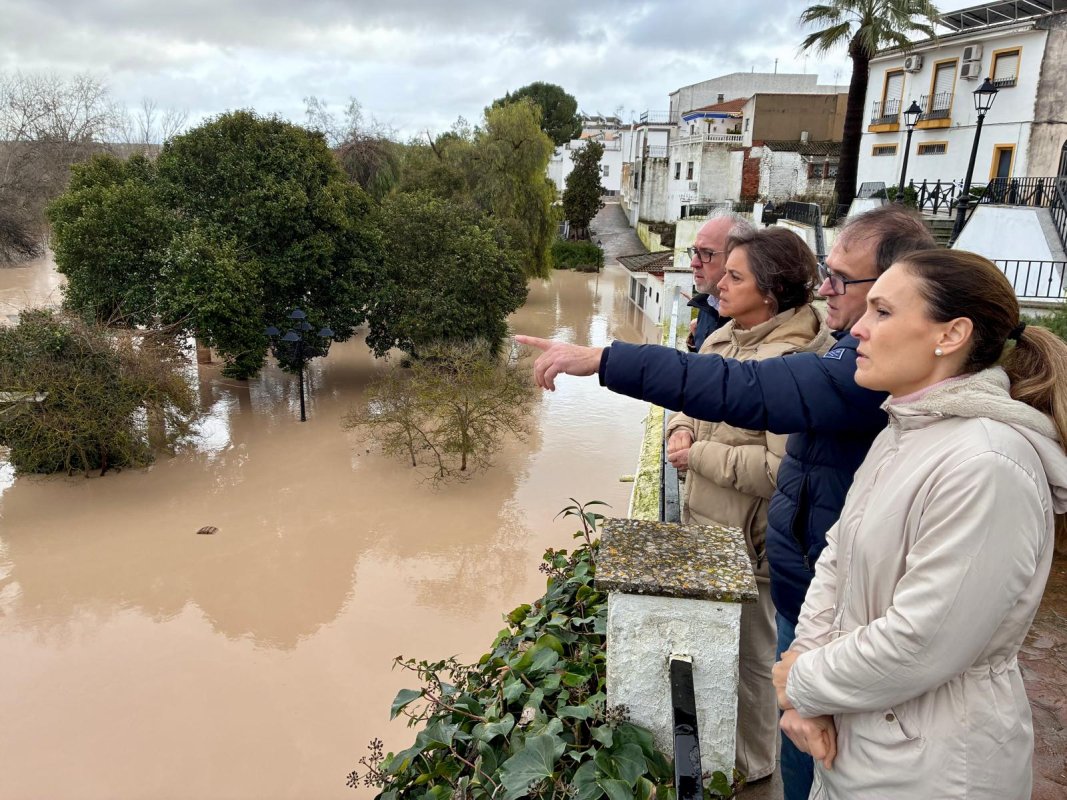
Meteorologists indicate that the extreme weather on the Iberian Peninsula at the start of the year is closely linked to a powerful high-pressure system stationed over the Norwegian Sea. This high-pressure ‘block’ is obstructing the usual path of cyclones, forcing them southwards to impact Western Europe. Simultaneously, an ‘atmospheric river’ is continuously feeding moisture into Spain, causing soil saturation in many regions and intensifying the flooding with persistent rainfall.
A fundamental improvement in the weather depends on the dissipation of this high-pressure system. The latest meteorological models predict this process could take several days or even weeks. While a temporary respite may come from the expansion of the Azores High, a definitive change is not expected until mid-February, and a high degree of uncertainty still persists.
