Recently, in the Burjassot area of Valencia, an unexpected ‘visitor’ disrupted the city’s normal routine. Around 9 a.m. on Tuesday morning, a wild boar appeared near the Empalme station and subsequently entered the metro and tram tracks, posing a direct threat to public transport.
Uninvited Guest Disrupts Urban Transit
The frightened boar ran back and forth through the tunnels between several stations, including Empalme, Beniferri, and Campanar, forcing the metro company to issue an immediate alert to all trains. To ensure safety, trains passing through the section were required to significantly reduce speed and closely monitor the tracks. This measure led to varying degrees of delays on several commuter lines, affecting the travel plans of many citizens.
Emergency Response and Service Restoration
Following the incident, agents from the Civil Guard’s Nature Protection Service (Seprona) responded quickly. After a tense operation lasting just over an hour, law enforcement officers eventually put down the threatening wild boar near the tracks, completely eliminating the safety hazard. Afterward, the affected metro lines gradually returned to normal operation.
The Underlying Problem: Wild Boar Overpopulation
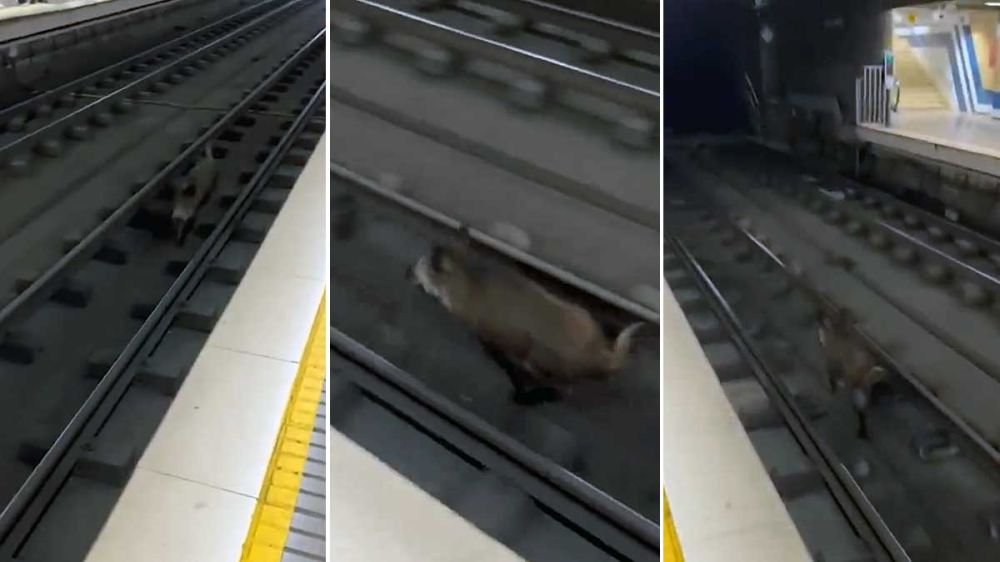
The intrusion of wild boars into the city is not an isolated event. In recent years, their severe overpopulation has become a thorny social issue, with the animals frequently entering residential areas and even transport hubs. Just a week before this incident, the local council had passed an emergency decree, planning to implement stricter measures such as setting up trap cages and using infrared monitoring to control the wild boar population and prevent related epidemics. This latest event proves once again that urgent management measures in the L’Horta district and around Burjassot are imperative.
Reflections on Urban Safety and Ecological Balance
Authorities warn that wild animals can become extremely aggressive when frightened in an urban environment. The decisive intervention by the police successfully avoided a major safety accident that could have been caused by a collision between a train and the animal. Although this ‘metro incident’ resulted in no human casualties, it profoundly reflects the growing conflict between ecological management and urban safety in the region, posing new challenges for achieving harmonious coexistence between humans and nature.
