Catalyst for the Strike: Fatal Accidents Sound Safety Alarms
The immediate cause of the strike were two serious railway accidents in January 2026. On January 18, a major accident involving a high-speed train (AVE) resulted in 46 fatalities. Just two days later, another accident with a suburban train caused one death. Railway unions argue that these incidents expose significant flaws in the rail system’s safety management and infrastructure maintenance. For instance, the preliminary investigation into the Adamuz train accident pointed to a fracture in a track weld.
Negotiations Collapse: Diverging Stances Between Unions and Government
Before the strike, the General Union of Workers (UGT) and the Spanish Union of Railway Drivers (SEMAF) held multiple rounds of talks with the Ministry of Transport, but failed to reach an agreement on key issues. The unions criticized that preventative maintenance has been neglected due to chronic staff and resource shortages, demanding increased government investment in safety and more technical personnel. With the two sides unable to bridge their differences, the talks ultimately broke down, and the strike proceeded as planned.
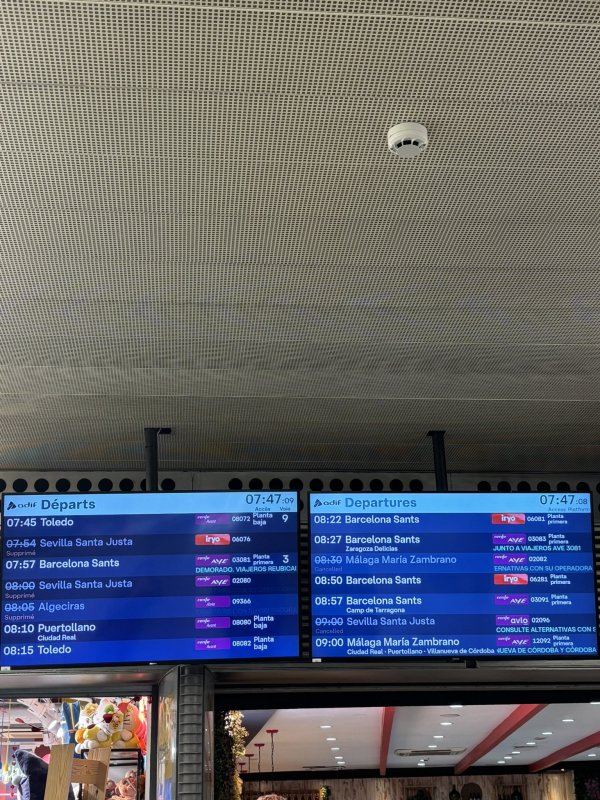
Widespread Impact: Over 330 Train Services Halted
The three-day stoppage has had a significant impact on the national rail network. Spain’s state-owned railway company, Renfe, along with two private high-speed operators, Ouigo and Iryo, have collectively cancelled over 330 trains, primarily affecting high-speed and medium-distance routes. This has posed a serious challenge to the travel plans of tens of thousands of commuters and long-distance passengers.
Government Response: Establishing Minimum Service Guarantees
To mitigate the strike’s impact on public travel, the Spanish government has legally mandated minimum service levels. According to the directive, high-speed and long-distance services must maintain 73% of their capacity. For high-traffic suburban trains, 75% of services must run during peak hours, and 50% during off-peak times. The minimum service levels for medium-distance and freight trains are set at 65% and 21%, respectively.
Future Outlook: Protests May Escalate
Railway unions emphasize that this strike is just an initial action. If the government fails to make substantial concessions regarding investment in railway safety, equipment upgrades, and improved working conditions, the unions reserve the right to take further and more drastic protest measures. The future of labor relations remains uncertain.
