Transactions Hit Historic Highs, Cash Buyers Active
According to data from the Spanish Land Registry and other institutions, a total of 705,000 residential properties were sold in 2025, the highest level in over a decade. The fourth quarter alone saw 178,200 transactions, the second-highest quarterly figure since the 2007 financial crisis. A notable feature is that approximately 30% of these transactions (around 206,500 units) were all-cash purchases, indicating a significant presence of buyers with high liquidity. At the same. time, the mortgage market did not shrink; 498,500 new mortgage contracts were signed throughout the year, a 14.5% year-on-year increase, showing that credit demand remains strong.
Supply Shortages Drive Prices Up, Core Cities See Astonishing Gains
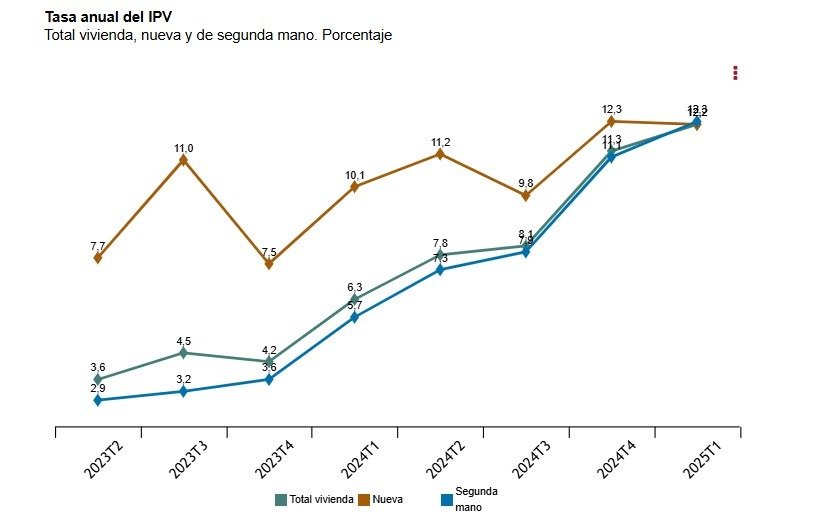
In 2025, nationwide property prices in Spain rose by 9.5% year-on-year. Over a longer period, the average housing price has increased by about 76% in the last decade, from €1,524/m² to €2,679/m². The capital, Madrid, is particularly outstanding, with a price increase of over 180% in ten years, and the average mortgage amount has nearly doubled. Market analysis points out that the main driver of price appreciation is a severe shortage of new housing supply. Constraints on land, approvals, and construction cycles have limited the pace at which new homes enter the market, failing to meet continuously growing demand. This supply-demand imbalance has even spilled over to the rental market. For instance, in the Madrid region, even the illegal subletting of parking spaces can fetch prices up to 10 times the official rate.
Influx of Foreign Buyers Expands Investment Landscape
Foreign buyers are another significant force supporting the market. In 2025, foreigners purchased approximately 97,000 properties in Spain, accounting for 13.8% of total market transactions. The composition of buyers is becoming more diverse. In addition to traditional sources like the UK and Morocco, there has been a significant increase in buyers from the United States, Latin America, and Portugal. Non-resident foreign buyers, primarily purchasing for vacation or investment purposes, have a higher average transaction price (€3,126/m²). In contrast, foreign residents living in Spain are more focused on their primary housing needs. Hotspots remain areas like Valencia and Andalusia, but some relatively lower-priced regions such as Asturias are also beginning to attract international attention.
Analysis of Interest Rate and Policy Impacts
Although the average interest rate for new mortgages dropped to 2.97% in the fourth quarter of 2025, the burden of homeownership remains heavy. The national average monthly mortgage payment is around €796, which accounts for one-third of the average salary. In the Balearic Islands and Madrid, this ratio climbs to 55% and 43.7%, respectively. To alleviate the pressure on young homebuyers, the government has proposed subsidy measures in the draft ‘2026–2030 National Housing Plan,’ but these are mainly targeted at public housing and are expected to have a limited impact on the private property market. Overall, against a backdrop of tight supply, strong demand, and falling interest rates, the cost of waiting to enter the market is increasing year by year.
