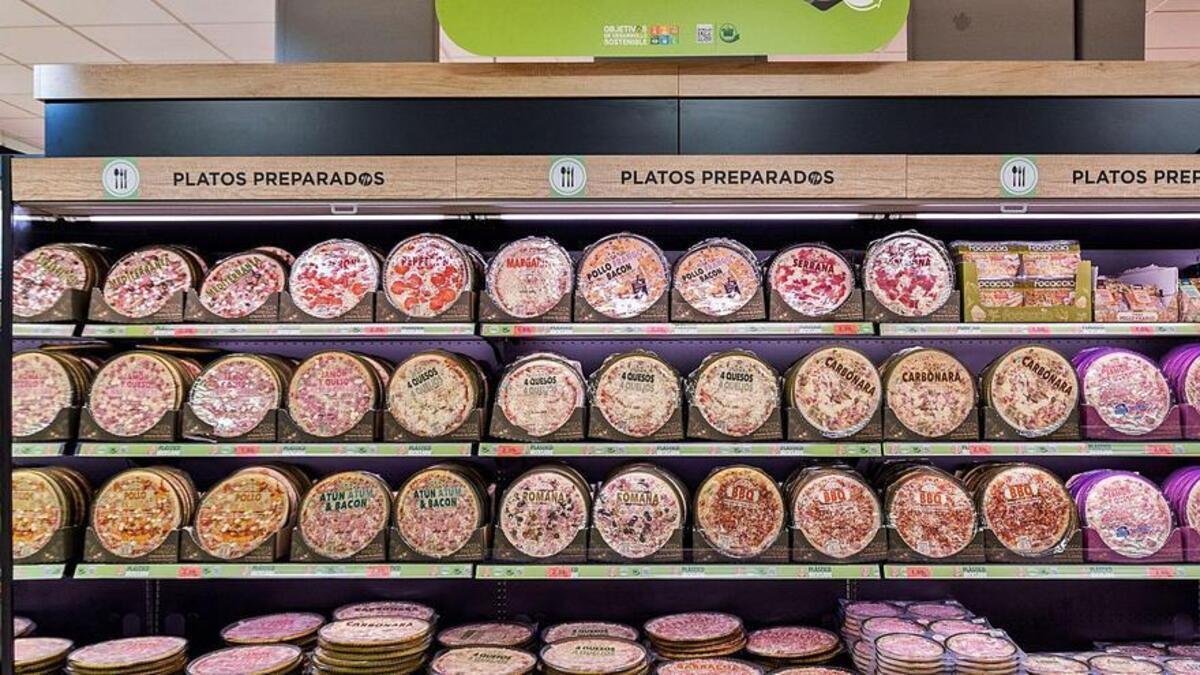
Recently, Spain’s Organization of Consumers and Users (Organización de Consumidores y Usuarios, OCU) released a detailed analysis of frozen pizzas sold in supermarkets, confirming the health concerns many have about this type of convenience food.
Excessive Salt and Saturated Fat
The report shows that a standard 400-gram frozen pizza contains an average of 6.4 grams of salt, which is 128% of the World Health Organization’s recommended daily intake. The salt content is particularly high in ham and cheese varieties. Furthermore, most products have a saturated fat content of around 5%, exceeding the recommended upper limit of 3.5%. This issue is especially common in plain cheese and vegetarian pizzas, and long-term consumption can increase the risk of cardiovascular disease.
Widespread Use of Additives and Ultra-Processed Ingredients
The analysis found that, on average, each frozen pizza contains about seven additives, with some products using as many as 17. OCU specifically alerts consumers to watch for ingredients like caramel colorings (E-150c, E-150d), preservatives (E-211, E-250, E-251, E-252), and phosphates (E-341). The use of flavorings, glucose syrup, and other ultra-processed ingredients is also very common. Notably, about a quarter of the tested products contained more than 10 such ingredients. Regulations are expected to change from this July, banning the use of smoke flavorings in non-traditional products.
A Few Products with Acceptable Ratings
In the Nutriscore system used by OCU, only five pizzas received a ‘C’ (moderate) rating. These are: Eroski’s ham and cheese pizza, Hacendado’s (from Mercadona) ham pizza, El Corte Inglés’s select ham and cheese pizza, Mamma Mancini’s barbecue pizza sold at Aldi, and Campofrío’s BBQ chicken pizza. Among these, only the Eroski and Hacendado products also met OCU’s stricter health standards (which penalize for over-processing). Even so, these products are still classified as ‘for occasional consumption’ due to additives, high salt content, and calorie density.
OCU’s Consumer Advice
OCU recommends that consumers treat frozen pizza as an occasional indulgence rather than a daily staple. If you do eat it, it’s best to have just one slice (not the whole pizza) and pair it with a salad or vegetables to balance the nutrition and increase dietary fiber. The key to making a healthier choice is to carefully read the nutrition facts and ingredient list before buying.
