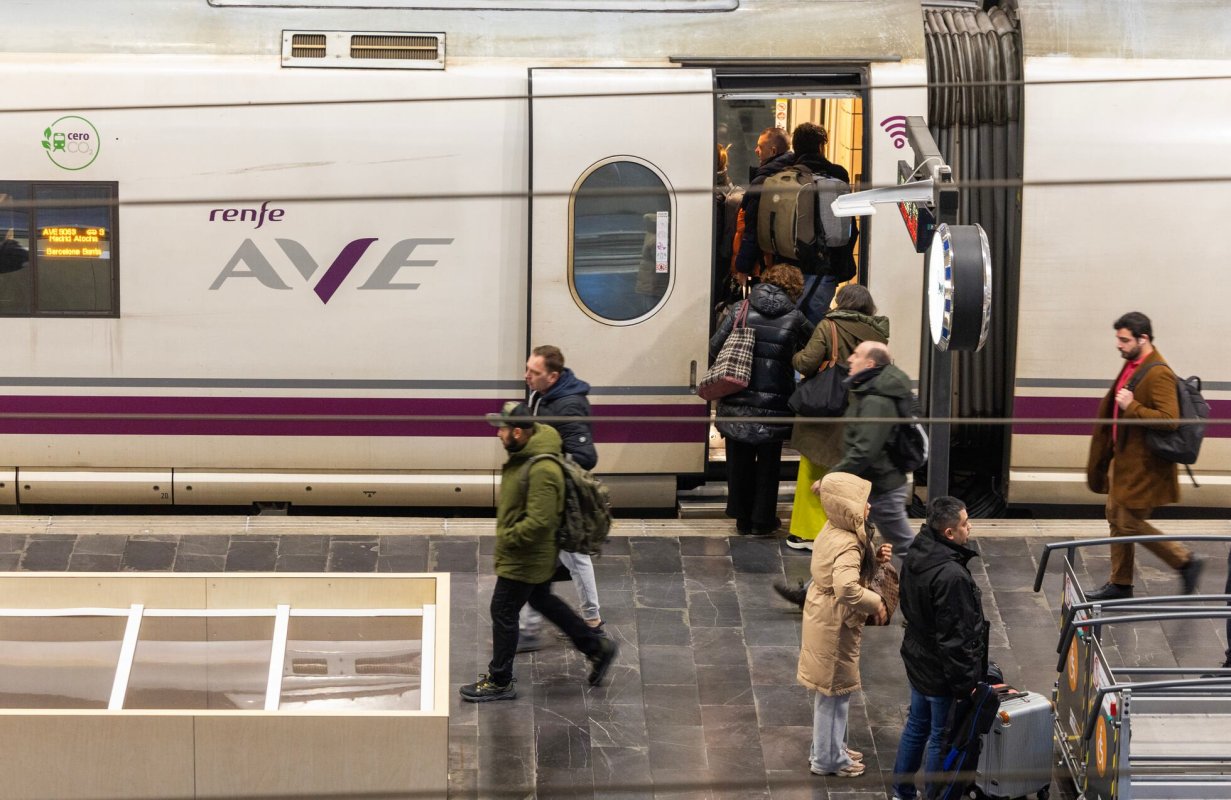
In January 2026, the monthly report from Spain’s national railway company (Renfe) revealed that the punctuality of its AVE high-speed and long-distance trains dropped to a historic low. That month, the average train delay reached 27 minutes, more than double that of December 2025 (13 minutes), and significantly higher than the worst month of 2025, July (18.8 minutes).
Infrastructure Issues as the Main Cause of Delays
The report attributes the majority of delays to “external causes,” primarily pointing to infrastructure issues managed by Adif. Data shows that a staggering 83.8% of delays in January were due to external factors, a figure much higher than the 69.2% in December of the previous year. In contrast, only 16.7% of delays were directly attributable to the operator, Renfe, itself. Several railway incidents during the month, such as the Ademuz incident, were significant factors leading to service disruptions and delays.
Major Routes Severely Affected
The infrastructure problems directly led to a significant drop in the operational efficiency of major commercial routes. Due to temporary speed limits imposed by the infrastructure management company, the journey time on the Madrid-Barcelona line unprecedentedly increased by 25 minutes. Additionally, other routes such as Madrid-Valencia were similarly affected. In terms of specific data, 45.5% of trains in January were delayed by at least 5 minutes, 29% were delayed by more than 15 minutes, and 8.1% of trains were delayed for over an hour.
Passenger Compensation Policy Cancelled
Faced with a severe decline in service quality, Renfe announced at the end of January 2026 that, due to widespread delays caused by temporary speed limits on the infrastructure, the company would completely cancel the delay compensation commitment under the original Sustainable Mobility Law framework. This means that, in the future, even if passengers encounter severe delays, they will no longer be able to apply for a 50% ticket price refund as in the past, a change that has drawn widespread attention from the public and passengers.
