Rise in Lung Cancer Sounds Alarm for Women’s Health
The latest ‘Cancer Figures in Spain 2026’ report has issued a clear warning: for the first time, lung cancer has surpassed breast cancer to become the leading cause of cancer-related deaths among women in Spain. In its analysis, the Spanish Society of Medical Oncology (SEOM) points out that while smoking remains the main culprit, an often-overlooked factor is gaining prominence: radon gas.
Unmasking the ‘Invisible Killer’: What is Radon?
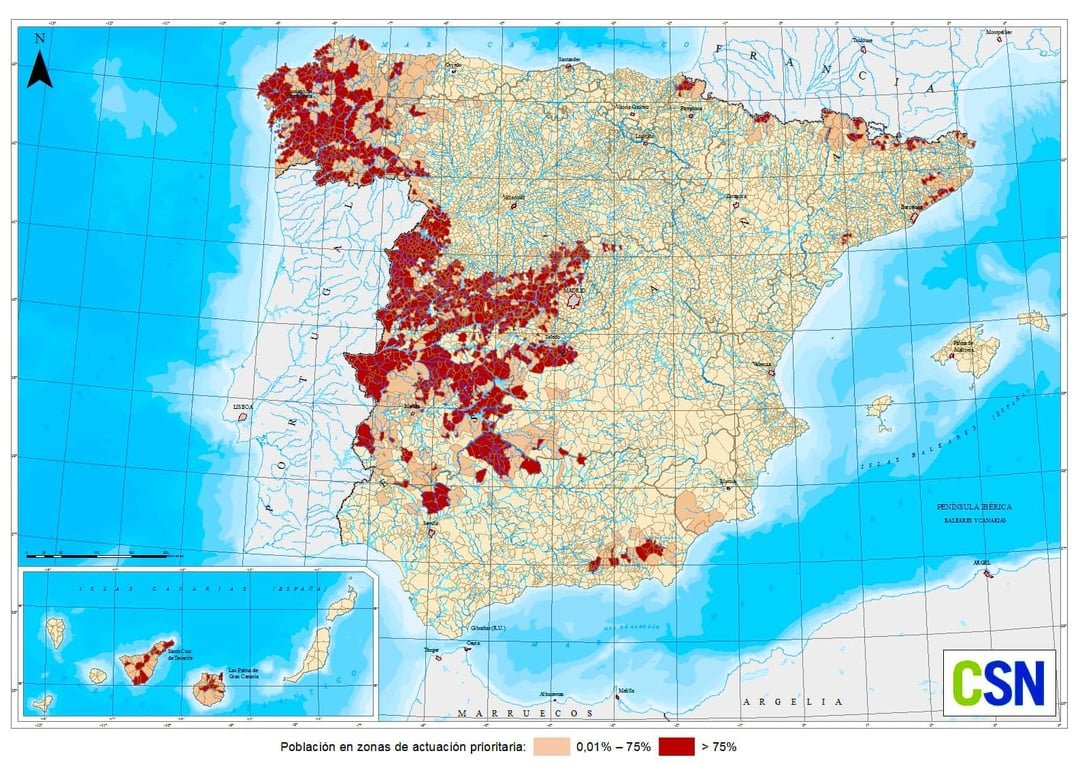
Radon is a naturally occurring radioactive gas that originates from the decay of uranium in rocks and soil. It is colorless, odorless, and tasteless, making it impossible to detect with human senses. It can seep into buildings through cracks in foundations and construction joints, accumulating in poorly ventilated lower levels and homes. The SEOM estimates that in 2024 alone, about 3.8% of lung cancer deaths in Spain were linked to long-term radon exposure. In high-risk regions such as Galicia, Extremadura, and Madrid, this figure could be as high as 7%, translating to nearly a thousand deaths annually. Data from the World Health Organization (WHO) also indicates that 3% to 14% of lung cancer cases globally may be caused by radon, establishing it as the leading risk factor for lung cancer in non-smokers.
Compounded Risk: How Radon Induces Cancer
The carcinogenic mechanism of radon involves the release of alpha particles during its decay. When inhaled, these high-energy particles can directly damage the DNA of cells deep within the lungs, increasing the probability of genetic mutations that can ultimately lead to cancer. The medical community particularly emphasizes the ‘synergistic effect’ between radon exposure and other risk factors like smoking. A smoker exposed to high concentrations of radon will see their risk of developing lung cancer increase exponentially. The latency period from exposure to diagnosis is typically 10 to 15 years. Geographically, the risk map from the Spanish Nuclear Safety Council (CSN) indicates that areas with granitic geology have a higher risk. Radon concentrations are also generally higher in single-family homes or ground-floor residences compared to apartments on higher floors.
The Path to Prevention: Starting with Detection and Regulation
Since radon is imperceptible to the senses, the only scientific way to determine if a home has a radon risk is through professional measurement. This typically involves placing a specialized detector in the home for at least three months to obtain an accurate annual average concentration value. Although Spain and the European Union set a reference level of 300 Bq/m³ for intervention, medical experts widely agree that any level of radiation exposure carries a risk. For every 100 Bq/m³ increase in concentration, the risk of lung cancer rises by approximately 16%. Faced with this ‘invisible threat,’ experts are actively urging the government and society to strengthen public education, lower the barriers and costs of detection services, and promptly improve related legislation to build a more comprehensive protective framework.
